A species
Aphid partner bacterium
Buchnera aphidicola
A bacterium that lives only inside aphids and feeds them what plant sap lacks
You and the aphid partner bacterium meet in the All life branch, shown at about 4.2 billion years ago (on 1 January, in a calendar from life's shared ancestor to today).
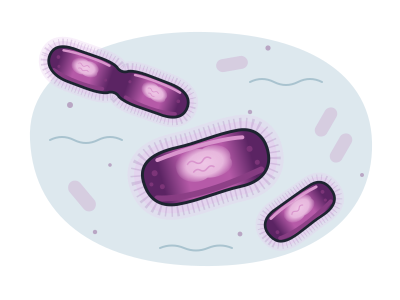
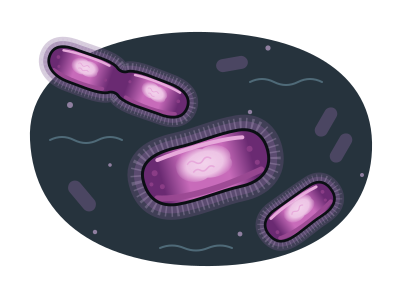
Almost every aphid, the little greenfly and blackfly on rose buds, carries a bacterium that cannot live anywhere else. It lives only inside special aphid cells. The two have depended on each other for over 150 million years, since the age of the dinosaurs.
Aphids drink only plant sap. Sap is full of sugar but short of some protein building blocks that animals cannot make for themselves. The bacterium makes them. For some of these, the bacterium is missing steps in its recipe, and the aphid's own cells fill the gaps. Together they work like one shared kitchen.
The surprise is its family. It is a relative of E. coli, the common gut bacterium, from the same broad group, and it came from a free-living ancestor much like it. After so long inside aphids, it has lost many genes it no longer needs. In pea aphids its genome is about one-seventh the size of E. coli's, tiny even for a bacterium. No one has ever grown it alone in a lab.
It never travels through soil, water or plants. A mother aphid passes it straight to her young, so aphid families and bacterium families have branched in step with each other.
One letter, big difference
Losing a single DNA letter in the switch that turns on one of the bacterium's heat-shock genes affects how well pea aphids cope with heat. In aphids from hot Tucson, Arizona, the bacteria all had the heat-tolerant version.
Millions on board
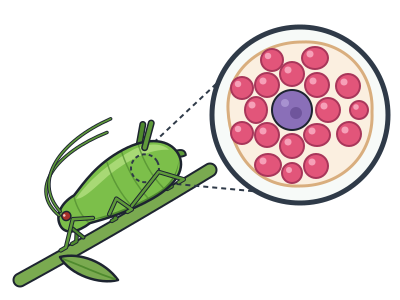
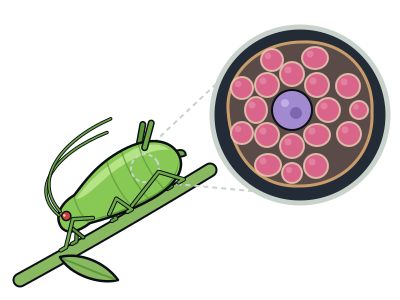
A grown aphid carries an estimated 5.6 million of these bacteria. They are packed into about 60 to 80 large host cells that form a two-lobed organ in its belly.
Replaced by fungi
In one group of aphids, this bacterium has been lost completely. Yeast-like fungi have taken over its job as their partner.
Next to it on the tree
- E. coliLives quietly in your gut; also the lab workhorse behind insulin production.
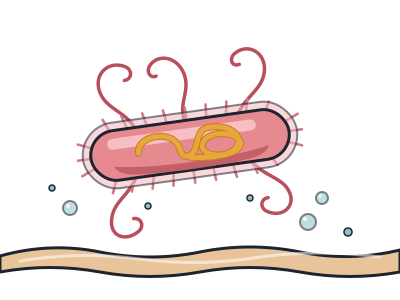
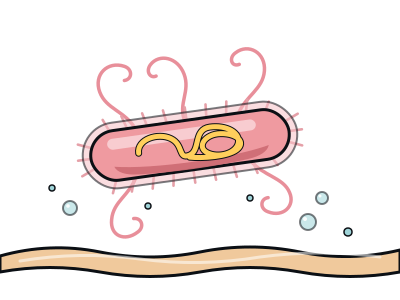
- Glowing squid partnerGlows only when enough of its friends are nearby, lighting up the Hawaiian bobtail squid like a moonlit shadow.
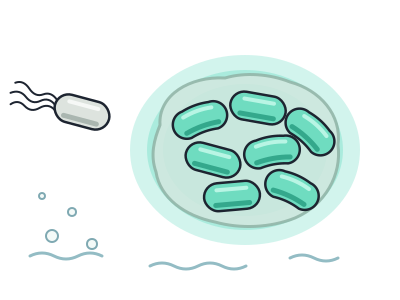
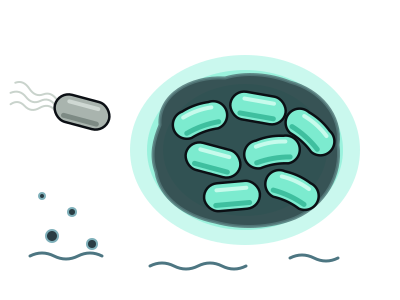
- SalmonellaA close cousin of E. coli that causes food poisoning, which is why we cook eggs and chicken well.
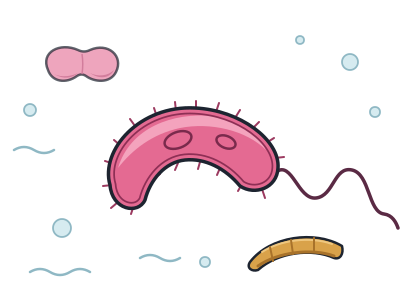
- Cholera bacteriumA comma-shaped water microbe; mapping its outbreaks in 1854 London helped invent public health.
- Plague bacteriumBehind the Black Death; spread by rat fleas, it is now rare and treatable with antibiotics.
- Giant bacteriumA single bacterial cell up to 2 cm long, visible to the naked eye, found in Caribbean mangroves.