A species
Zombie-ant fungus
Ophiocordyceps unilateralis
A fungus that steers an ant up a plant to bite a leaf, then grows out of its head.
You and the zombie-ant fungus meet in the Fungi and animals branch, shown at about 1.3 billion years ago (on 10 September, in a calendar from life's shared ancestor to today).
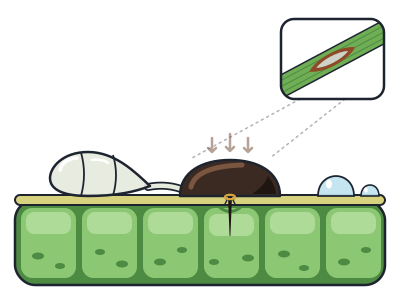
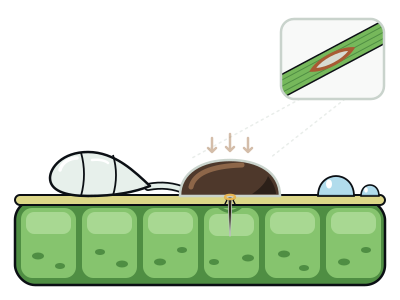
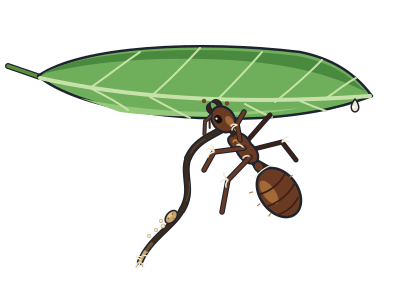
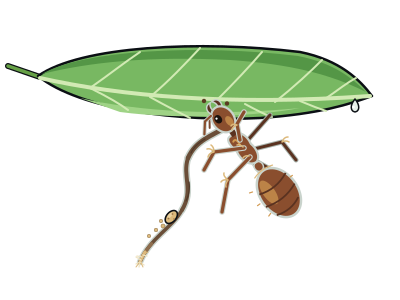
Imagine a fungus that can steer an ant. This one infects carpenter ants that live high up in rainforest trees. An infected ant leaves its nest, wanders as if it were drunk, and ends up in the undergrowth near the ground. There it bites down hard on the main vein under a leaf, usually around midday. Its jaws stay locked on, even after it dies.
Surprisingly, a 2017 microscope study found no fungus inside the ant's brain. Instead, the fungus wraps a web of cells around the muscles of the legs and jaws, a bit like a puppeteer pulling a puppet's strings. It also makes the jaw muscles waste away, which helps keep the dead ant stuck in place. Several days later, a thin, dark stalk pushes out from the back of the ant's head and releases spores.
Despite the 'cordyceps' label it often gets, this is not a true Cordyceps. DNA studies put it in a separate family from its relatives on the tree, the orange caterpillar fungus and ergot. All three still belong to the same larger group of fungi.
Ant graveyards
Dead ants can gather in 'graveyards'. In Thailand, researchers found up to 26 dead ants clinging to leaves in a single square metre.
A very old trick
A fossil leaf about 48 million years old, from Germany, shows the same bite scars. It is the oldest known fossil evidence of a parasite controlling its host's behaviour.
A precise drop
In one Thai rainforest, ants from nests more than 20 metres up bit leaves in a narrow band only about 25 cm above the forest floor. That is a bit lower than a school ruler standing on its end.
Next to it on the tree
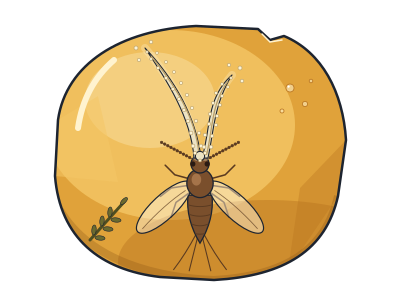
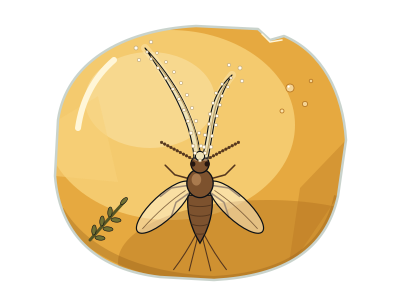
- Amber insect-parasite fungusTwo tiny stalks sprouting from a scale insect's head, frozen in amber since the dinosaurs.
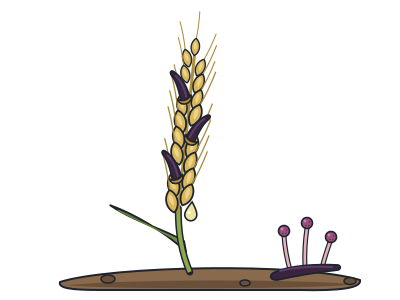
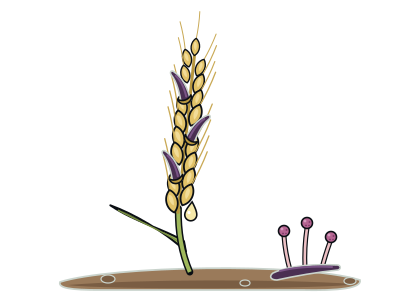
- ErgotDark spurs on rye that once poisoned whole villages and later gave medicines.
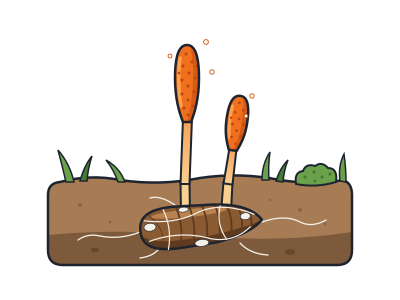
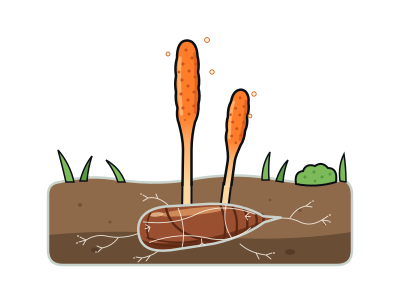
- Orange caterpillar fungusBright orange clubs that grow out of buried moth pupae; now farmed on rice.
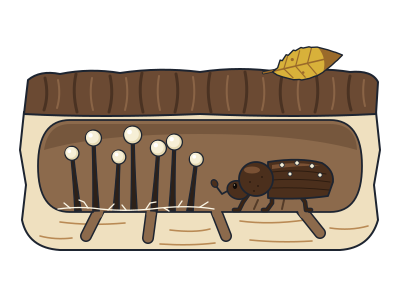
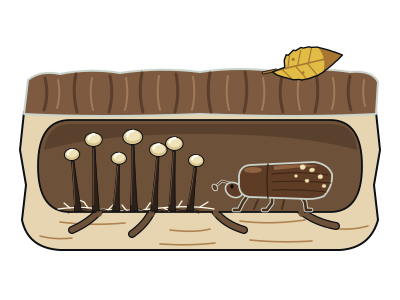
- Dutch elm disease fungusSpread by bark beetles, it killed most of the tall elms of Europe and North America.
- Red bread mouldAn orange mould that helped prove each gene makes a protein.
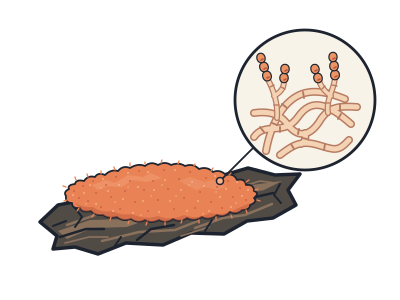
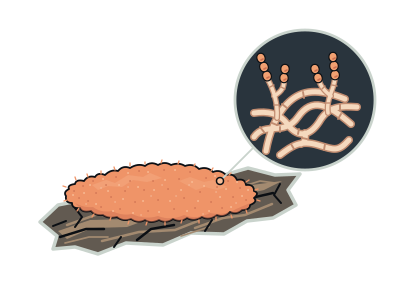
- Rice blast fungusPunches into rice leaves with enormous pressure; it destroys enough rice to feed millions.