An extinct species
Amber insect-parasite fungus †
Paleoophiocordyceps coccophagus
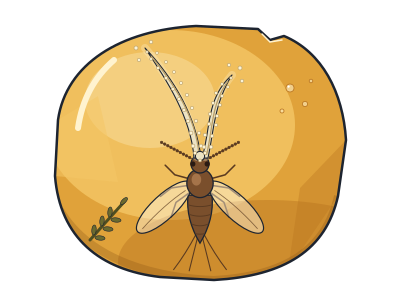
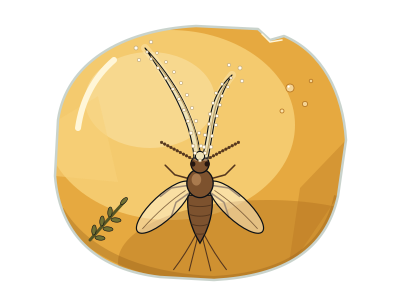
Two tiny fungus stalks sprouting from a bug's head, trapped in amber since the dinosaurs.
Known from about 99 million years ago.
You and the amber insect-parasite fungus meet in the Fungi and animals branch, shown at about 1.3 billion years ago (on 10 September, in a calendar from life's shared ancestor to today).
About 99 million years ago, when dinosaurs still roamed, a tiny insect got stuck in sticky tree resin. Over time that resin hardened into golden amber. Inside it you can still see two thin, whip-like stalks sprouting from the insect's head. They belonged to a fungus that was living off the insect.
The insect was a male scale insect, a small sap-sucking bug. The crusty 'scales' you see on garden plants are females. The males had wings and looked a bit like gnats. This one was probably less than 1 millimetre long, smaller than a grain of rice. Each fungal stalk was a few times longer than the whole insect, yet still only about as long as a sesame seed.
The surprising part is its family. Its shape is very like the zombie-ant fungus, a living relative that attacks ants today, and the two are placed in the same family of insect-attacking fungi. Further out on the tree it is related to ergot, red bread mould and the fungus behind Dutch elm disease.
The amber comes from northern Myanmar, and only one specimen is known. It is a tiny moment frozen in time: a fungus and its host, held together for about 99 million years.
A record holder
When scientists named it in 2008, they described it as the oldest fossil evidence of a fungus living off an animal.
Spores too small to see
The stalks were covered in tiny cells, and each one carried a single round spore about 3 to 4 thousandths of a millimetre wide. You would need a microscope to see them.
More family turns up
In 2025 scientists described two more species in the same genus, the close family group it shares a first name with, in amber of the same age. One was growing from an ant pupa and the other from a fly.
Next to it on the tree
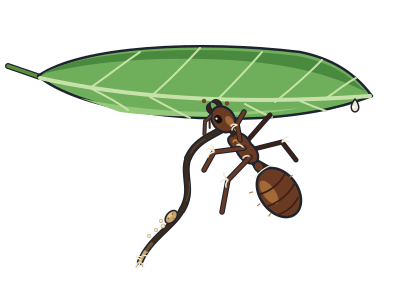
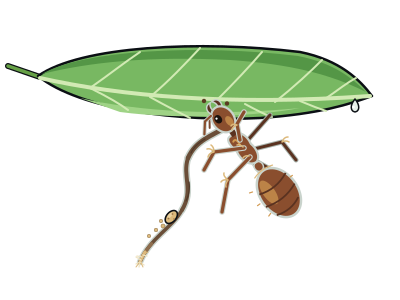
- Zombie-ant fungusSteers an infected ant up a plant to bite a leaf, then sprouts from its head.
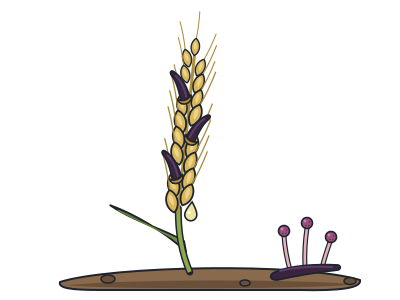
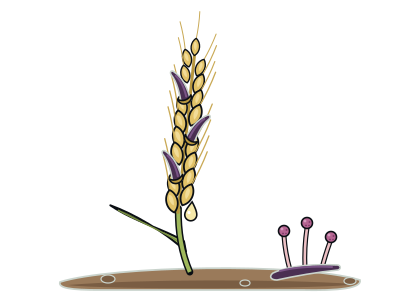
- ErgotDark spurs on rye that once poisoned whole villages and later gave medicines.
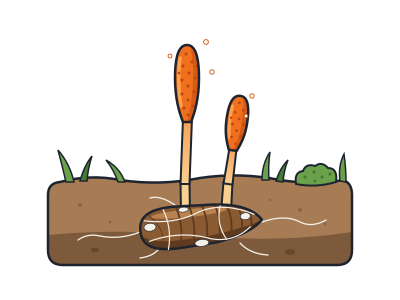
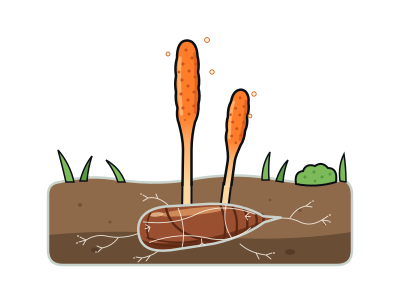
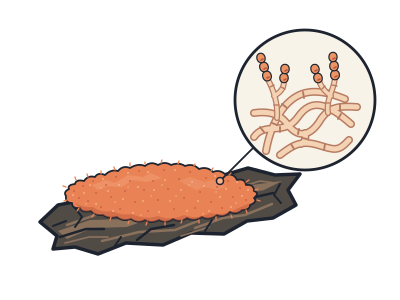
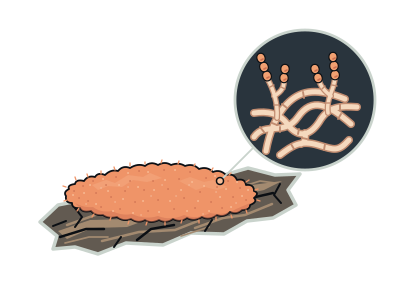
- Orange caterpillar fungusBright orange clubs that grow out of buried moth pupae; now farmed on rice.
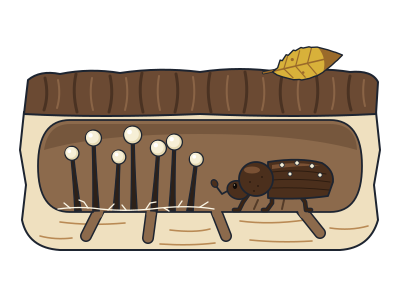
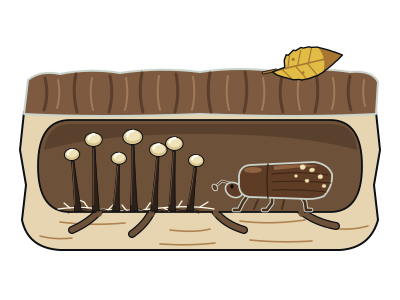
- Dutch elm disease fungusSpread by bark beetles, it killed most of the tall elms of Europe and North America.
- Red bread mouldAn orange mould that helped prove each gene makes a protein.
- Rice blast fungusPunches into rice leaves with enormous pressure; it destroys enough rice to feed millions.