A species
Red bread mould
Neurospora crassa
The orange mould that helped connect genes with proteins
You and the red bread mould meet in the Fungi and animals branch, shown at about 1.3 billion years ago (on 10 September, in a calendar from life's shared ancestor to today).
This orange bread mould helped reveal how genes guide the making of proteins. In 1941, George Beadle and Edward Tatum used it to study enzymes that speed up chemical reactions. Their work showed that a change in one gene could interrupt a particular chemical step inside the fungus. A familiar-looking mould helped answer a much bigger question about how living things work.
Its relatives include the rice blast fungus, but being relatives does not mean they share the same way of life. Red bread mould breaks down dead plant material, helping recycle carbon. Bread is not its whole story.
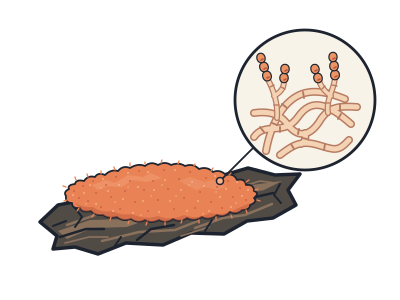
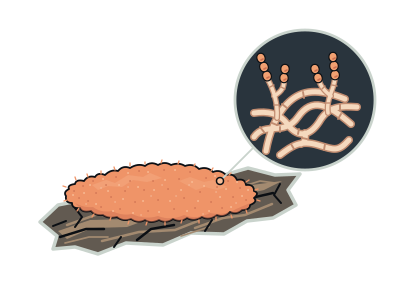
Its orange patch is not a miniature cap-and-stem mushroom. Instead, its body is a spreading mesh of thin tubes. Individual threads need magnification to see clearly. What looks like one soft patch is a network of these tiny threads.
Nobel-winning mould
Beadle and Tatum received shares of the 1958 Nobel Prize in Physiology or Medicine for this work.
An inner clock
It has an internal daily clock that responds to light, making it useful for studying biological rhythms.
Different cold tolerances
Wild populations differ in how well they tolerate cold. Researchers linked some differences to their genes and local climates.
Next to it on the tree
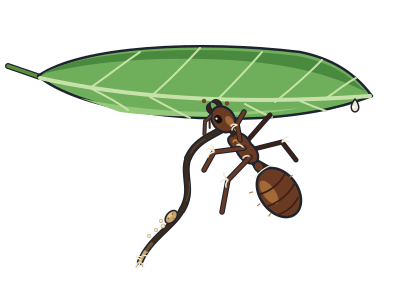
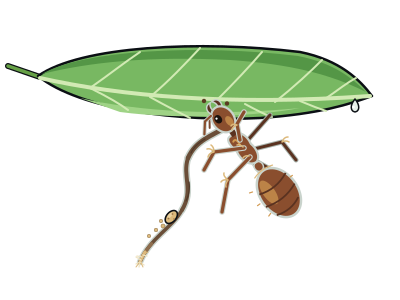
- Zombie-ant fungusSteers an infected ant up a plant to bite a leaf, then sprouts from its head.
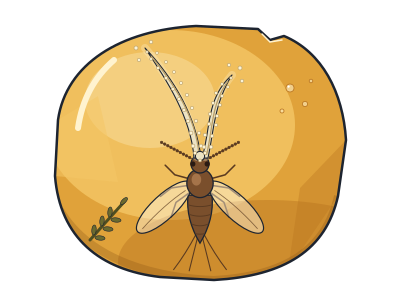
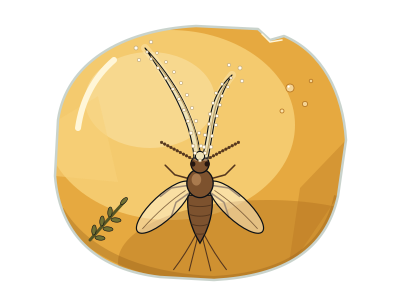
- Amber insect-parasite fungusTwo tiny stalks sprouting from a scale insect's head, frozen in amber since the dinosaurs.
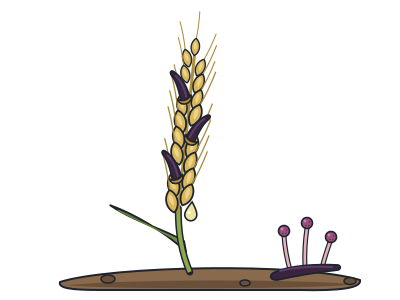
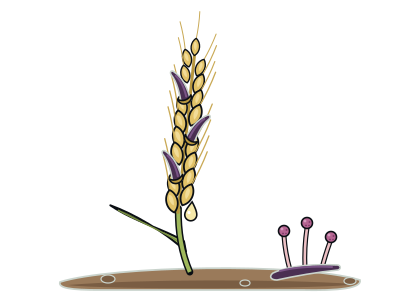
- ErgotDark spurs on rye that once poisoned whole villages and later gave medicines.
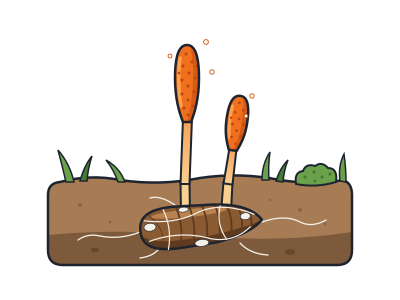
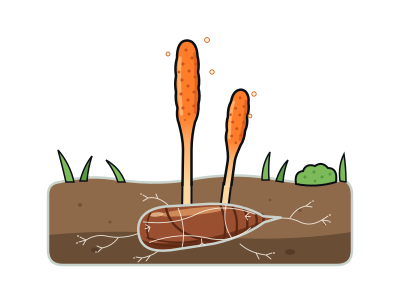
- Orange caterpillar fungusBright orange clubs that grow out of buried moth pupae; now farmed on rice.
- Dutch elm disease fungusSpread by bark beetles, it killed most of the tall elms of Europe and North America.
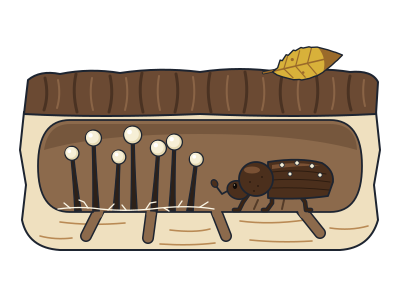
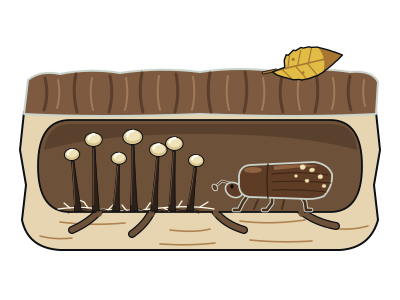
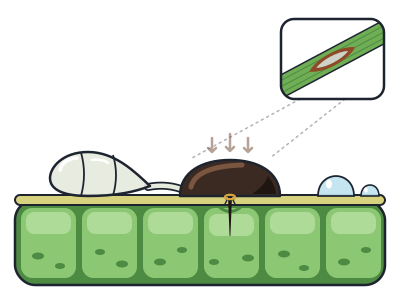
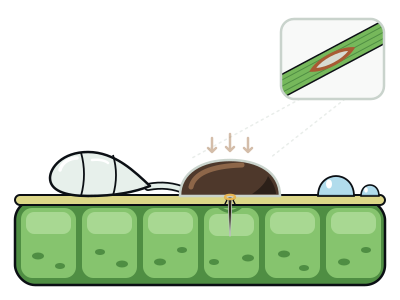
- Rice blast fungusPunches into rice leaves with enormous pressure; it destroys enough rice to feed millions.