A species
Ergot
Claviceps purpurea
Dark spurs on rye that once poisoned whole villages and later gave medicines.
You and the ergot meet in the Fungi and animals branch, shown at about 1.3 billion years ago (on 10 September, in a calendar from life's shared ancestor to today).
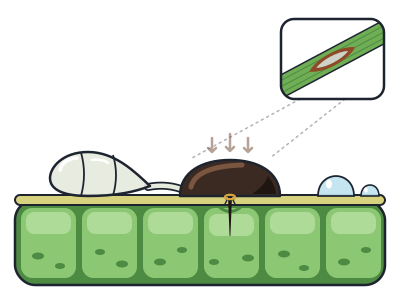
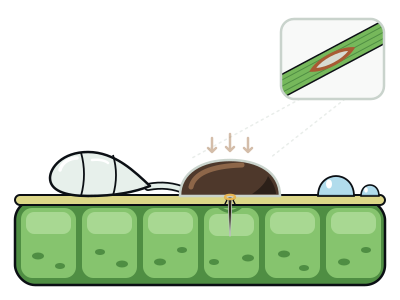
Dark spurs sticking out of a head of rye look like spoiled grains, but they are a fungus. Bread baked from infected rye once poisoned whole villages. Centuries later, the same spurs gave doctors useful medicines. Ergot belongs to the flask fungi, alongside relatives such as the zombie-ant fungus and the red bread mould.
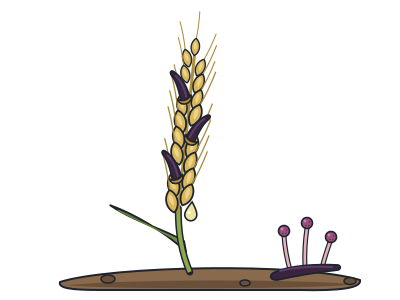
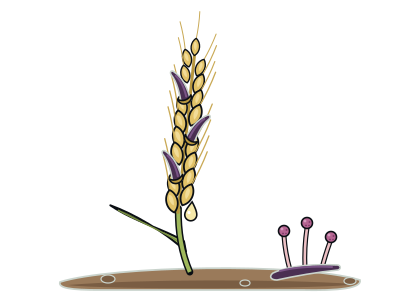
Ergot attacks the flowers of rye and related grasses, including wheat and barley. Early on, an infected flower oozes a sweet, sticky liquid full of spores, and insects carry the spores to other flowers. Then, instead of a grain, the flower grows a hard purple-black spur. It is white inside and up to about 2 cm long, roughly the length of a fingernail. The spurs rest in the soil over winter, and most survive only about a year. In spring they sprout tiny mushroom-shaped stalks that release new spores.
In the Middle Ages, eating poisoned bread caused an illness called St Anthony's Fire. Some victims felt burning pain as blood stopped reaching their hands and feet. Others had fits. For centuries nobody knew the cause, until a German doctor linked it to ergot in 1596.
Midwives once used ergot to help with difficult births. Today, medicines made from it control heavy bleeding after childbirth and treat migraines.
Hundreds of hospitals
A religious brotherhood called the Hospital Brothers of St Anthony was founded in 1095 to care for victims. By the end of the 1400s they had set up nearly 400 hospitals across Europe.
A painting for the sick
Matthias Grünewald's famous Isenheim Altarpiece, painted between 1512 and 1516, was made for a monastery hospital that cared for people with St Anthony's Fire.
A surprising lab discovery
Ergot does not contain LSD. But in 1938 the Swiss chemist Albert Hofmann, who was working on ergot medicines, made LSD from lysergic acid, a chemical found in ergot. He only discovered its mind-altering effects in 1943, after he was exposed to it by accident.
Next to it on the tree
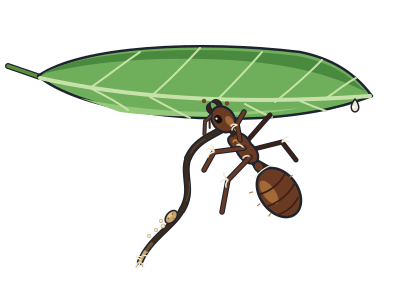
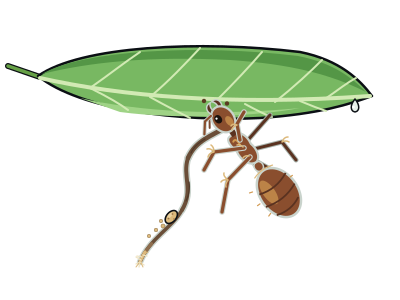
- Zombie-ant fungusSteers an infected ant up a plant to bite a leaf, then sprouts from its head.
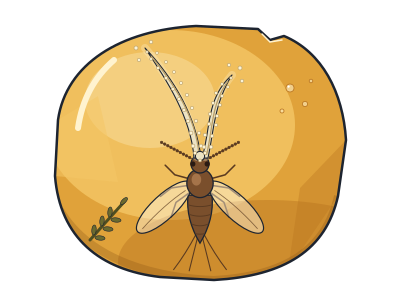
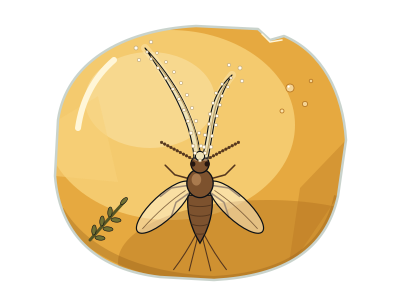
- Amber insect-parasite fungusTwo tiny stalks sprouting from a scale insect's head, frozen in amber since the dinosaurs.
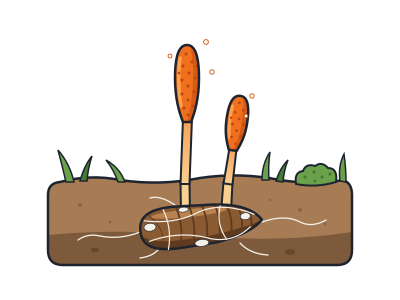
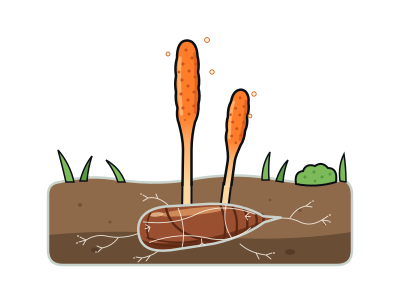
- Orange caterpillar fungusBright orange clubs that grow out of buried moth pupae; now farmed on rice.
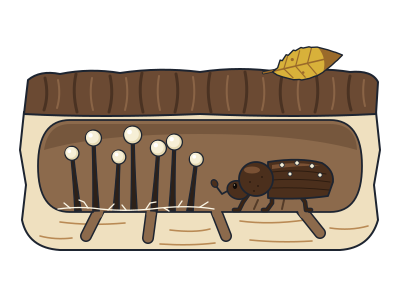
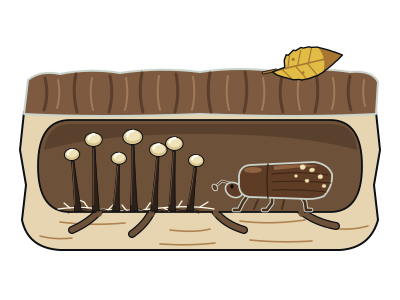
- Dutch elm disease fungusSpread by bark beetles, it killed most of the tall elms of Europe and North America.
- Red bread mouldAn orange mould that helped prove each gene makes a protein.
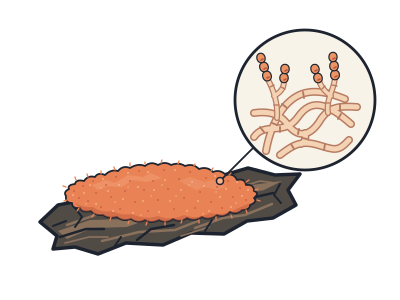
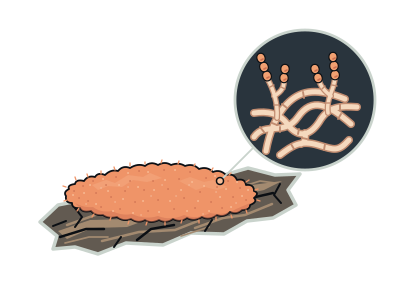
- Rice blast fungusPunches into rice leaves with enormous pressure; it destroys enough rice to feed millions.