A species
Orange caterpillar fungus
Cordyceps militaris
Bright orange clubs that grow out of buried moth pupae, and are now farmed on rice.
You and the orange caterpillar fungus meet in the Fungi and animals branch, shown at about 1.3 billion years ago (on 10 September, in a calendar from life's shared ancestor to today).
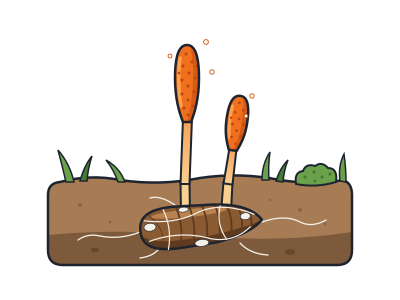
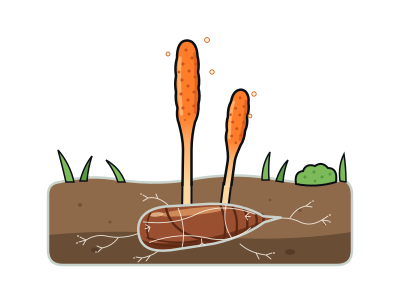
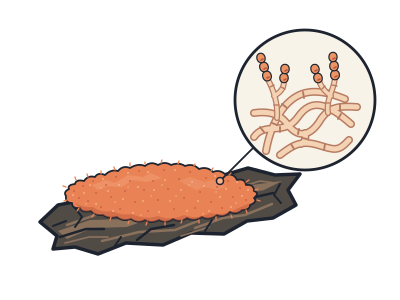
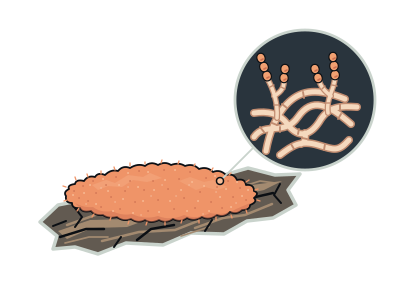
In late summer and autumn, small bright orange clubs sometimes poke up through short grass and moss. If you dig gently around one, you find something surprising. The club is usually growing out of a dead moth pupa buried in the soil. This fungus mainly attacks moth pupae, and sometimes caterpillars, underground. It fills the insect's body with its threads, then pushes its club up through the soil.
Each club is usually about 1 to 8 centimetres tall. The orange head is only about as thick as a pencil lead. Its surface is grainy, with tiny raised pores. A paler stalk joins it to the pupa below.
Today this fungus is also farmed. Growers in China, Vietnam, Taiwan and Indonesia raise it on rice, silkworm pupae or a nutrient liquid. It is sold as a cheaper stand-in for the costly wild Himalayan caterpillar fungus, but the two are only distant relatives.
People often mix it up with the zombie-ant fungus, which inspired the game 'The Last of Us'. Both are flask fungi that attack insects, but they belong to different families. This one is not known for making insects climb like 'zombies', and neither fungus is known to infect people.
Named by Linnaeus
Carl Linnaeus first described it in 1753. It is the species the whole genus name is anchored to, and that name means 'club-head'.
A famous chemical
In 1950 scientists first took a chemical called cordycepin from this fungus. It is a near-copy of one of the building blocks of genetic material.
Britain's most common one
At least a dozen species in its genus have been recorded in Britain and Ireland, and this one is the most common. It is still hard to spot, because the clubs are usually shorter than the grass around them.
Next to it on the tree
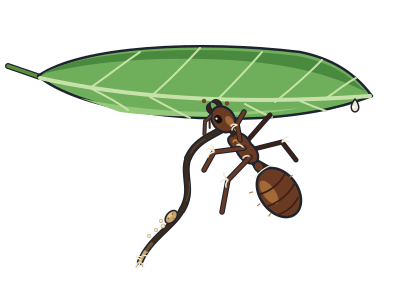
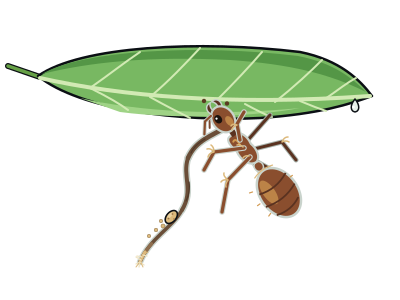
- Zombie-ant fungusSteers an infected ant up a plant to bite a leaf, then sprouts from its head.
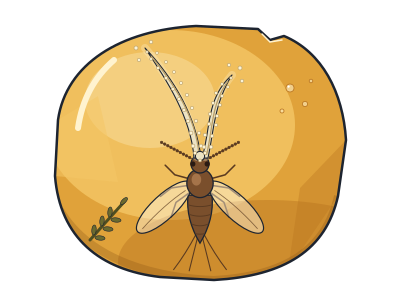
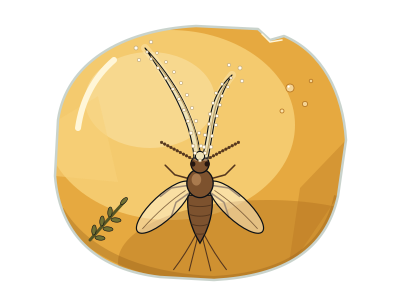
- Amber insect-parasite fungusTwo tiny stalks sprouting from a scale insect's head, frozen in amber since the dinosaurs.
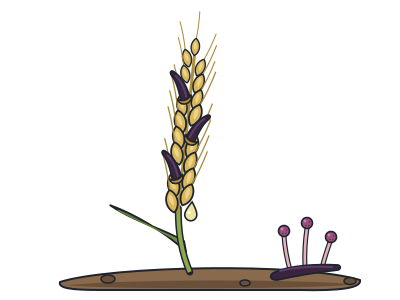
- ErgotDark spurs on rye that once poisoned whole villages and later gave medicines.
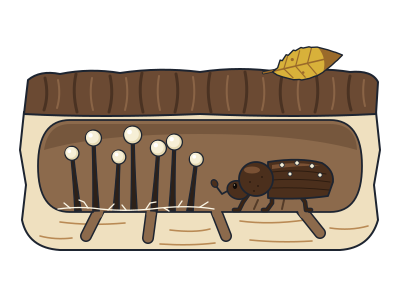
- Dutch elm disease fungusSpread by bark beetles, it killed most of the tall elms of Europe and North America.
- Red bread mouldAn orange mould that helped prove each gene makes a protein.
- Rice blast fungusPunches into rice leaves with enormous pressure; it destroys enough rice to feed millions.