An extinct group
Sea scorpions †
Eurypterida
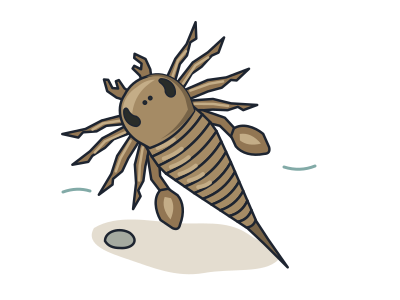
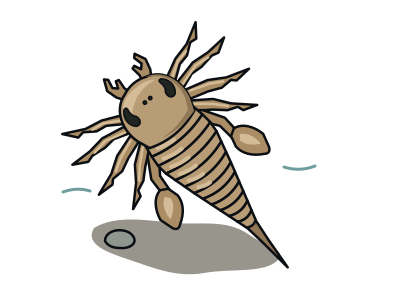
Ancient spider relatives, some longer than a person
This branch is shown at about 479 million years ago; its age is a rough estimate.
Lived about 479–252 million years ago.
You and sea scorpions meet in the Two-sided animals branch, shown at about 580 million years ago (on 11 November, in a calendar from life's shared ancestor to today).
Sea scorpions belonged to the same broad family branch as spiders, scorpions and horseshoe crabs, but they were not true scorpions. Some were estimated to grow longer than a person. Fossils showed they lived at least as far back as about 479 million years ago. They had disappeared by about 252 million years ago.
Despite their name, they did not all live in the sea. Early members inhabited ancient seas, while later members also occupied partly salty water and freshwater. Different kinds lived in different settings, including rivers and swamps. They came in many sizes and body shapes.
One branch had broad swimming paddles on its rearmost pair of head limbs. The other main branch had walking limbs instead. One giant, Jaekelopterus, was estimated to reach about 2.5 metres in body length. That impressive length was calculated from an incomplete fossil claw, rather than measured from a whole preserved animal.
Hundreds of kinds
About 250 different kinds of sea scorpion were known from fossils.
A state fossil
Eurypterus remipes was chosen as New York's official state fossil.
Different tail tips
Tail tips varied between groups: some were pointed, while others were paddle-shaped. A pointed tail did not establish that the animal could sting.
Inside sea scorpions
- Giant sea scorpionA sea scorpion estimated to reach 2.5 metres, among the largest joint-legged animals known.
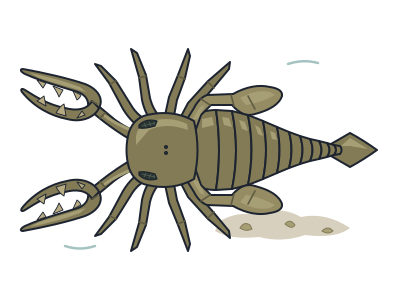
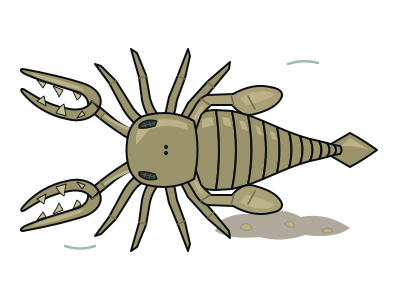
- EurypterusThe most common sea scorpion, a paddle-swimming hunter and New York's state fossil.
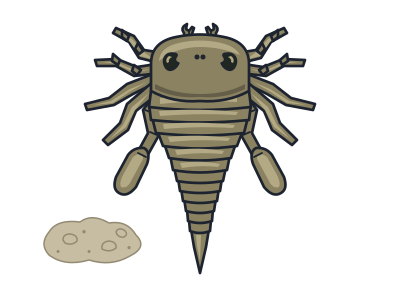
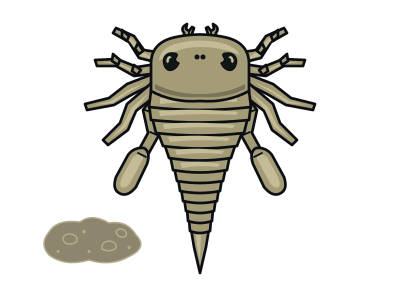
- MegarachneWas hailed as the biggest spider ever, until a better fossil showed it was a sea scorpion.
Next to it on the tree
- Atlantic horseshoe crabNot a crab but a spider cousin, with blue blood used to test medicines.
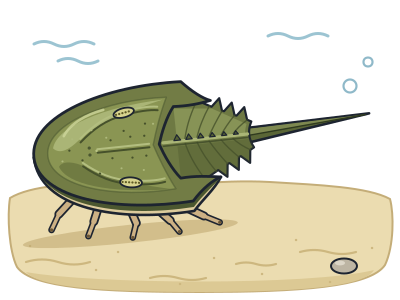
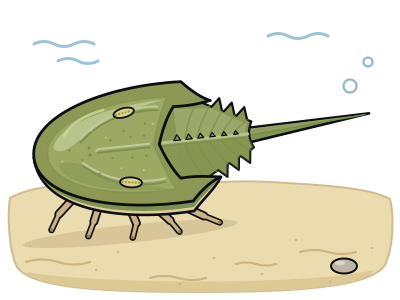
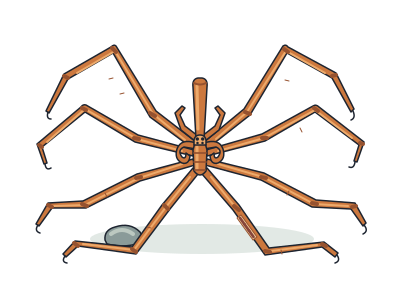
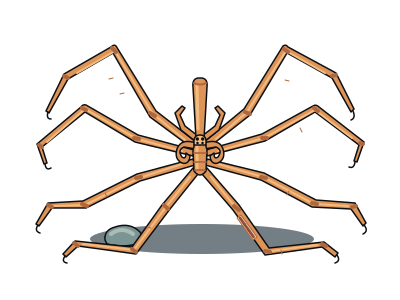
- Giant sea spiderA leggy sea creature so thin its gut runs down its legs; it pumps blood with its gut.
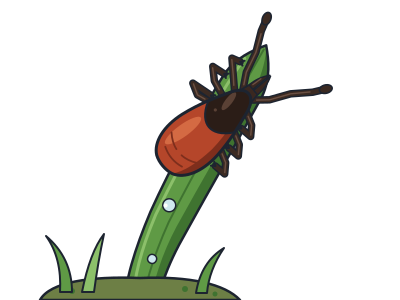
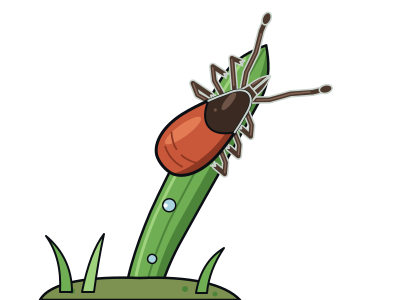
- Castor bean tickA blood-sipping mite relative that waits on grass with its front legs held out.
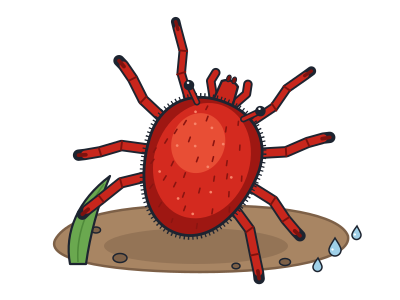
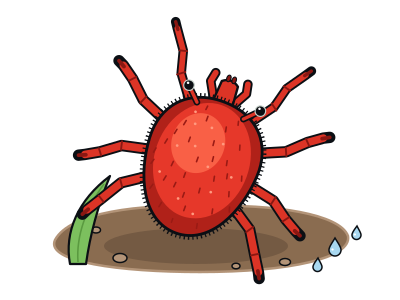
- Red velvet miteA bright red, fuzzy mite that appears after rain, like a tiny walking cushion.
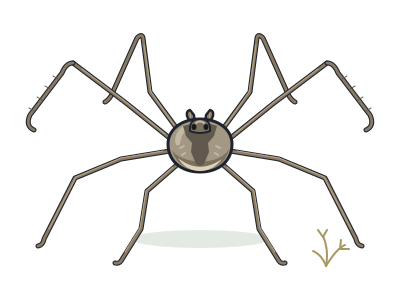
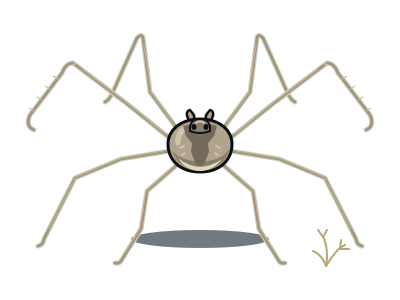
- HarvestmanA 'daddy longlegs' with one body blob and no venom or silk; not a spider.
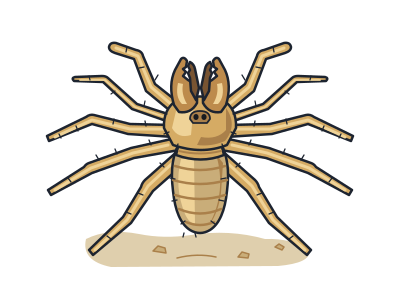
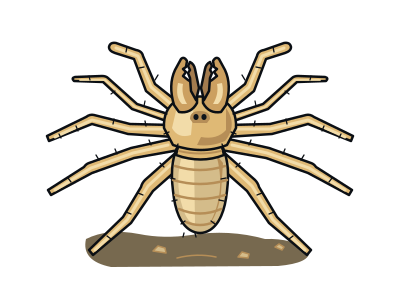
- Camel spiderA fast desert hunter with huge jaws; neither a spider nor a scorpion.
- Spiders, scorpions and kinArachnids that breathe with book lungs, stacked like pages, inherited from a shared ancestor.
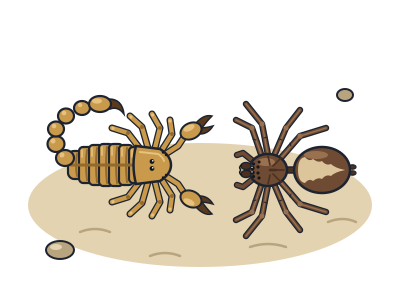
- Book scorpionA tiny tailless scorpion look-alike that hunts book lice in old libraries and hitchhikes on flies.