A group of living things
Sea anemones
Actiniaria
A soft-bodied relative of corals that looks like a flower but stings its prey.
This branch is shown at about 380 million years ago; its age is a rough estimate.
You and sea anemones meet in the Animals branch, shown at about 700 million years ago (on 1 November, in a calendar from life's shared ancestor to today).
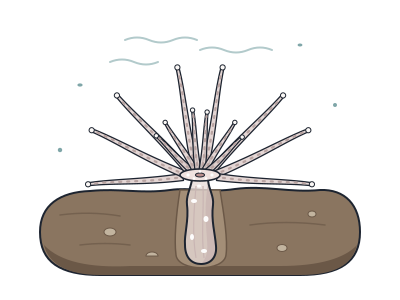
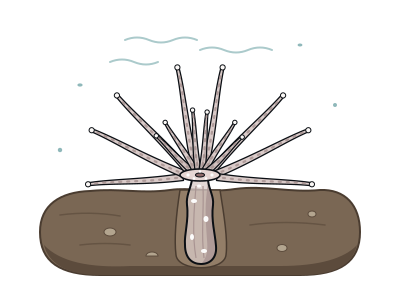
A sea anemone looks like a flower growing on a rock, but it is an animal, and it has no skeleton at all. Its body is a soft column held down by a sticky base. On top is a ring of tentacles around a mouth. Its nearest relatives on the tree are the corals, and jellyfish are cousins further out. Like a coral, an anemone is a polyp. Unlike many corals, it builds no hard skeleton, and each anemone is a separate animal, not part of a joined colony.
Those soft tentacles are packed with stinging cells. If a small animal brushes against them, the cells fire tiny harpoon-like threads that inject venom, and the prey stops moving. The anemone then pulls its meal into its gut. The gut has only one opening, so the mouth is also its bottom. Most anemones are harmless to people, but a few tropical ones have caused bad stings.
There are about 1,000 kinds, living in seas all over the world, from rock pools to the deep sea. Most stay in one place or creep slowly on their base. Most are about 1 to 5 cm across, but a few giants are more than a metre wide.
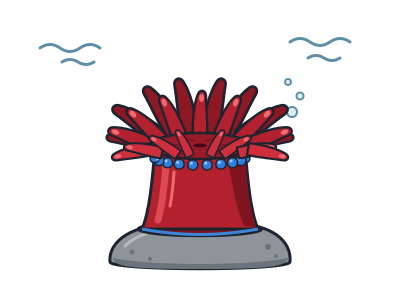
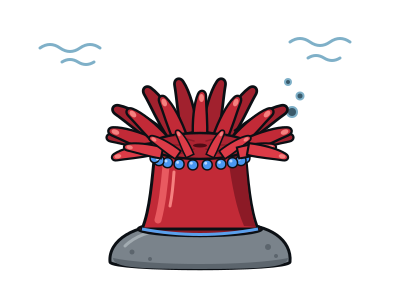
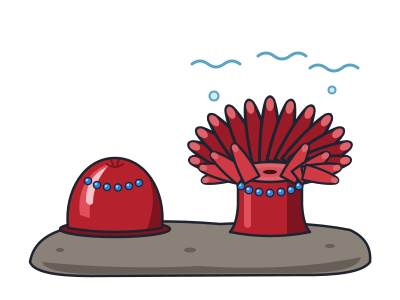
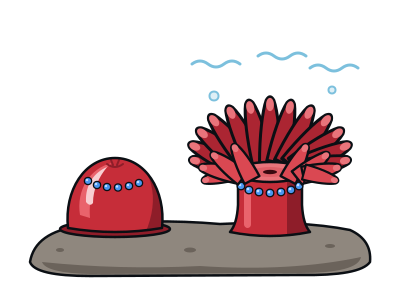
The red beadlet anemone of European rock pools has a ring of bright blue beads below its tentacles. It uses them to fight other anemones for its patch of rock.
Clownfish lodgers
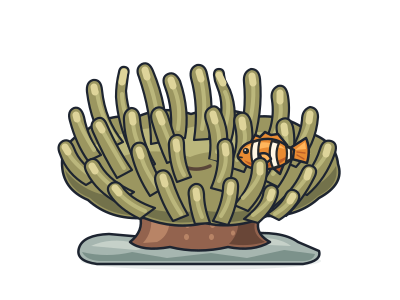
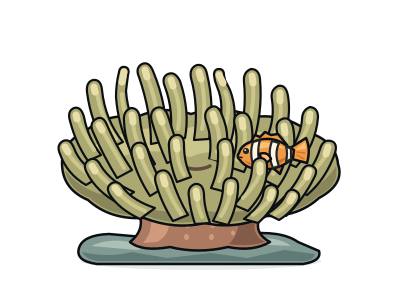
Clownfish shelter among the stinging tentacles of some anemones. A coat of mucus protects the fish, and the anemone gets leftover scraps of the clownfish's food.
Two ways to make more
Sea anemones can breed by mating. They can also make copies of themselves by budding or splitting in two.
Sun-powered partners
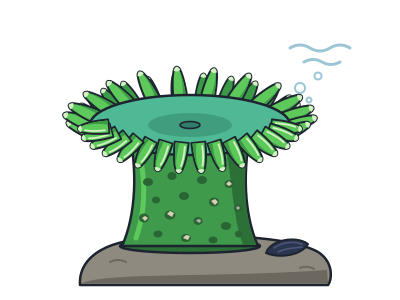
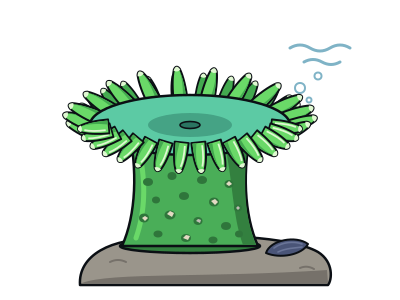
Many anemones have tiny algae living inside them. The algae make food from sunlight and share it with the anemone. The giant green anemone gets part of its green colour from these algae.
Inside sea anemones
- Magnificent sea anemoneA flower-like animal with stinging tentacles that clownfish shelter in, unharmed.
- Beadlet anemoneA blob of red jelly at low tide that opens into a flower when the sea returns.
- Giant green anemoneGlows bright green on Pacific shores and can live for many decades.
- Starlet sea anemoneA pinhead-sized anemone from salt marshes that helps scientists study how bodies are built.
Next to it on the tree
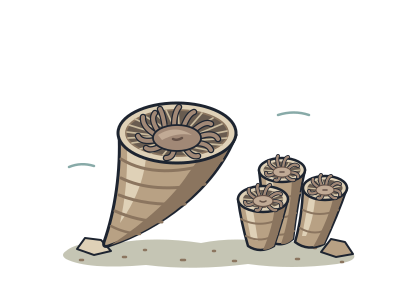
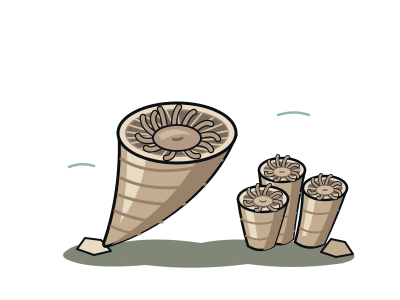
- Horn coralsHorn-shaped corals that built reefs for 200 million years and died out in the greatest mass extinction.
- Stony coralsTiny polyps that build limestone cups, together raising reefs big enough to see from space.
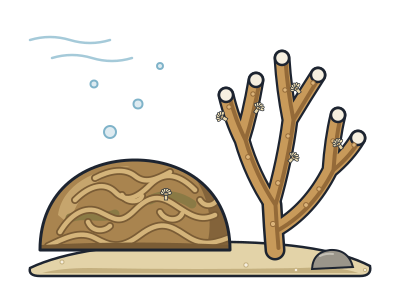
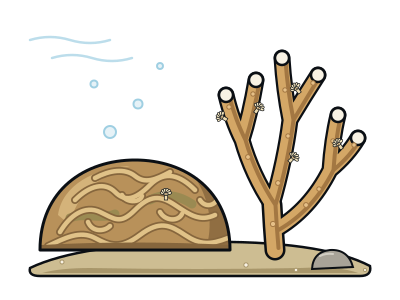
- Soft corals and sea fansCorals whose polyps each have exactly eight feathery tentacles, from sea fans to sea pens.
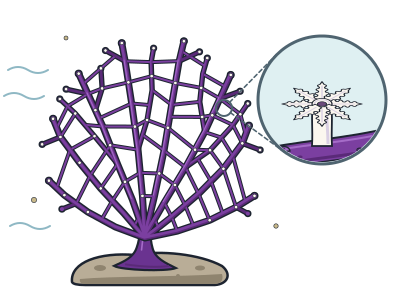
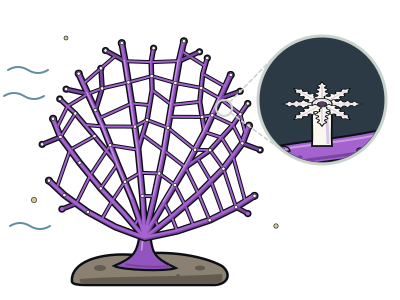
- Black coralSome colonies have been growing for over 4,000 years, making them among the oldest animals on Earth.
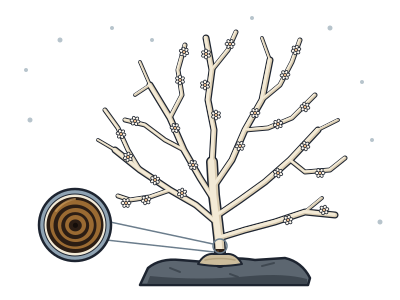
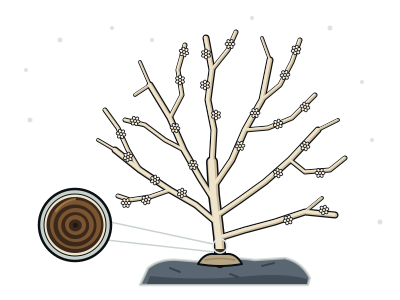
- Honeycomb coralsAncient colonial corals built of tightly packed tubes, often looking like fossil honeycomb.