A species
Magnificent sea anemone
Heteractis magnifica
A living shelter with a sting
You and the magnificent sea anemone meet in the Animals branch, shown at about 700 million years ago (on 1 November, in a calendar from life's shared ancestor to today).
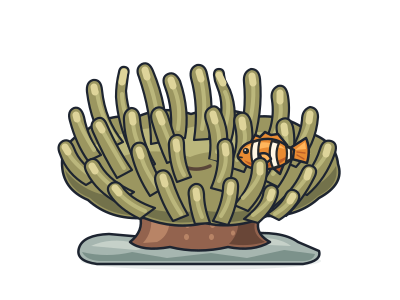
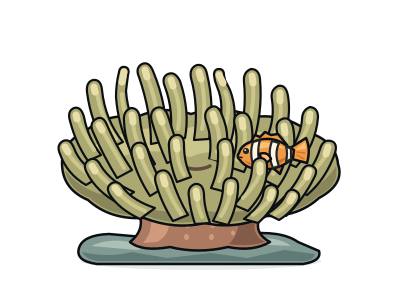
The magnificent sea anemone looks like a flower, but it is an animal with stinging tentacles. Clownfish shelter among them, unharmed, while the stings help keep predators away. Protective mucus on the fish's skin helps make this possible. The anemone has not switched its stings off. Despite its flowery appearance, it belongs with corals and jellyfish, not plants.
Those tentacles also catch food. They capture small animals, including fish and shrimps, and bring them towards a central mouth. But hunting is only part of the food supply. Tiny algae living inside the anemone use sunlight to make sugars, which they share with their host.
This anemone lives on tropical Indo-Pacific reefs, including northern Australia. A sticky disc beneath its body anchors it to a hard surface. It usually sits out in the open on reef rock or a coral boulder, rather than hiding its body in sand.
Not stuck forever
It can creep along on its attachment disc to change position.
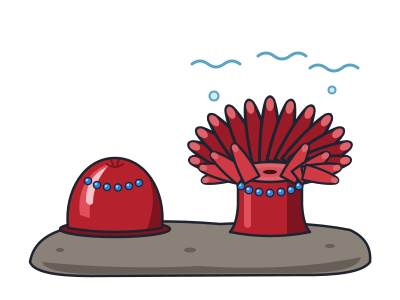
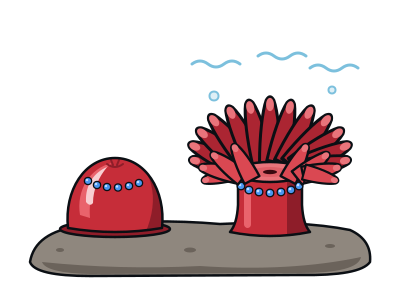
A smaller shape
It can pull itself into a rounded form, leaving only a small tuft of tentacles showing.
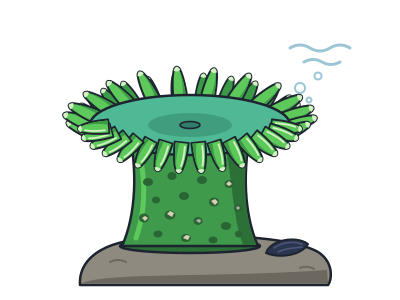
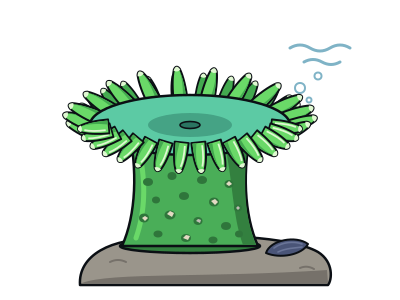
Finger-like tentacles
Its tentacles reach about 7.5 centimetres long. Some have forked ends.