A species
Giant green anemone
Anthopleura xanthogrammica
A bright-green flower of the tide pools that is really a long-lived animal
You and the giant green anemone meet in the Animals branch, shown at about 700 million years ago (on 1 November, in a calendar from life's shared ancestor to today).
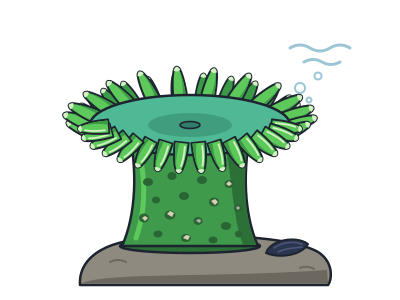
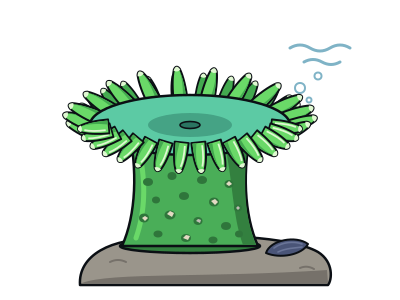
In sunlit tide pools on the Pacific coast of North America, this anemone can look a vivid, almost glowing green. It looks like a flower, but it is an animal, a relative of jellyfish and corals. It can also live a very long time. One kept in human care reached about 80 years old.
Its green comes from two places. The anemone makes its own green pigment in its skin, and tiny algae live inside its body. The algae make food from sunlight and share it with their host. The pigment is thought to shade them from too much light. Anemones living in caves or shade have few algae and look paler.
It is one of the largest sea anemones on the Pacific coast of North America, about as wide as a dinner plate. It lives from Alaska to southern California, often near mussel beds. Its main food is mussels that get knocked loose from the rocks above, and some anemones sit just below the beds to catch them as they fall. Stinging cells in its tentacles stun its prey. To a person, a touch feels like nothing more than a slight sticky tingle.
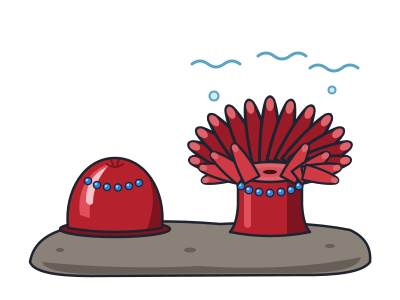
On the tree it sits with other sea anemones. The beadlet anemone, shown beside it, belongs to the same family.
Not quite stuck
It usually stays fixed to a rock, but it can creep slowly along on its sticky base.
Hunted in turn
Its predators include the leather star, which is a kind of sea star, along with a sea slug, small snails and a sea spider.
Deeper than you think
It is not just a tide pool animal. It also lives below the low-tide line, down to about 15 metres and perhaps as deep as 30 metres.
Next to it on the tree
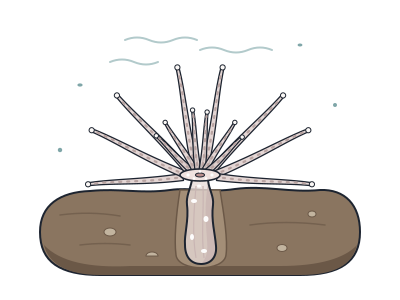
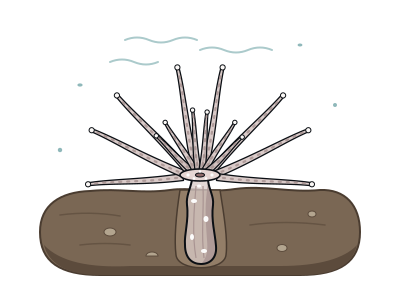
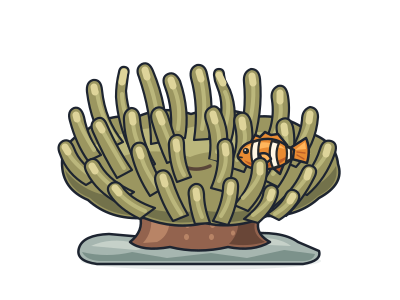
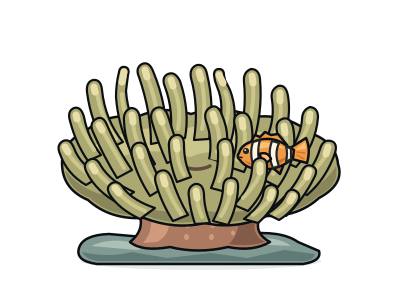
- Magnificent sea anemoneA flower-like animal with stinging tentacles that clownfish shelter in, unharmed.
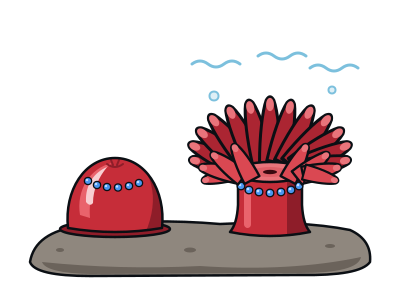
- Beadlet anemoneA blob of red jelly at low tide that opens into a flower when the sea returns.
- Starlet sea anemoneA pinhead-sized anemone from salt marshes that helps scientists study how bodies are built.