A species
Beadlet anemone
Actinia equina
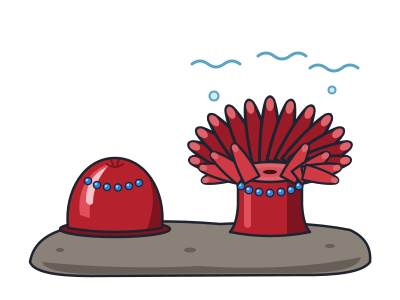
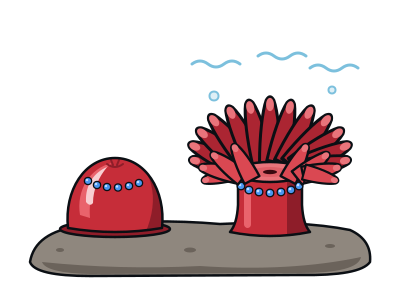
A blob of red jelly at low tide that opens into a stinging flower when the sea comes back.
You and the beadlet anemone meet in the Animals branch, shown at about 700 million years ago (on 1 November, in a calendar from life's shared ancestor to today).
At low tide, look along a rocky shore and you may spot shiny blobs of jelly stuck to the rocks, usually red but sometimes brown, green or orange. They look a bit like dropped sweets. But when the sea comes back and covers them, each blob opens into something like a flower, with up to 192 short, thick tentacles arranged in six rings.
It is not a flower at all. It is an animal, and a hunter. Its tentacles sting and catch passing prey, such as small crabs, shrimps and small fish. That sting shows who its relatives are. Sea anemones belong to the same animal group as jellyfish and corals, and all of them have stinging cells that fire tiny harpoon-like threads. Anemones and corals live as a tube stuck down at one end with the mouth facing up, while the jellyfish most people know swim about as a bell.
Just below the tentacles is a ring of bright blue bumps, like a string of beads. They give the anemone its name. These beads are weapons packed with stinging cells. When the tentacles of two neighbours touch, they may fight over space on the rock, and the loser crawls away or lets go.
Born as tiny anemones
Beadlet anemones give birth to live young. Up to about 100 babies grow inside one adult's body and come out as tiny, ready-made anemones.
Tough enough for the shore
It copes with heat, drying out and water that keeps changing how salty it is. It can even live in estuaries, where rivers meet the sea.
A very long coastline
It lives on every coast of Britain and Ireland and along western Europe, from the Arctic down to near the equator off West Africa.
Next to it on the tree
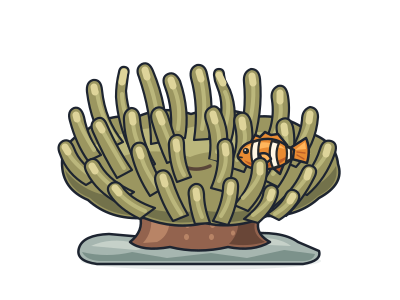
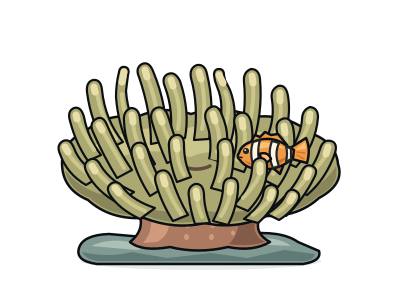
- Magnificent sea anemoneA flower-like animal with stinging tentacles that clownfish shelter in, unharmed.
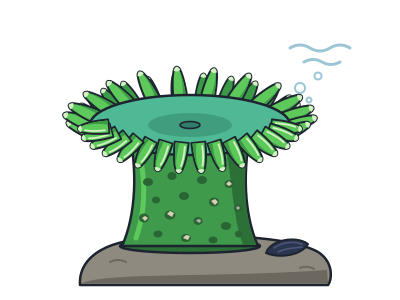
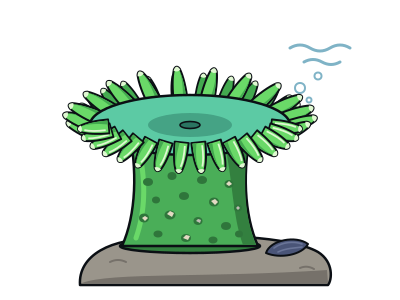
- Giant green anemoneGlows bright green on Pacific shores and can live for many decades.
- Starlet sea anemoneA pinhead-sized anemone from salt marshes that helps scientists study how bodies are built.