A group of living things
Stony corals
Scleractinia
Tiny animals in limestone cups that together build reefs you can see from space.
This branch is shown at about 420 million years ago; its age is a rough estimate.
You and stony corals meet in the Animals branch, shown at about 700 million years ago (on 1 November, in a calendar from life's shared ancestor to today).
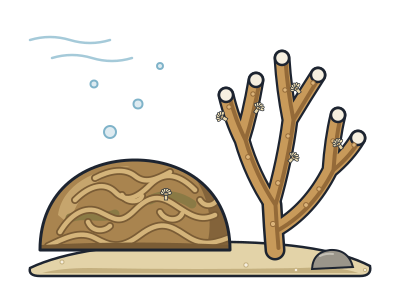
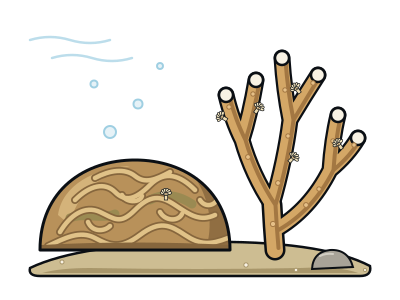
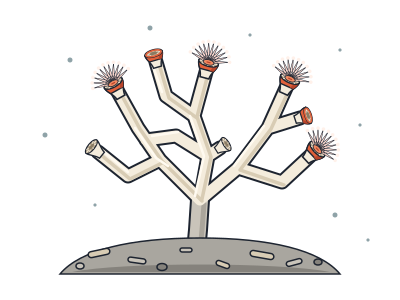
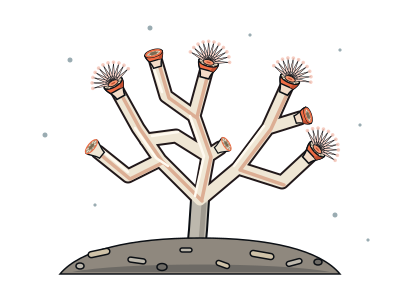
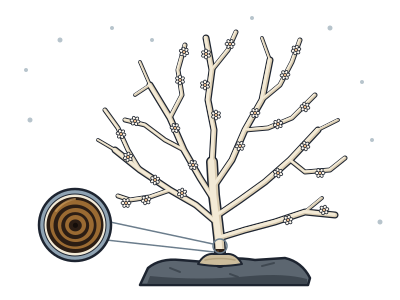
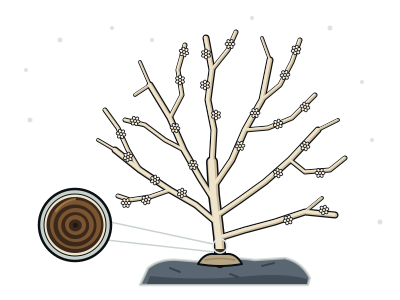
A stony coral is made of polyps. These are soft animals, and in most reef colonies each one is smaller than a grain of rice. A polyp looks like a tiny sea anemone, with a tube-shaped body, one mouth on top and a ring of stinging tentacles. Underneath, it builds a hard cup of limestone. A colony can hold anywhere from hundreds to hundreds of thousands of polyps, and many colonies together build whole reefs. The Great Barrier Reef is made of about 3,000 reefs. It stretches more than 2,000 km and can be seen from space.
So corals are not plants or rocks. They are animals, related to sea anemones and jellyfish. Here is a surprise: long ago, the extinct horn corals and honeycomb corals built reefs too, but stony corals are probably not their close cousins. Stony corals most likely came from an anemone-like ancestor and later took over the reef-building job.
Many stony corals also share their bodies with tiny algae. The algae make food from sunlight and pass up to about 90% of it to the coral. They also give corals their colours. When the water gets too hot, corals can push the algae out and turn white. This is called bleaching. If it goes on too long, the coral can starve.
A pattern of six
The ridges inside each stony coral cup are arranged in sixes. That is why these corals are also called hexacorals, and it helps tell them apart from the extinct horn corals.
Bigger than many countries
The Great Barrier Reef covers about 350,000 square kilometres and includes about 900 islands.
Busy tentacles
A polyp's stinging tentacles catch small animals to eat. The polyp also uses them to defend itself and to sweep away bits of debris.
Inside stony corals
Next to it on the tree
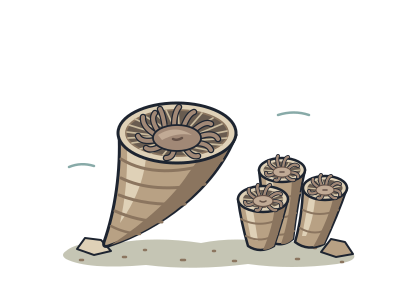
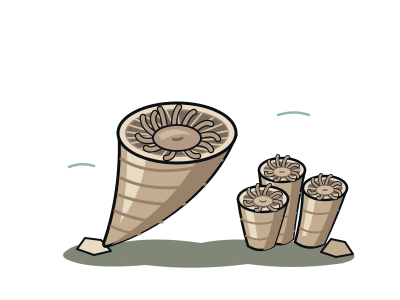
- Horn coralsHorn-shaped corals that built reefs for 200 million years and died out in the greatest mass extinction.
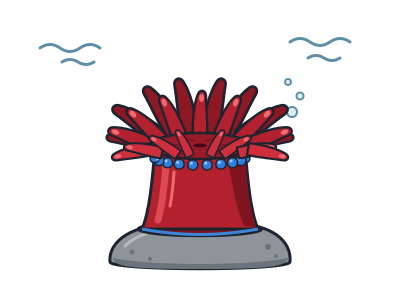
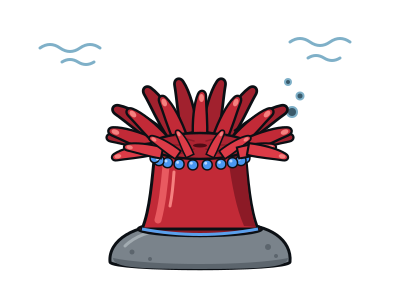
- Sea anemonesSoft polyps with no skeleton that sit like flowers on rocks and sting what touches them.
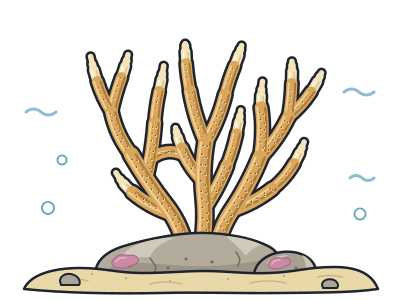
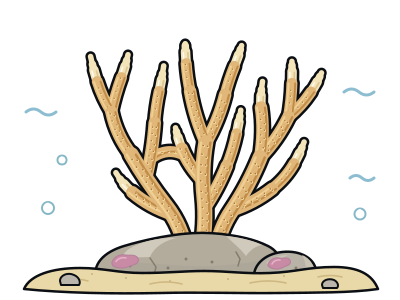
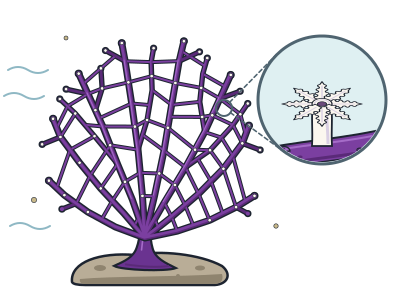
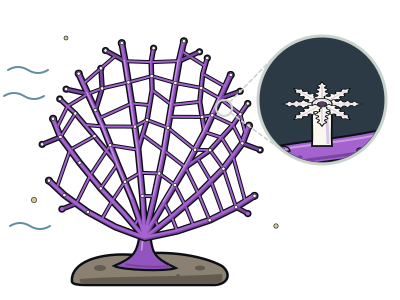
- Soft corals and sea fansCorals whose polyps each have exactly eight feathery tentacles, from sea fans to sea pens.
- Black coralSome colonies have been growing for over 4,000 years, making them among the oldest animals on Earth.
- Honeycomb coralsAncient colonial corals built of tightly packed tubes, often looking like fossil honeycomb.