A species
Black coral
Leiopathes glaberrima
A deep-sea 'tree' of tiny animals that can keep growing for thousands of years
You and the black coral meet in the Animals branch, shown at about 700 million years ago (on 1 November, in a calendar from life's shared ancestor to today).
Some black coral colonies started growing around the time of the Roman Empire. One colony off Sardinia was about 2,000 years old, yet its base was only about 4 cm across. In the Gulf of Mexico, black corals from the same genus have grown nonstop for at least 2,000 years. Close Hawaiian relatives, once counted as this same species, have been dated to more than 4,000 years. That makes them among the oldest living things known in the sea.
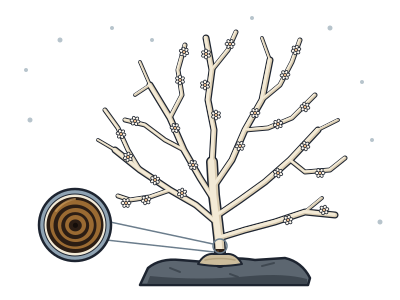
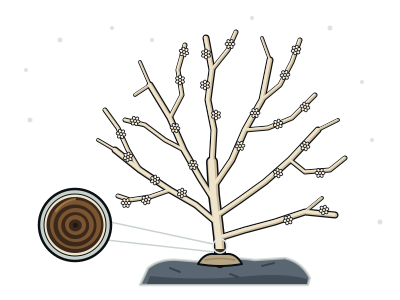
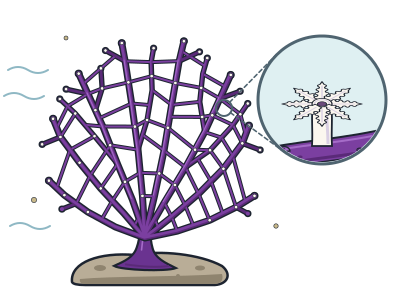
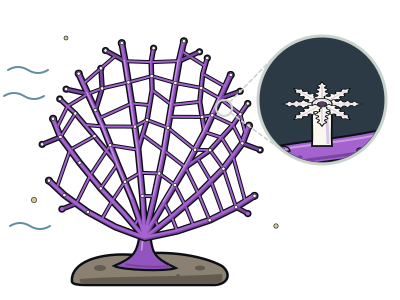
It looks like a little tree, but it is a colony of tiny animals called polyps, each with six short tentacles. Its relatives include sea anemones and stony corals. Stony corals build hard skeletons of limestone. Black coral builds a flexible, horn-like skeleton instead. When alive, it is not black at all. The skin is white, cream or orange. Only the skeleton underneath is dark.
It grows on rock, usually hundreds of metres down, where little or no sunlight reaches. You can find it in the western Mediterranean and the North Atlantic, usually where currents are strong. The polyps probably catch tiny drifting animals and bits of food sinking from the surface far above. Dense black coral 'forests' shelter crabs, lobsters and fish. In the Mediterranean it is endangered. Trawling and lost fishing nets can break colonies that took centuries to grow, and climate change is another threat.
The smoothest one
A coat of mucus makes the colony feel smooth. Its species name means 'smoothest'.
A shark nursery
In the Strait of Sicily, small-spotted catsharks lay their egg cases among black coral forests.
Rings like a tree
The skeleton is laid down in layers, much like tree rings. In black corals from the same genus in the Gulf of Mexico, a new ring seems to form each year, and ring counts matched the radiocarbon ages.
Next to it on the tree
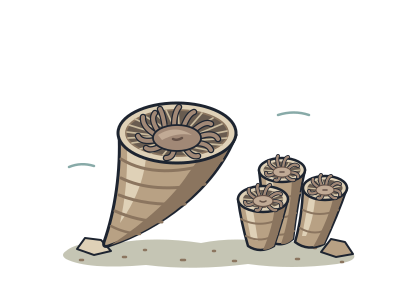
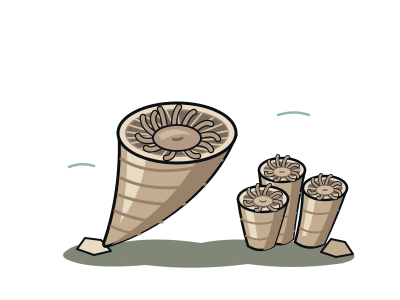
- Horn coralsHorn-shaped corals that built reefs for 200 million years and died out in the greatest mass extinction.
- Stony coralsTiny polyps that build limestone cups, together raising reefs big enough to see from space.
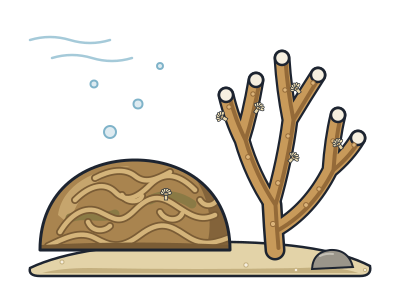
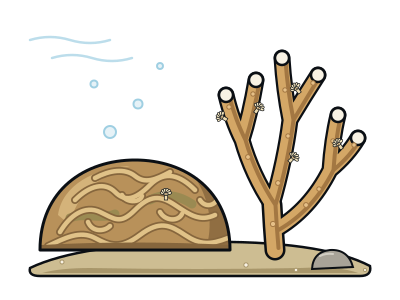
- Sea anemonesSoft polyps with no skeleton that sit like flowers on rocks and sting what touches them.
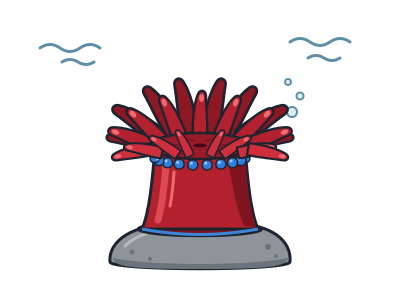
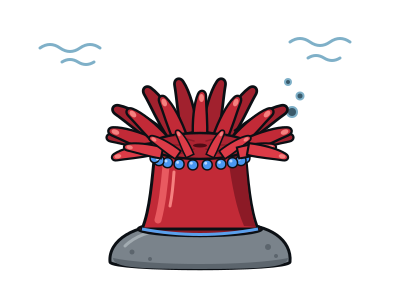
- Soft corals and sea fansCorals whose polyps each have exactly eight feathery tentacles, from sea fans to sea pens.
- Honeycomb coralsAncient colonial corals built of tightly packed tubes, often looking like fossil honeycomb.