A group of living things
Soft corals and sea fans
Octocorallia
Eight feathery tentacles on every feeding polyp, from sea fans to sea pens.
This branch is shown at about 450 million years ago; its age is a rough estimate.
You and soft corals and sea fans meet in the Animals branch, shown at about 700 million years ago (on 1 November, in a calendar from life's shared ancestor to today).
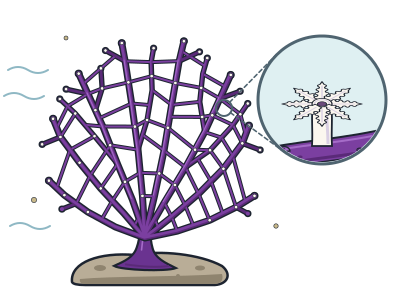
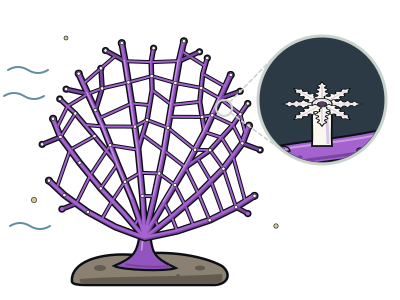
Look closely at a soft coral or a sea fan and you will see thousands of tiny polyps. Each feeding polyp has eight tentacles, never seven and never nine, and they are usually feathery. This eight-part plan runs through the whole group, from lacy sea fans to sea pens standing in the mud. There are more than 3,000 kinds.
They may look like plants, but they are animals. Like their relatives the stony corals, sea anemones and jellyfish, they have tentacles with stinging cells that catch tiny drifting food. Each polyp works like a little stomach with a single opening, used both to eat and to get rid of waste. Almost all of them live in colonies, so a sea fan is not one animal but thousands joined together.
Many have no solid skeleton. Instead, tiny spiny chalky pieces are scattered through their flesh. These make it gritty and help put off predators. Sea fans can sway in the waves because their skeleton is made of a tough, bendy protein, with tiny chalky pieces as well.
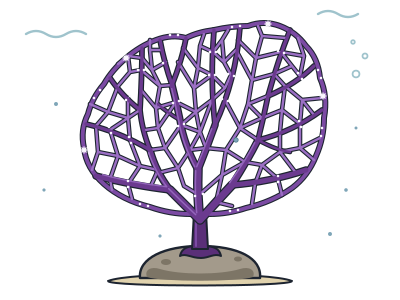
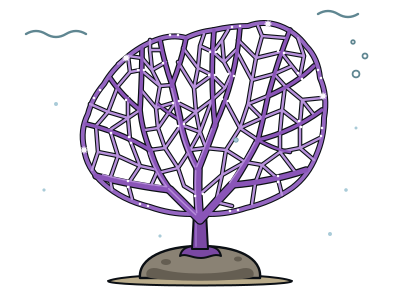
The common sea fan on Caribbean reefs is usually purple. It can grow about 1.8 metres tall, taller than most adults. It turns its flat fan across the moving water like a net and feeds mainly at night.
A glowing warning
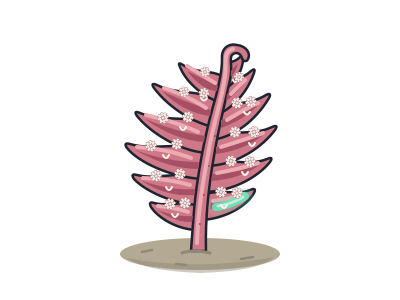
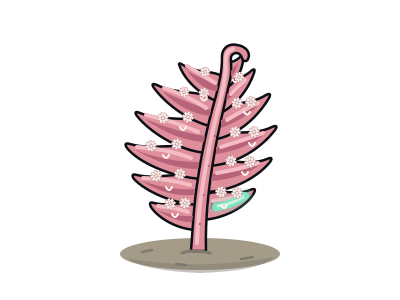
When something disturbs the phosphorescent sea pen, it glows blue-green, and the light ripples in waves along the colony. This is thought to startle predators.
Sunlight helpers
The common sea fan has tiny partner algae living inside it. They make food from sunlight and share it with the coral.
Telling them apart
Scientists often work out which species they are looking at by studying the tiny chalky pieces in a coral's flesh.
Inside soft corals and sea fans
- Phosphorescent sea penA feather-shaped colony of polyps that glows green when touched.
- Precious red coralIts blood-red skeleton has been carved into jewellery around the Mediterranean for thousands of years.
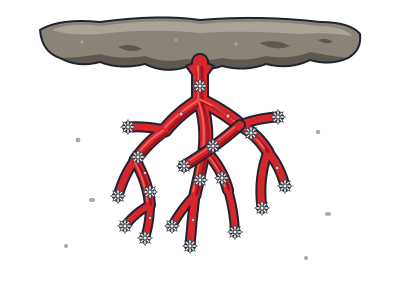
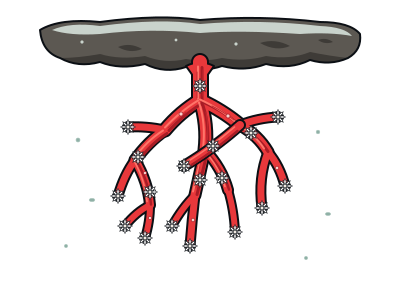
- Common sea fanA flat purple lattice that faces the current like a net, catching food as the water flows through.
Next to it on the tree
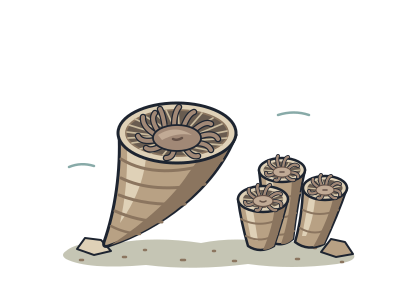
- Horn coralsHorn-shaped corals that built reefs for 200 million years and died out in the greatest mass extinction.
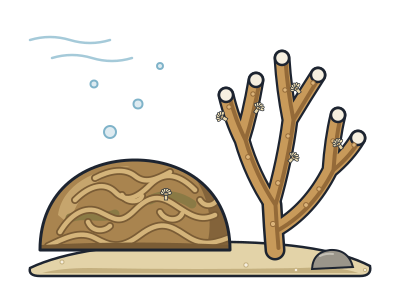
- Stony coralsTiny polyps that build limestone cups, together raising reefs big enough to see from space.
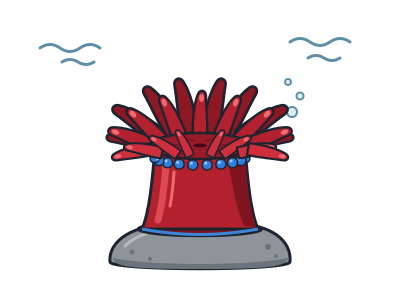
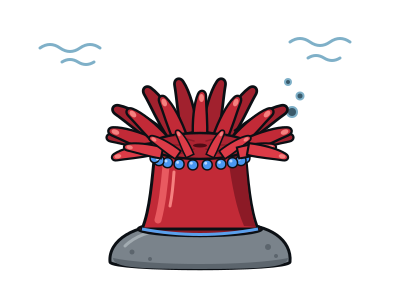
- Sea anemonesSoft polyps with no skeleton that sit like flowers on rocks and sting what touches them.
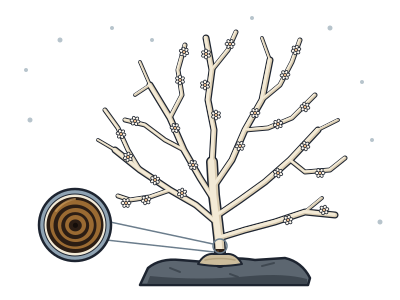
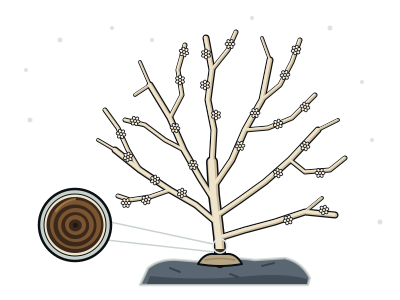
- Black coralSome colonies have been growing for over 4,000 years, making them among the oldest animals on Earth.
- Honeycomb coralsAncient colonial corals built of tightly packed tubes, often looking like fossil honeycomb.