A species
Precious red coral
Corallium rubrum
A small sea animal whose blood-red skeleton has been treasured as jewellery for thousands of years.
You and the precious red coral meet in the Animals branch, shown at about 700 million years ago (on 1 November, in a calendar from life's shared ancestor to today).
For thousands of years, people around the Mediterranean have carved this coral's blood-red skeleton into beads and charms. Coral jewellery has been found in ancient Egyptian burials and in prehistoric graves in Europe. About 2,000 years ago, red coral was traded all the way from the Mediterranean to India.
But this treasure comes from an animal. For centuries, many people thought it was a stone-like plant. In the 1700s a French doctor, Jean-André Peyssonnel, studied it closely and argued that it is an animal. At first, leading scientists in Paris doubted him.
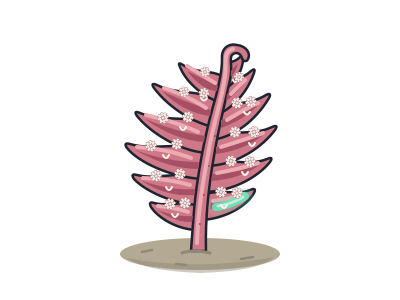
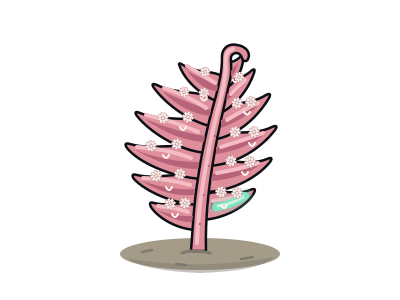
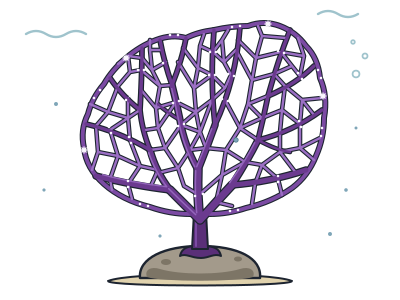
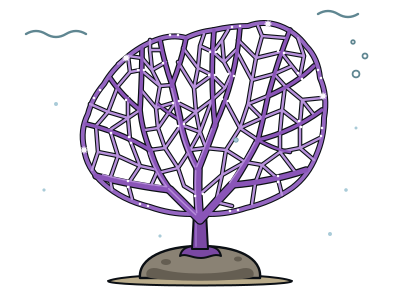
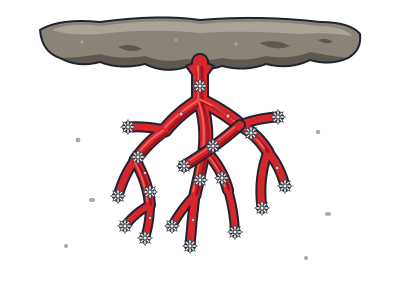
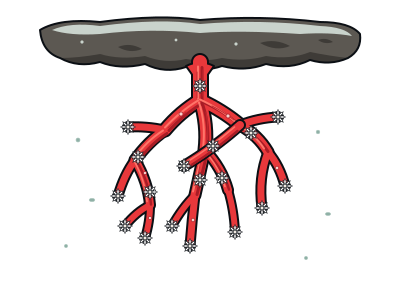
Each little bush is a colony of tiny white polyps dotted over red branches. Each polyp has eight tentacles for catching tiny drifting animals. Inside the branches is a hard red skeleton, made of the same mineral as chalk. This is the part that becomes jewellery. It is not one of the reef-building corals of tropical seas. It belongs with the soft corals and sea fans, so it is a relative of sea fans and sea pens.
Harvesting has taken a heavy toll. In fished areas, colonies up to 50 cm tall used to be common. Now more than 90% are only 3 to 5 cm tall, about the length of your thumb. In protected areas, colonies have become bigger and more numerous again.
Medicine for a king
People once believed red coral could heal. King Louis XIV of France was even prescribed it by his doctor.
A town of coral carvers
Torre del Greco, near Naples in Italy, set up a coral society in 1790 and opened its first coral factory in 1805. It is still famous for coral carving.
Lucky charm
Romans hung coral branches around children's necks to protect them. In 20th-century Italy, people still wore coral to ward off the 'evil eye'.