An extinct group
Horn corals †
Rugosa
Horn-shaped homes from a lost world of reefs
Lived about 460–252 million years ago.
You and horn corals meet in the Animals branch, shown at about 700 million years ago (on 1 November, in a calendar from life's shared ancestor to today).
Horn corals belonged to the same wider animal group as today's corals and sea anemones. Some helped build reefs, yet all disappeared in Earth's greatest known mass extinction. Their fossils recorded a history from about 460 to 252 million years ago — roughly 200 million years.
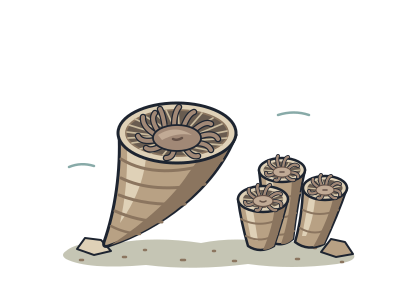
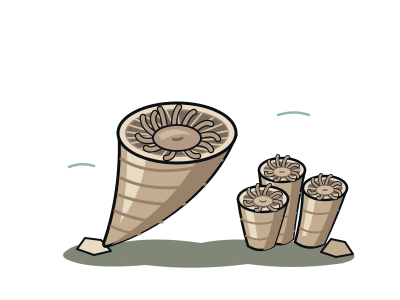
Many lived alone, leaving curved skeletons shaped like cow or goat horns. These fossils were not teeth or actual horns: they were the hard homes of sea animals. Each solitary horn housed one animal, rather than a whole crowd. Other members grew together in colonies. Their skeletons formed bundles of neighbouring tubes or solid masses with repeating patterns.
Fossils showed hollow cups at the tops of their skeletons. From these remains, scientists reconstructed soft animals that occupied the cups. Colony-forming members were important reef builders during the Devonian, when horn corals reached their greatest variety. But not every member lived on a reef. The group inhabited ancient seas, and its entire story ended about 252 million years ago.
A name from wrinkles
Wrinkles on the outer walls of their skeletons gave the group its scientific name.
Patterns in a pebble
Michigan's Petoskey stones were rounded pieces of colonial horn coral, often polished to reveal their repeating patterns.
Four, not six
Their main internal skeletal plates followed a four-part arrangement, unlike the six-part arrangement of modern stony corals.
Next to it on the tree
- Stony coralsTiny polyps that build limestone cups, together raising reefs big enough to see from space.
- Sea anemonesSoft polyps with no skeleton that sit like flowers on rocks and sting what touches them.
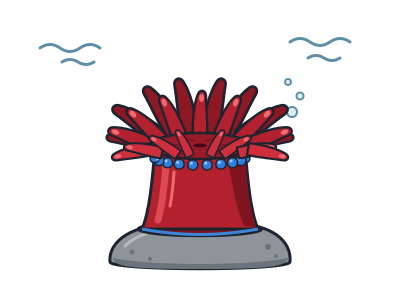
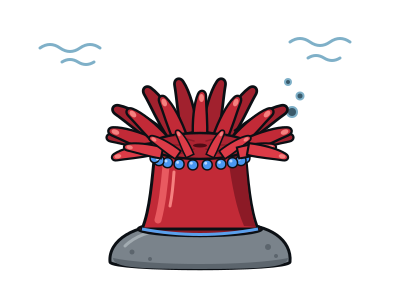
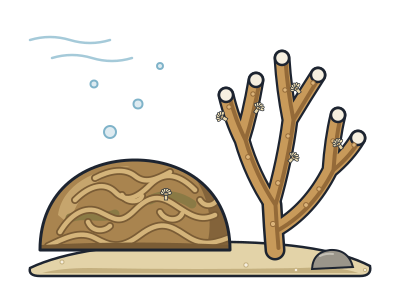
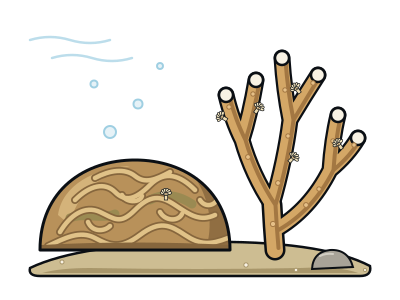
- Soft corals and sea fansCorals whose polyps each have exactly eight feathery tentacles, from sea fans to sea pens.
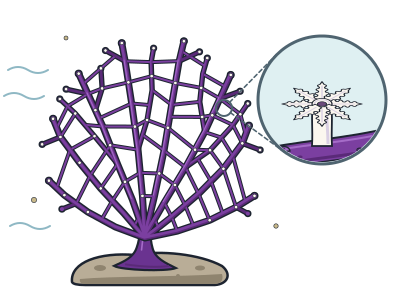
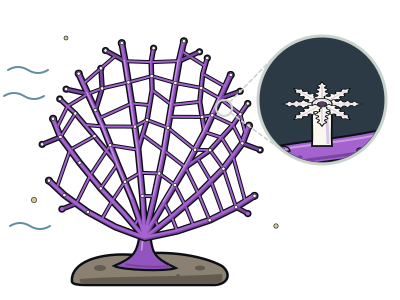
- Black coralSome colonies have been growing for over 4,000 years, making them among the oldest animals on Earth.
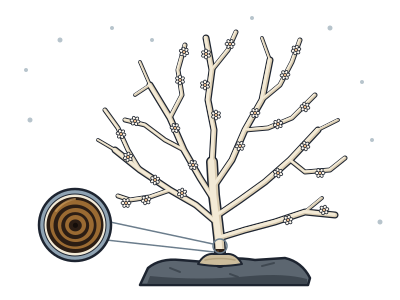
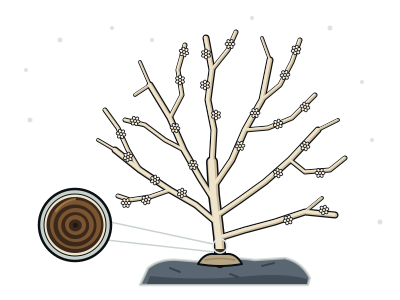
- Honeycomb coralsAncient colonial corals built of tightly packed tubes, often looking like fossil honeycomb.