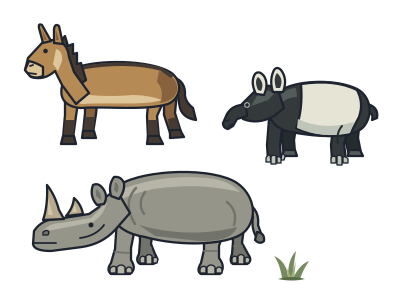
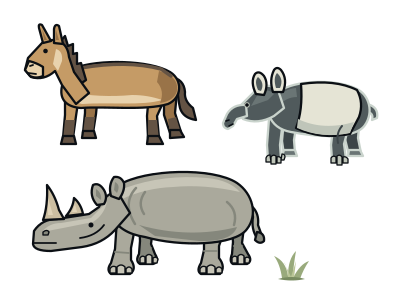
A group of living things
Odd-toed hoofed mammals
Perissodactyla
One toe, three toes—and a four-toed surprise
This branch is shown at about 56 million years ago; its age is a rough estimate.
You and odd-toed hoofed mammals meet in the Placental mammals branch, shown at about 95 million years ago (on 23 December, in a calendar from life's shared ancestor to today).
Horses, rhinos and tapirs belong to the same group of hoofed mammals, often called ‘odd-toed’. A horse walks on one main toe per foot and a rhino on three. But tapirs break the counting rule: they have four toes on each front foot and three on each back foot.
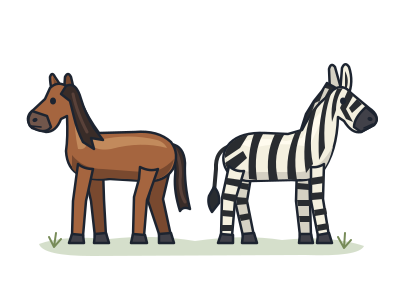
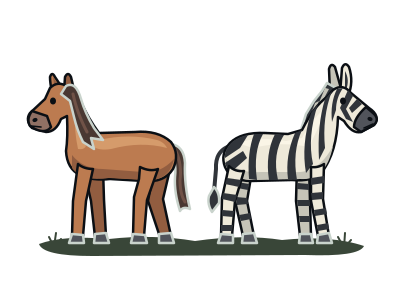
The better clue is how their feet are built: around an enlarged middle toe. A horse’s single hoof surrounds that toe—it is not a foot without toes. Zebras and donkeys belong here too. Within this group, tapirs and rhinos are more closely related to each other than either is to horses.
These relatives have different ways of gathering plant food. A tapir’s short, flexible trunk is made from its nose and upper lip. It pulls leaves and fruit towards the mouth. White rhinos crop grass with broad mouths, while black rhinos pick leaves and twigs with a pointed, grasping upper lip.
A horn without bone
Rhino horn has no bony core. It is made of the same material as our hair and fingernails.
Stripy youngsters
Baby tapirs have pale spots and stripes on a brown coat, even when their parents have very different adult colours.
Forest seed carriers
Tapirs help spread forest plants by carrying seeds in their dung.
Inside odd-toed hoofed mammals
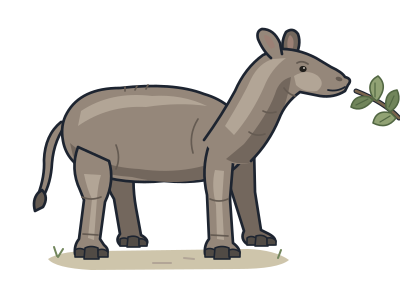
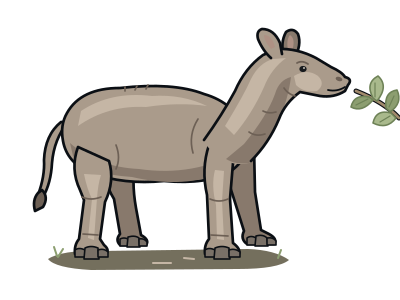
- ParaceratheriumA hornless giant rhino relative; the largest reconstructed individuals reach about five metres at the shoulder.
- Malayan tapirBlack-and-white "split" colouring and a short trunk for grabbing leaves.
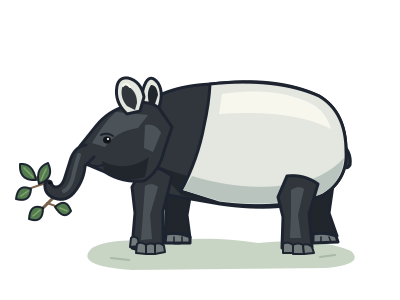
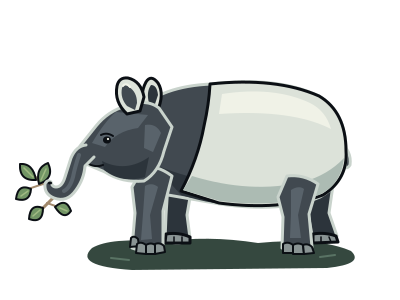
- Horses, zebras and donkeysEvery living horse, zebra and donkey shares an ancestor about four million years ago.
- RhinocerosesFive living species survive from a family that once spread across the world.
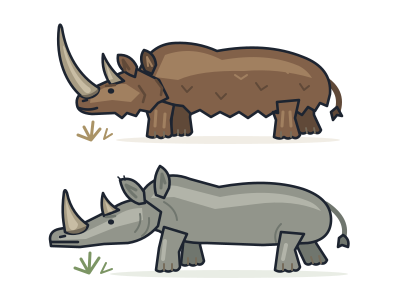
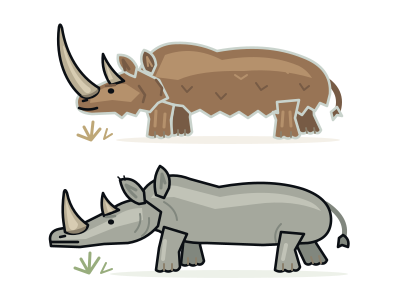
- ElasmotheriumThe "Siberian unicorn", a giant rhino relative that lived until about 39,000 years ago.
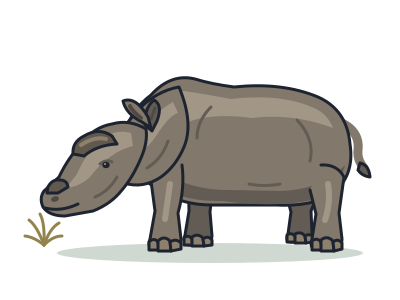
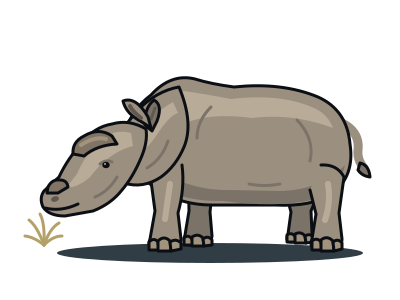
- South American tapirA pig-shaped swimmer with a short grasping trunk, related to horses and rhinos.
- EohippusA fox-sized 'dawn horse' with four toes on each front foot, near the start of the horse family.
Next to it on the tree
- Even-toed hoofed mammals and whalesWhales evolved from small hoofed land mammals.
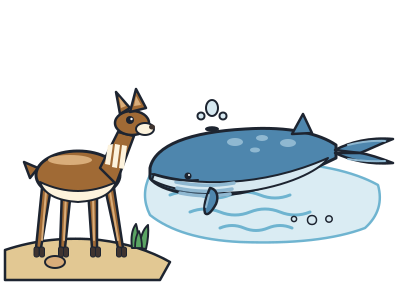
- Hedgehogs, moles and shrewsSmall insect-hunters that kept a very old mammal lifestyle.
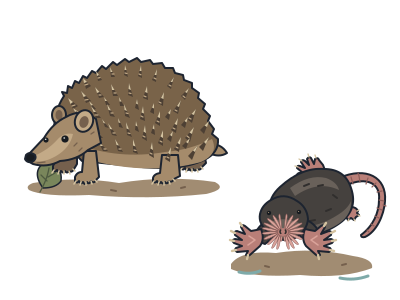
- BatsThe only mammals that truly fly; one in five mammal species is a bat.
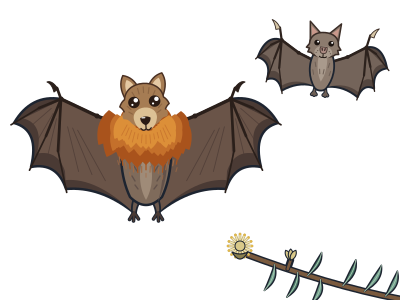
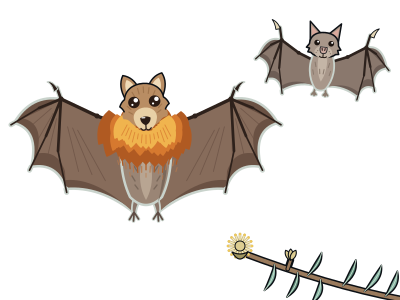
- OnychonycterisA bat from about 52 million years ago that could fly; whether it could echolocate remains debated.
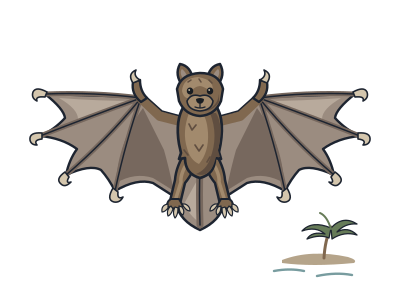
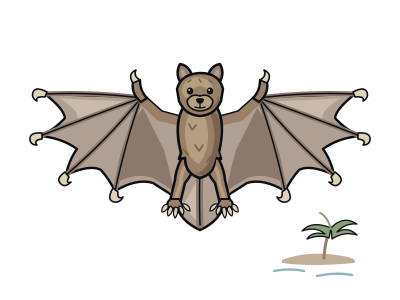
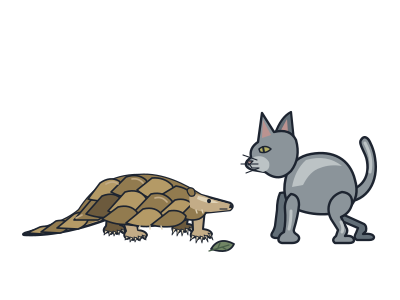
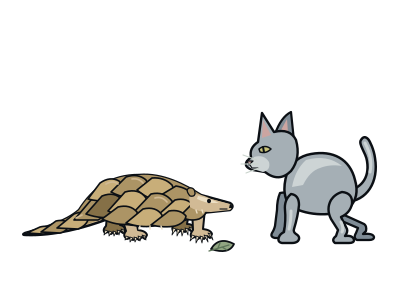
- Pangolins and carnivoransPangolins are the closest living relatives of the whole group containing cats, dogs, bears and seals.
- MacraucheniaA camel-shaped South American beast that baffled Darwin until its proteins were read.
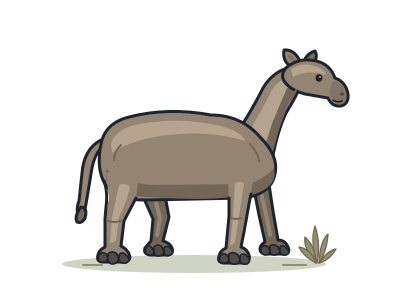
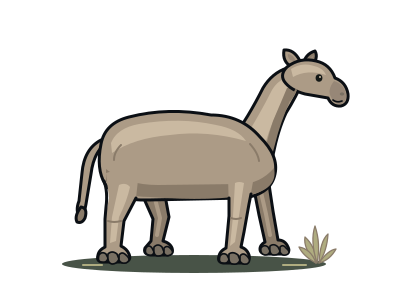
- ToxodonA rhino-sized South American grazer; Darwin bought the first known skull for eighteen pence.