An extinct species
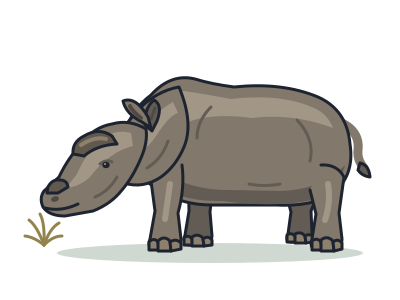
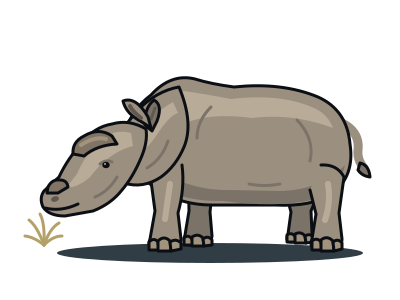
Elasmotherium †
Elasmotherium sibiricum
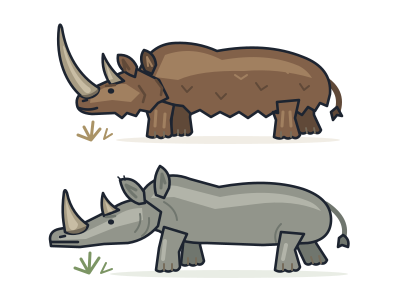
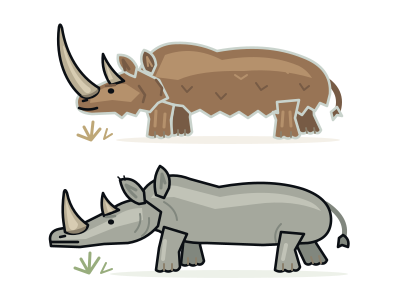
The ‘Siberian unicorn’ was a giant rhino relative, not a horse.
Lived about 1–0.039 million years ago.
You and the elasmotherium meet in the Placental mammals branch, shown at about 95 million years ago (on 23 December, in a calendar from life's shared ancestor to today).
The ‘Siberian unicorn’ was a giant rhino relative, not a horse-like unicorn. DNA recovered from ancient remains placed it on a separate branch beside the group containing all living rhinos. It was the last known survivor of its distinctive branch.
Its known fossils spanned roughly 1 million to 39,000 years ago. That meant it lived during the time of both modern humans and Neanderthals. Sharing their world did not, by itself, show that people hunted it or caused its disappearance.
It reached about 4–4.5 metres long, roughly the length of a large car, and stood over 2 metres at the shoulder. Its range stretched from Ukraine and southwestern Russia through Kazakhstan to Siberia. Chemical evidence from its fossils pointed to dry, open grasslands. Despite its famous nickname, no fossil horn had been found: the enormous horn in familiar pictures was a reconstruction, not a recovered part.
Three main toes
Each foot had three working toes, with the middle one largest.
Unusual chewing teeth
Adults lacked front biting teeth and pointed, fang-like teeth. Their chewing teeth were very tall, with deeply folded enamel.
A stronger timeline
The 2018 study dated remains from 23 individuals, replacing much older estimates of when it disappeared.
Next to it on the tree
- ParaceratheriumA hornless giant rhino relative; the largest reconstructed individuals reach about five metres at the shoulder.
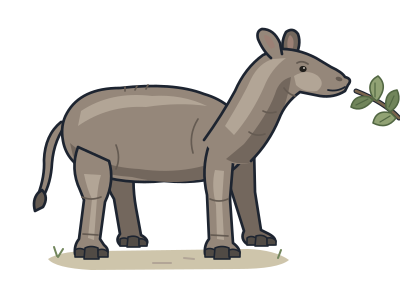
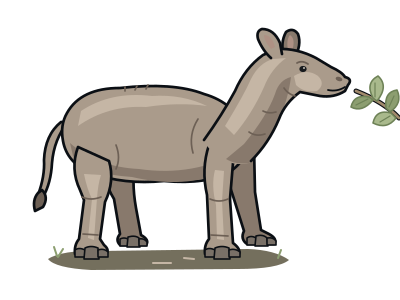
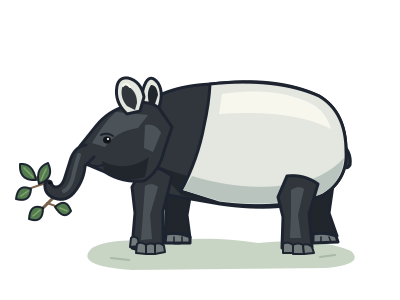
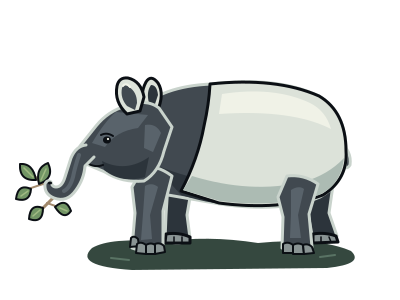
- Malayan tapirBlack-and-white "split" colouring and a short trunk for grabbing leaves.
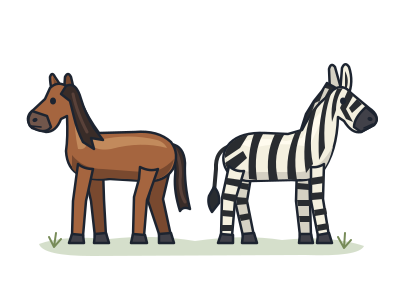
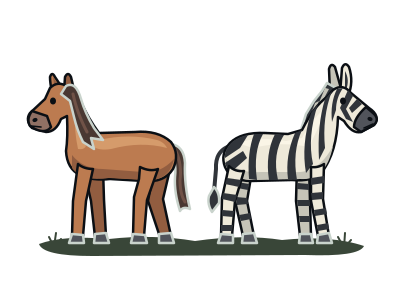
- Horses, zebras and donkeysEvery living horse, zebra and donkey shares an ancestor about four million years ago.
- RhinocerosesFive living species survive from a family that once spread across the world.
- South American tapirA pig-shaped swimmer with a short grasping trunk, related to horses and rhinos.
- EohippusA fox-sized 'dawn horse' with four toes on each front foot, near the start of the horse family.