A group of living things
Rhinoceroses
Rhinocerotidae
Five survivors of a once widespread family
This branch is shown at about 16 million years ago; its age is a rough estimate.
You and rhinoceroses meet in the Placental mammals branch, shown at about 95 million years ago (on 23 December, in a calendar from life's shared ancestor to today).
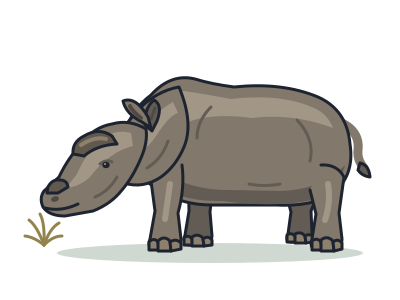
Five living species survive from a rhino family that once spread across much of the world. Today, wild rhinos live in Africa and Asia, but extinct members also lived in Europe and North America. The survivors are white, black, greater one-horned, Javan and Sumatran rhinos.
Their family connections may surprise you. Tapirs are closer living relatives of rhinos than horses are. All three belong to the odd-toed hoofed mammals. And although horns seem like the obvious sign of a rhino, many extinct members of the family had none.
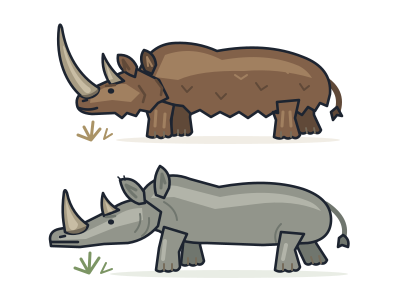
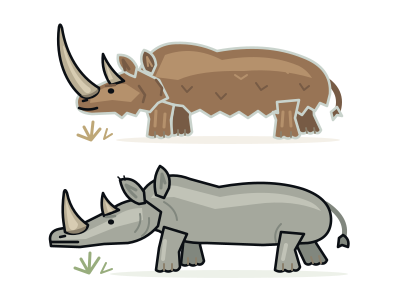
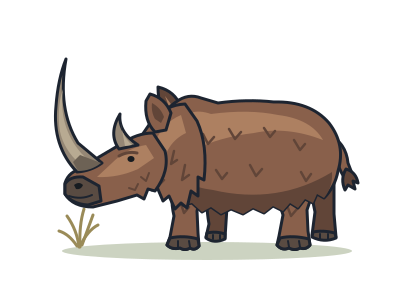
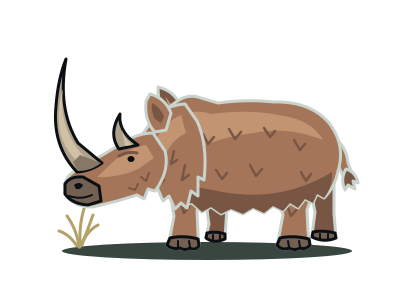
Picture a white rhino beside an extinct woolly rhino. The woolly rhino had a thick coat: rare remains preserved in permanently frozen Siberian ground show that its fur was real, not an artist's guess. Its front horn could grow longer than a metre. That furry animal belonged to the same wider family as today's rhinos.
Clover-shaped tracks
Living rhinos have three toes on each foot. Their footprints can look like a three-leaf clover.
Names are not colours
Despite their names, white and black rhinos are both essentially grey.
Different lips, different meals
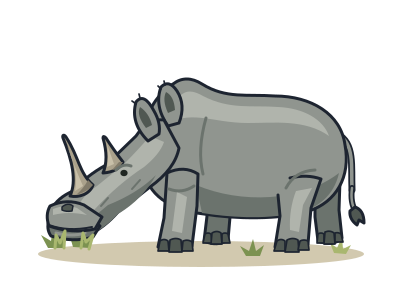
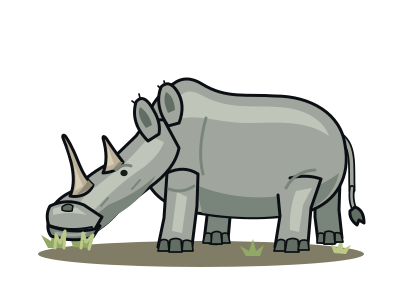
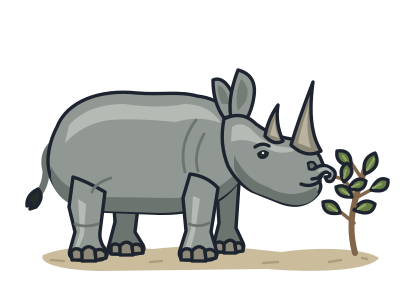
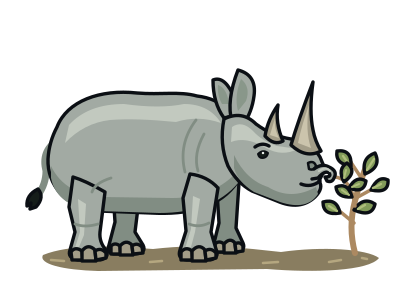
White rhinos crop grass with broad, square lips. Black rhinos use a pointed, grasping upper lip to feed on shrubs and trees.
Inside rhinoceroses
- White rhinocerosA broad-lipped grass grazer; exceptionally large males can approach three tonnes.
- Woolly rhinocerosA shaggy ice-age rhino painted on cave walls by early artists.
- Black rhinocerosUses a hooked lip to pluck leaves; not actually black.
- Greater one-horned rhinocerosIts skin folds look like armour plates.
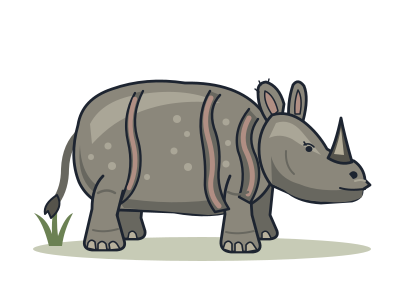
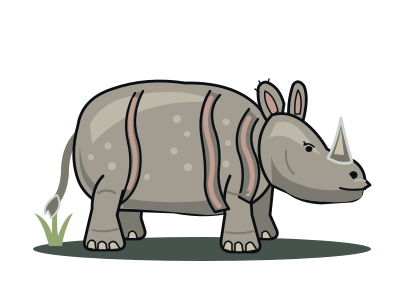
- Sumatran rhinocerosThe smallest and hairiest rhino, the closest living relative of the woolly rhino.
Next to it on the tree
- ParaceratheriumA hornless giant rhino relative; the largest reconstructed individuals reach about five metres at the shoulder.
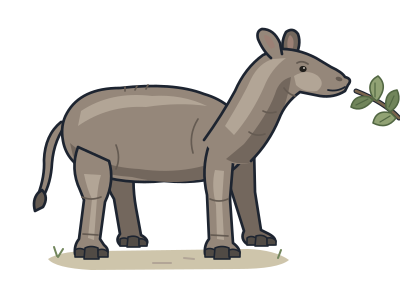
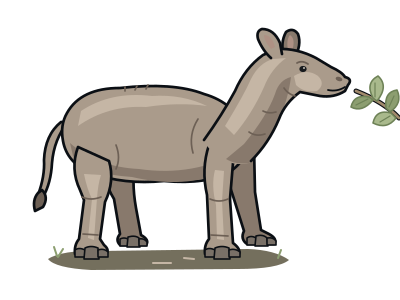
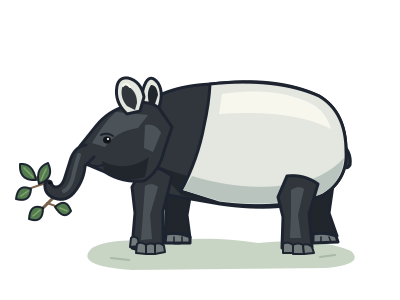
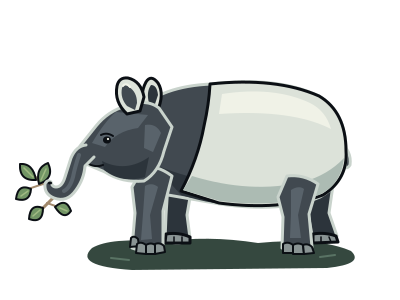
- Malayan tapirBlack-and-white "split" colouring and a short trunk for grabbing leaves.
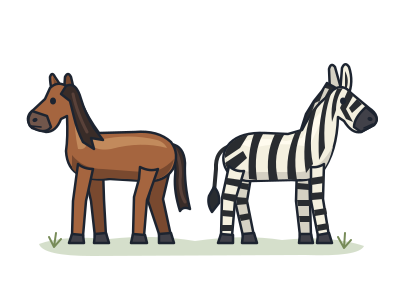
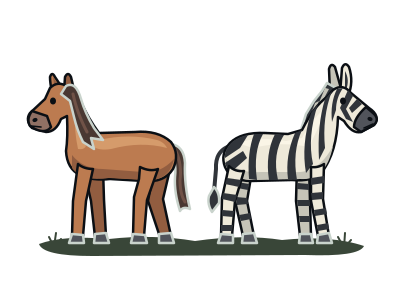
- Horses, zebras and donkeysEvery living horse, zebra and donkey shares an ancestor about four million years ago.
- ElasmotheriumThe "Siberian unicorn", a giant rhino relative that lived until about 39,000 years ago.
- South American tapirA pig-shaped swimmer with a short grasping trunk, related to horses and rhinos.
- EohippusA fox-sized 'dawn horse' with four toes on each front foot, near the start of the horse family.