A species
Greater one-horned rhinoceros
Rhinoceros unicornis
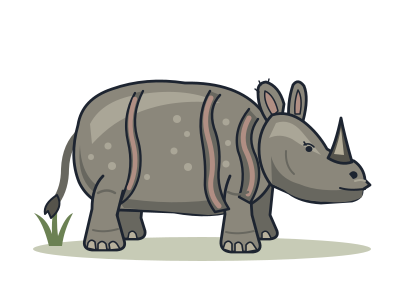
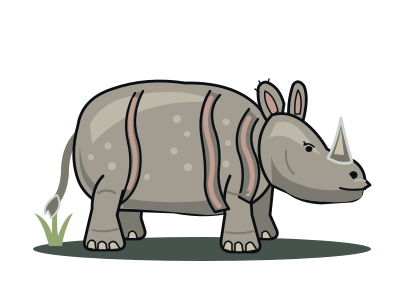
Armour-like folds, not metal plates
You and the greater one-horned rhinoceros meet in the Placental mammals branch, shown at about 95 million years ago (on 23 December, in a calendar from life's shared ancestor to today).
Its skin folds look like armour plates. Deep creases around the neck, shoulders and rump divide its hide into sections, while rounded bumps look like the rivets holding a suit of armour together. But these are folds of skin, not a shell or separate bony plates. The hide is grey-brown, with pinkish skin showing around the folds.
This rhino belongs to the same wider branch as horses and tapirs. It also has an easy-to-spot difference from its African rhino relatives: one horn on its nose rather than two. It is the largest living Asian rhino.
Wild populations live in India and Nepal, mainly in grasslands beside rivers that flood. Grass makes up most of its meals, though it also eats leaves, twigs, fruit and water plants. Despite its heavy build, it swims well and readily crosses rivers. Pools and muddy wallows offer somewhere to cool down and get protection from biting insects.
A lip that gathers food
Its flexible upper lip curls around plant stems to gather food.
Scent messages
Shared dung heaps carry scent messages that help rhinos detect other individuals using the area.
A long pregnancy
A female usually gives birth to one calf after a pregnancy lasting about 15–16 months.
Next to it on the tree
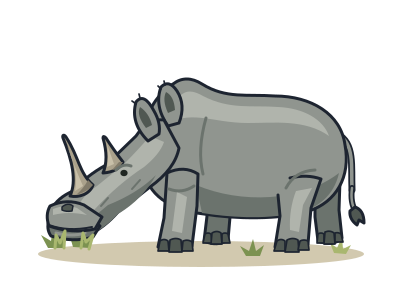
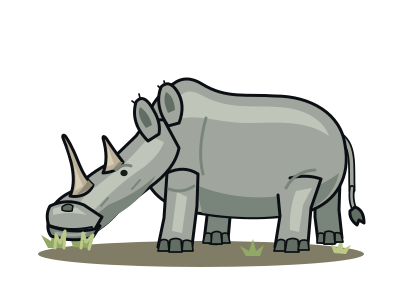
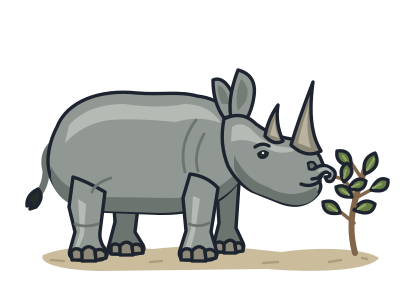
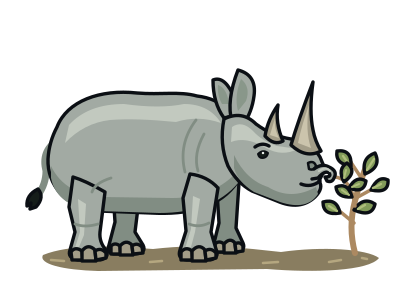
- White rhinocerosA broad-lipped grass grazer; exceptionally large males can approach three tonnes.
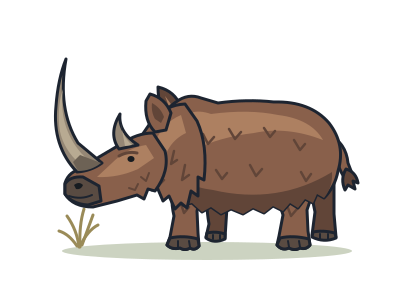
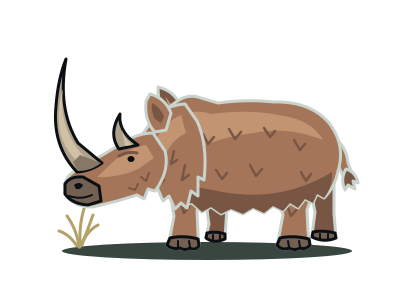
- Woolly rhinocerosA shaggy ice-age rhino painted on cave walls by early artists.
- Black rhinocerosUses a hooked lip to pluck leaves; not actually black.
- Sumatran rhinocerosThe smallest and hairiest rhino, the closest living relative of the woolly rhino.