An extinct species
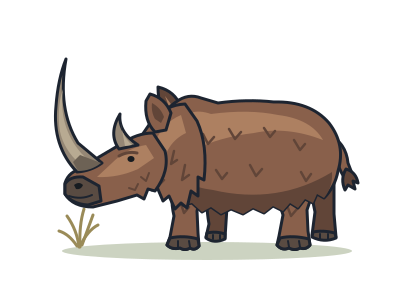
Woolly rhinoceros †
Coelodonta antiquitatis
A shaggy ice-age rhino captured in cave art
Lived about 500,000–14,000 years ago.
You and the woolly rhinoceros meet in the Placental mammals branch, shown at about 95 million years ago (on 23 December, in a calendar from life's shared ancestor to today).
Early artists drew this shaggy ice-age rhino in charcoal on the walls of Chauvet Cave in southern France. It belonged to the same family as today’s rhinoceroses, not to the mammoths. Its closest living relative is the Sumatran rhinoceros, which also has a noticeable coat of hair.
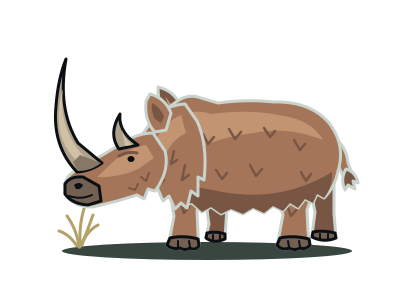
The woolly rhinoceros lived about 500,000 to 14,000 years ago. It grew about as long as a large car, with a stout body, short legs and small ears. These features helped it retain heat. Long, thick, reddish-brown fur covered its body, and two horns stood along its snout.
Its shaggy appearance was not simply an artist’s guess. Bones revealed its frame, while rare frozen remains from Siberia preserved fur and other soft parts. Those remains gave researchers evidence that a skeleton alone could not provide, helping them build a fuller picture of the animal that cave artists had seen.
Horns, not bones
Its horns were made of keratin, the same material found in human hair and nails.
A metre-long horn
The larger front horn could grow longer than a metre.
A name from teeth
The first part of its scientific name meant ‘hollow tooth’, referring to hollows in its grinding teeth.
Next to it on the tree
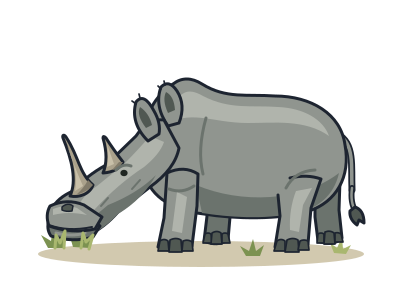
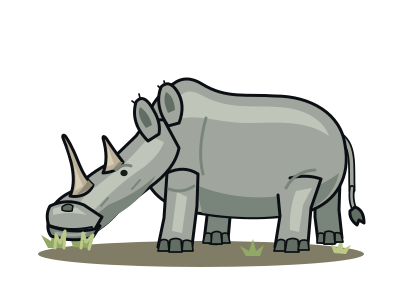
- White rhinocerosA broad-lipped grass grazer; exceptionally large males can approach three tonnes.
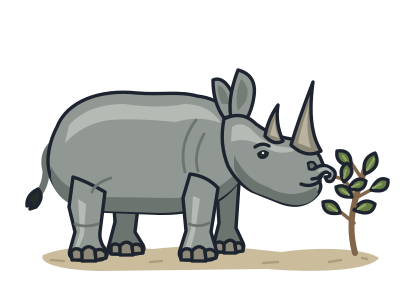
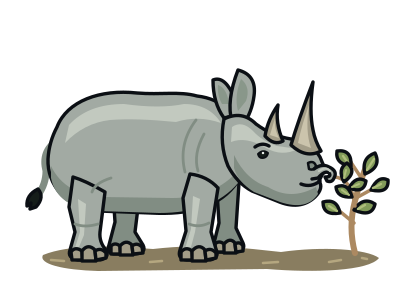
- Black rhinocerosUses a hooked lip to pluck leaves; not actually black.
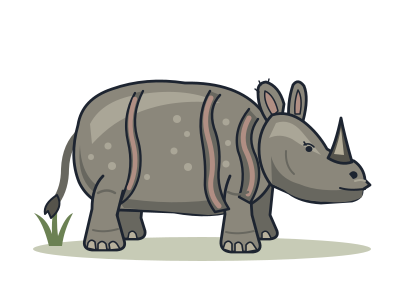
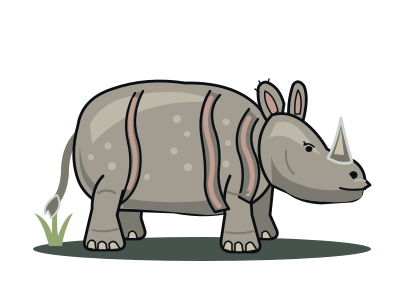
- Greater one-horned rhinocerosIts skin folds look like armour plates.
- Sumatran rhinocerosThe smallest and hairiest rhino, the closest living relative of the woolly rhino.