A species
White rhinoceros
Ceratotherium simum
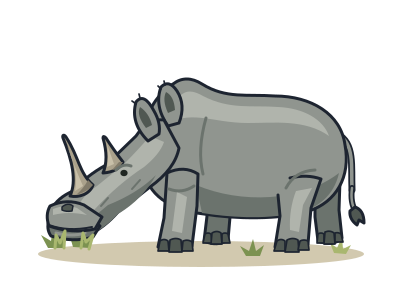
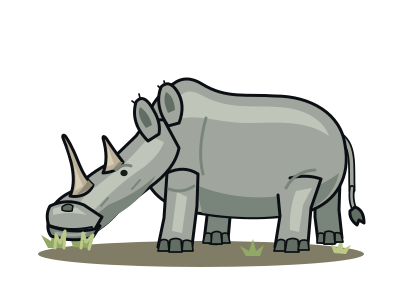
A giant grass-mower with a wide, square mouth.
You and the white rhinoceros meet in the Placental mammals branch, shown at about 95 million years ago (on 23 December, in a calendar from life's shared ancestor to today).
A large white rhinoceros can be a three-tonne grass-mower, though most adults weigh less. Its closest living rhino relative is the black rhinoceros. Its broad, square mouth clips grass close to the ground. Despite their names, both species have grey skin: colour is not a reliable way to tell them apart.
With its long head held low and a hump behind its neck, this rhino lives in open African grasslands. Its close grazing leaves patches of short grass that benefit smaller plant-eating animals. These patches can also interrupt the spread of fire.
Females and young often gather in small groups, while adult breeding males defend their own areas. Shared dung heaps act like scent-message points. A roll in mud helps cool the animal and protects its skin from sun and biting insects.
Horns, not bones
Its two nose horns contain keratin, the material in human hair and nails, rather than a bony core.
Listening both ways
Its ears can turn independently, helping it listen in different directions.
A long wait
A pregnancy lasts about 16 months and normally produces one calf.
Next to it on the tree
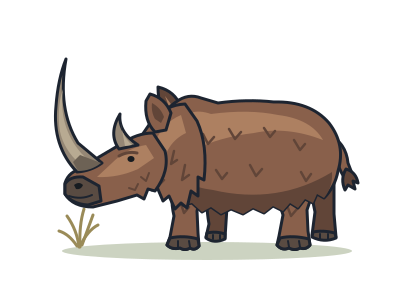
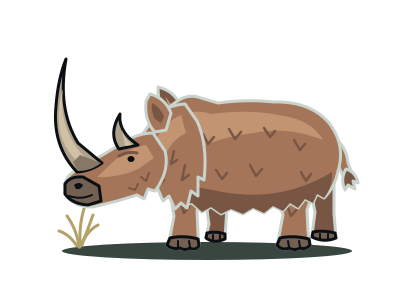
- Woolly rhinocerosA shaggy ice-age rhino painted on cave walls by early artists.
- Black rhinocerosUses a hooked lip to pluck leaves; not actually black.
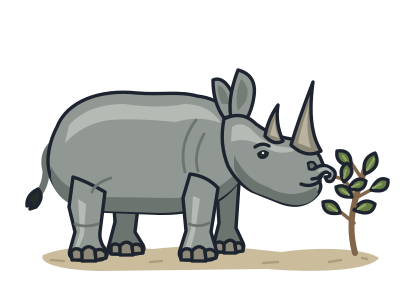
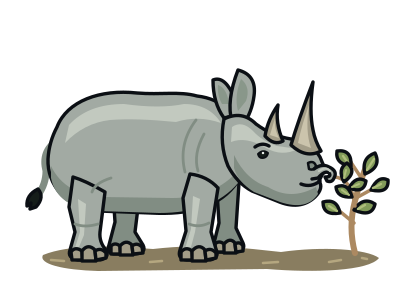
- Greater one-horned rhinocerosIts skin folds look like armour plates.
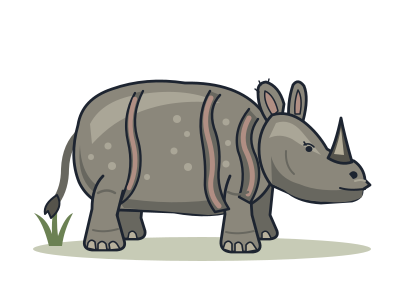
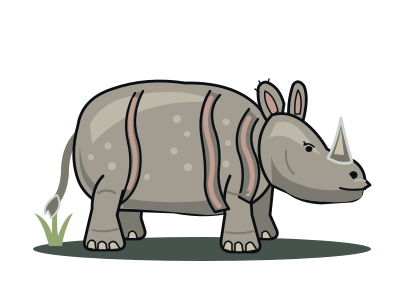
- Sumatran rhinocerosThe smallest and hairiest rhino, the closest living relative of the woolly rhino.