A species
Black rhinoceros
Diceros bicornis
A leaf-plucking lip and a misleading name.
You and the black rhinoceros meet in the Placental mammals branch, shown at about 95 million years ago (on 23 December, in a calendar from life's shared ancestor to today).
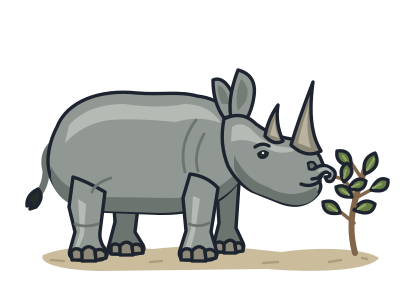
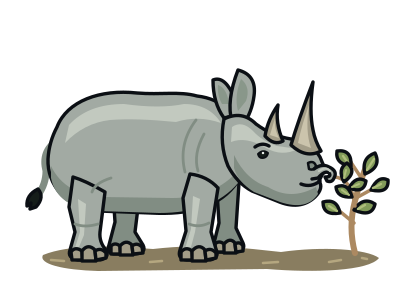
A black rhino's hooked upper lip works like a little grabbing hand, plucking leaves and small branches from shrubs and trees. Despite its name, this rhino is grey, just like its relative the white rhino. Mud can stain either animal the colour of the soil. They are different species, not two colour versions of the same animal.
Both black and white rhinos have two horns. Their greater one-horned relative has just one. Black rhinos live in eastern and southern Africa, including Namibia, South Africa and Zimbabwe. Their homes range from dense bush and open woodland to dry country.
Not every black rhino lives alone. Adult males generally do, but females can be social and have overlapping home ranges. So the picture of a rhino always keeping its neighbours away does not fit the whole species.
Horn, not bone
Rhino horns are made of keratin, the material in your hair and fingernails. They have no bony core.
Three toes per foot
Each foot has three hoofed toes. The middle toe is the largest and carries most of the weight.
A long childhood
Calves can stay with their mothers for up to about three years.
Next to it on the tree
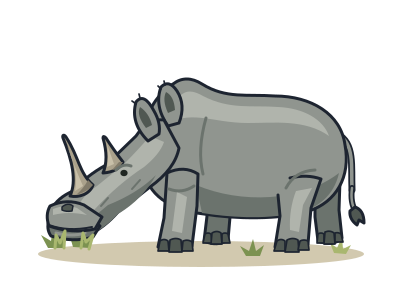
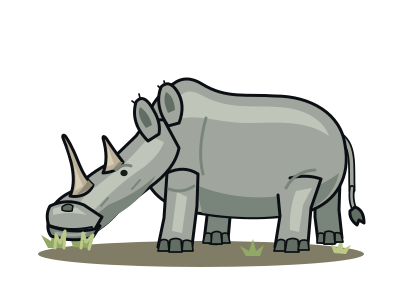
- White rhinocerosA broad-lipped grass grazer; exceptionally large males can approach three tonnes.
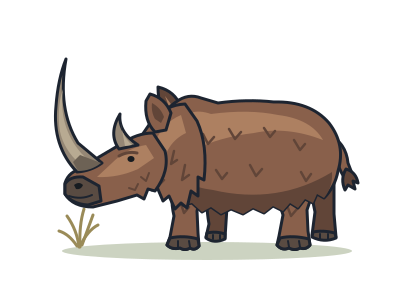
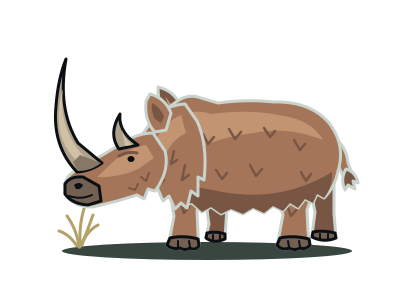
- Woolly rhinocerosA shaggy ice-age rhino painted on cave walls by early artists.
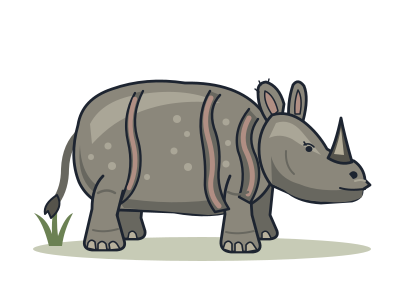
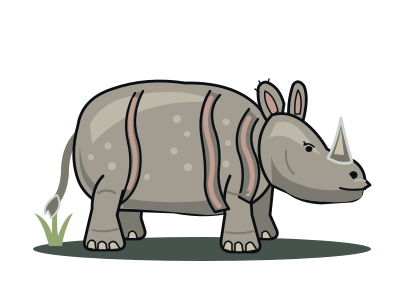
- Greater one-horned rhinocerosIts skin folds look like armour plates.
- Sumatran rhinocerosThe smallest and hairiest rhino, the closest living relative of the woolly rhino.