A species
Norway spruce
Picea abies
The classic Christmas tree, and one wild Swedish spruce has roots nearly 10,000 years old
You and the norway spruce meet in the Eukaryotes branch, shown at about 1.8 billion years ago (on 28 July, in a calendar from life's shared ancestor to today).
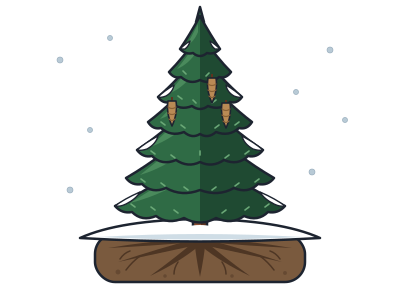
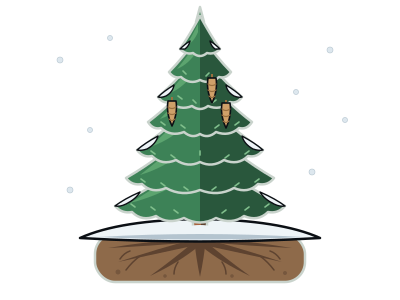
Chances are you have seen this tree covered in lights. The Norway spruce is the classic Christmas tree, with a neat cone shape and side branches that hang down like curtains. In the wild, those bendy, drooping branches help it cope with heavy snow.
On a mountain in Sweden grows a much stranger one, called Old Tjikko. The two scientists who found it named it after their dog. It is only about 5 metres tall, but wood found beneath it suggests it first sprouted about 9,500 years ago.
The trick is that Old Tjikko is a clone. Its trunks die and regrow from the same roots, and each one may last around 600 years. So no trunk is ancient, but the root system and the living tree it belongs to are. For thousands of years it stayed a low, scrubby bush. It only grew an upright trunk when the climate warmed in the 1900s.
Despite its name, it grows wild across northern, central and eastern Europe, not just in Norway. Forest trees usually reach about 35 to 55 metres, as tall as a 10 to 18 storey building. It belongs to the pine family, so its relatives include the bristlecone pine and the cedar of Lebanon.
Record-breaking cones
It has the longest cones of any spruce, about 9 to 17 cm long. The longest are nearly as long as a new pencil. The cones hang down near the top of the tree.
A tree that makes music
Its wood is prized for the soundboards of violins. It is also one of Europe's most important trees for timber and paper.
A slow start
A Norway spruce usually doesn't make seeds until it is about 30 to 40 years old. In its natural forests, a single trunk can live for up to about 300 years.
Next to it on the tree
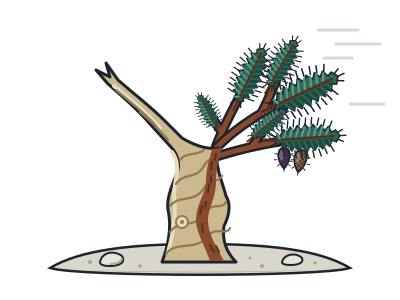
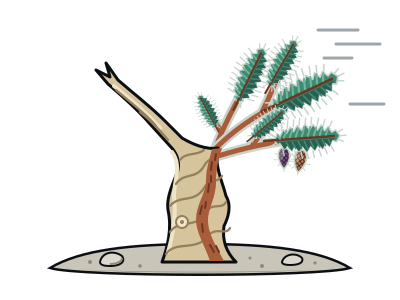
- Bristlecone pineA twisted mountain pine; one living tree is more than 4,800 years old.
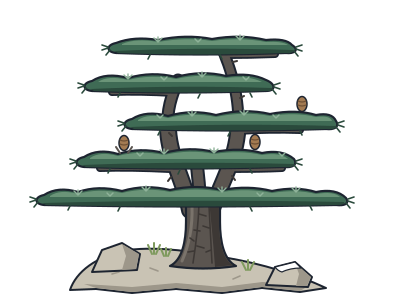
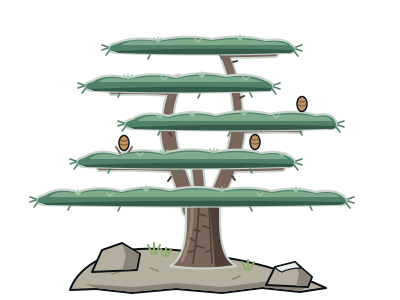
- Cedar of LebanonA broad, layered mountain tree prized in ancient times and shown on Lebanon's flag.
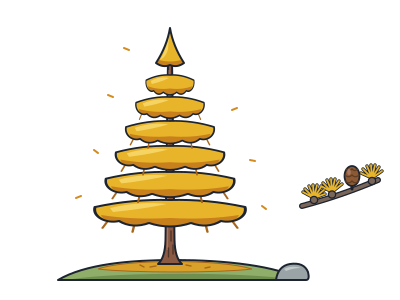
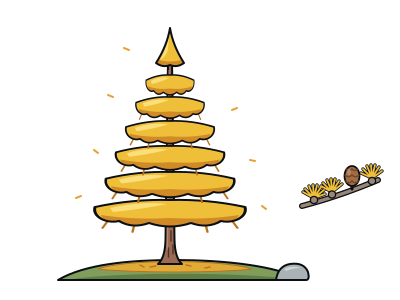
- European larchA conifer that turns gold and drops all its needles each autumn.
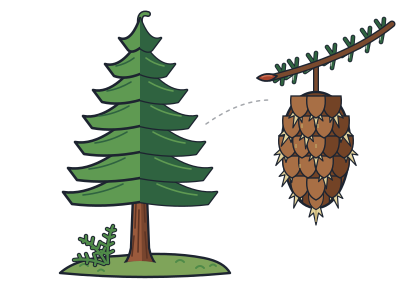
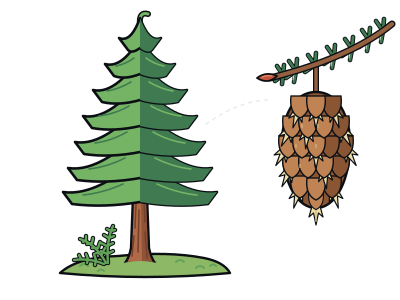
- Douglas firA towering timber tree of the Pacific Northwest whose cones have mouse-tail bracts.
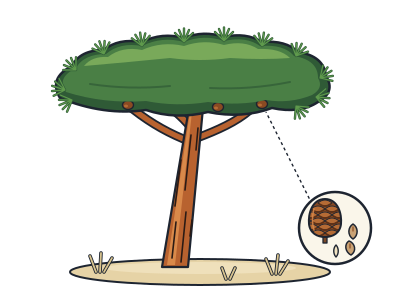
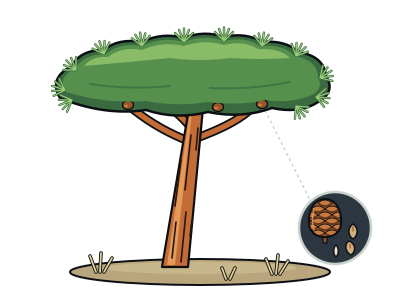
- Stone pineThe umbrella-shaped Mediterranean pine that gives us pine nuts.