A species
Douglas fir
Pseudotsuga menziesii
A giant timber tree whose cones look like mice diving inside
You and the douglas fir meet in the Eukaryotes branch, shown at about 1.8 billion years ago (on 28 July, in a calendar from life's shared ancestor to today).
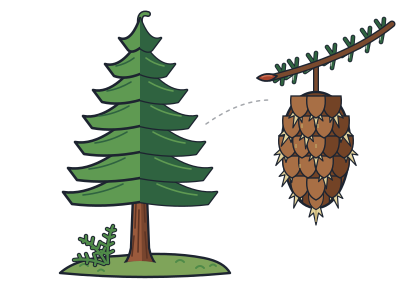
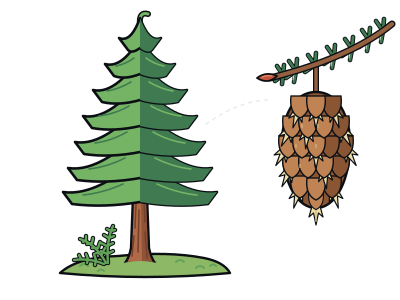
The Douglas fir is a giant timber tree of the Pacific Northwest, and its cones hide a little surprise. From under each woody scale pokes a thin, papery flap with three points. It looks like the back half of a mouse, with two hind feet and a tail, diving into the cone. A Native American story says mice hid there to escape a forest fire.
Despite its name, it is not a true fir. It is not a pine, spruce or hemlock either. Its genus name means 'false hemlock'. It does belong to the pine family, though, so pines, spruces, larches and true cedars are its relatives. Overall, it is the largest member of that whole family.
Coast trees usually grow about 60 to 76 metres tall, roughly as tall as a 20- to 25-storey building, and a few have passed 90 metres. That makes it one of the tallest kinds of tree in the world. Many live more than 500 years, and some live more than 1,000. Thick, corky bark helps old trees survive moderate fires.
The coast kind grows from British Columbia to California. A smaller, bluer kind grows inland through the Rocky Mountains and into Mexico. North America gets more timber from this tree than from any other.
A tree from the Moon trip
A Douglas fir at Oregon State University grew from a seed that travelled around the Moon on Apollo 14 in 1971.
Named after two Scots
Its common name honours David Douglas, who brought it to Europe in the 1820s. Its scientific name honours Archibald Menzies, who recorded it in 1791.
A home in the treetops
Old Douglas fir forests are key homes for the northern spotted owl and the red tree vole, a small rodent that spends almost its whole life high in the branches.
Next to it on the tree
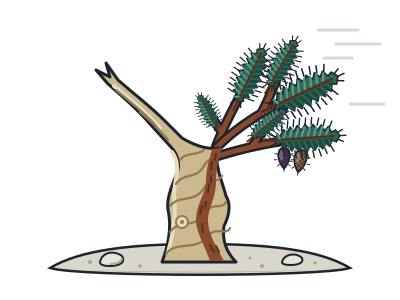
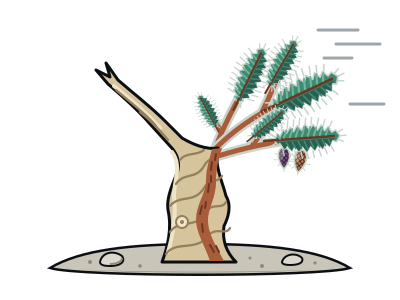
- Bristlecone pineA twisted mountain pine; one living tree is more than 4,800 years old.
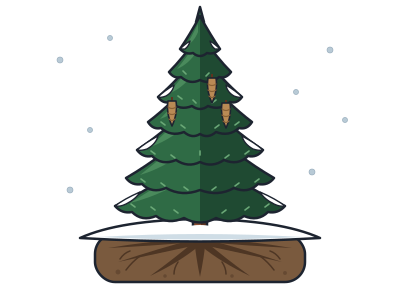
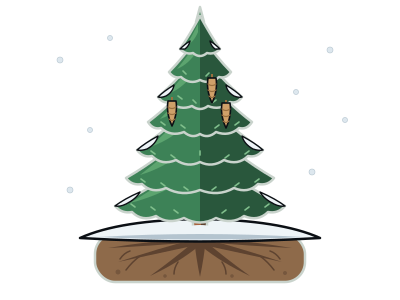
- Norway spruceThe classic Christmas tree; one Swedish spruce has roots nearly 10,000 years old.
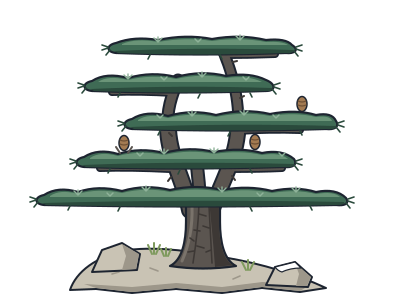
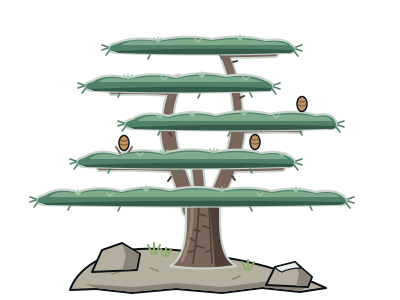
- Cedar of LebanonA broad, layered mountain tree prized in ancient times and shown on Lebanon's flag.
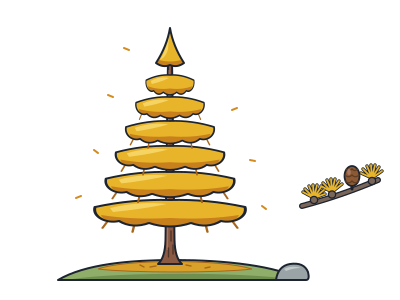
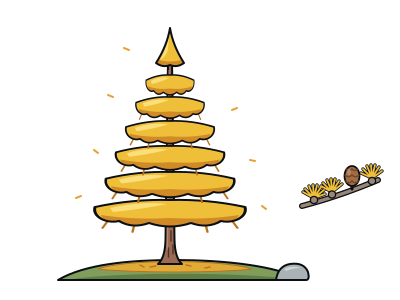
- European larchA conifer that turns gold and drops all its needles each autumn.
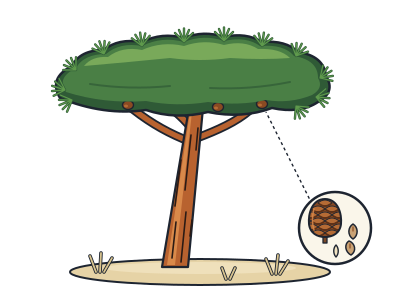
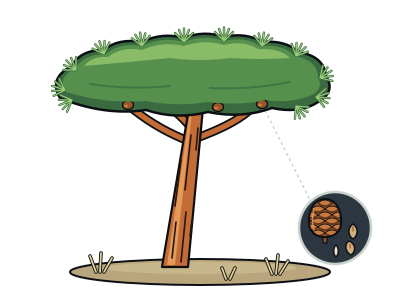
- Stone pineThe umbrella-shaped Mediterranean pine that gives us pine nuts.