A species
Cedar of Lebanon
Cedrus libani
A spreading mountain giant that ancient peoples treasured and Lebanon put on its flag.
You and the cedar of lebanon meet in the Eukaryotes branch, shown at about 1.8 billion years ago (on 28 July, in a calendar from life's shared ancestor to today).
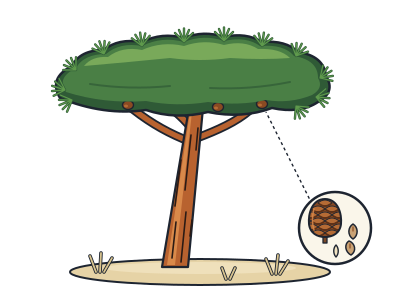
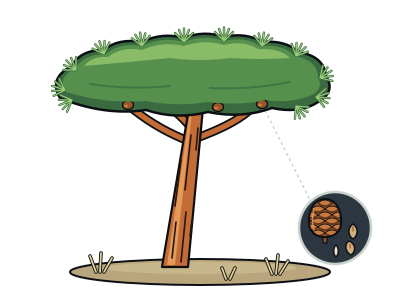
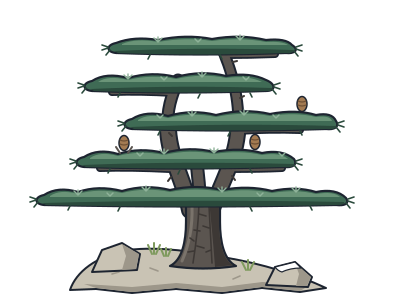
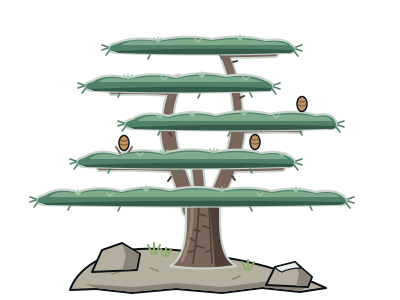
Picture a giant tree whose branches spread out in wide, flat layers, like green shelves stacked one above another. That is an old cedar of Lebanon. Young trees are neat, pointed triangles. As they grow older, the top flattens and the crown spreads sideways like an umbrella. A green cedar sits in the middle of Lebanon's flag, which was adopted in 1943. There it is said to stand for immortality.
People have treasured this tree for thousands of years. The Bible links its wood with Solomon's Temple, and ancient Egyptians used cedar wood to build temples. The cedar forests even appear in the ancient story of Gilgamesh, where the hero and his friend defeat the forest's guardian.
It belongs to the pine family, so pines and spruces are its relatives. Like them, it has needles and cones. Most of its short needles grow in little tufts, and its barrel-shaped cones stand upright on the branches like candles.
In the wild it grows only in the mountains of Lebanon, western Syria and southern Turkey, on rocky limestone slopes. Centuries of logging have taken their toll. Forests that once covered thousands of square kilometres in Lebanon have shrunk to only about 17 square kilometres of scattered groves, and the species is now rated Vulnerable.
Cones that crumble
Its cones take about a year to ripen. Then they fall apart while still on the branch, dropping their scales to let the seeds go, so you rarely find a whole cone underneath.
Fast start, slow finish
Young trees grow quite quickly until they are about 45 to 50 years old. After about 70 years, their growth becomes extremely slow.
Measured by law
Lebanon's constitution sets the size of the flag's cedar: one-third the width of the white stripe, touching the red stripes above and below.
Next to it on the tree
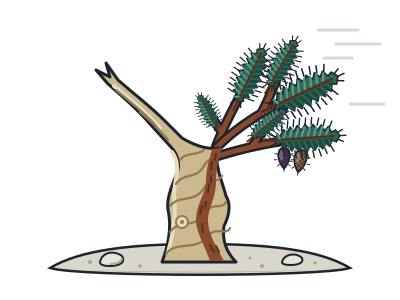
- Bristlecone pineA twisted mountain pine; one living tree is more than 4,800 years old.
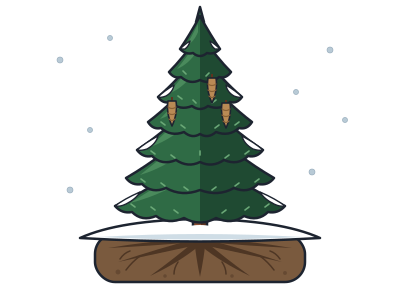
- Norway spruceThe classic Christmas tree; one Swedish spruce has roots nearly 10,000 years old.
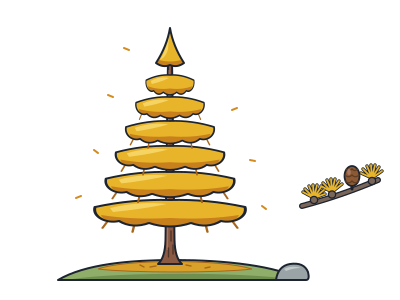
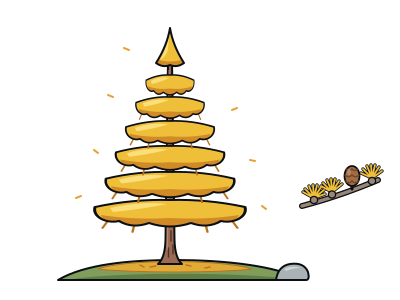
- European larchA conifer that turns gold and drops all its needles each autumn.
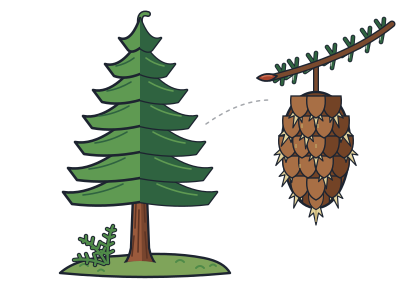
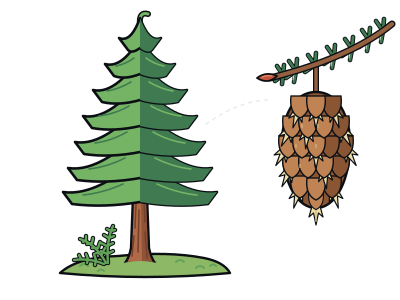
- Douglas firA towering timber tree of the Pacific Northwest whose cones have mouse-tail bracts.
- Stone pineThe umbrella-shaped Mediterranean pine that gives us pine nuts.