A species
European larch
Larix decidua
The conifer that turns gold and lets all its needles fall
You and the european larch meet in the Eukaryotes branch, shown at about 1.8 billion years ago (on 28 July, in a calendar from life's shared ancestor to today).
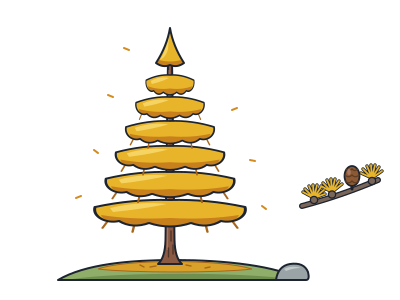
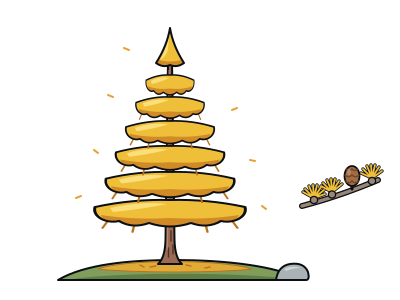
Most conifers stay green all year round. The European larch does not. Each autumn its soft needles turn golden yellow, and then every one of them falls, leaving the tree bare all winter. In spring, fresh bright green needles grow back. A bare larch in winter is not dead or sick. This is simply how it spends the cold months.
Even so, it is a true conifer, a cone-bearing tree in the pine family, along with pines, spruces and cedars. Within that family, the larches' closest relatives are the Douglas firs. The two groups are sisters, and they share less obvious features, such as reddish heartwood and thick bark that resists fire. Dropping its leaves makes the larch look like an oak or a beech, but it is not closely related to them.
On short, knobbly side shoots, the needles grow in tufts of about 30 to 40, like little shaving brushes. Its small, egg-shaped cones stand upright on the twigs. They start pink-red and turn brown. It grows wild in the mountains of central Europe, mainly the Alps and the Carpathians, and can grow as high up as the tree line. A typical tree is about 30 metres tall, roughly as tall as a 10-storey building.
Nearly a thousand years old
European larches can live for close to 1,000 years. One tree had about 986 growth rings counted.
Wood for boats
Its wood is tough and long-lasting but bends in thin strips, so boatbuilders prize it. Clear wood with no knots is called 'boatskin larch'.
A famous old tree in Scotland
In the late 1730s, young larches brought from the Tyrol mountains were planted at Dunkeld in Scotland. One still survives, the 'Parent Larch'. Seed from these trees was used for large larch plantings around the area.
Next to it on the tree
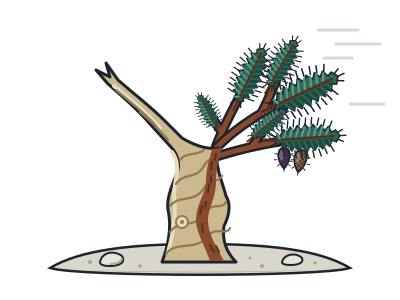
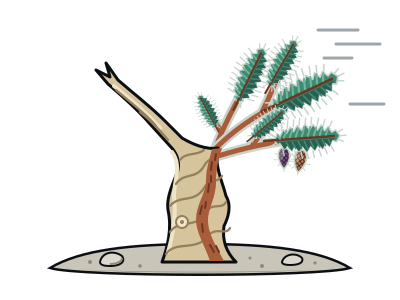
- Bristlecone pineA twisted mountain pine; one living tree is more than 4,800 years old.
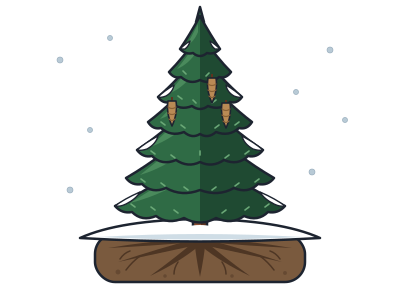
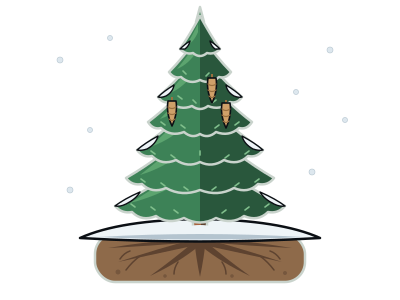
- Norway spruceThe classic Christmas tree; one Swedish spruce has roots nearly 10,000 years old.
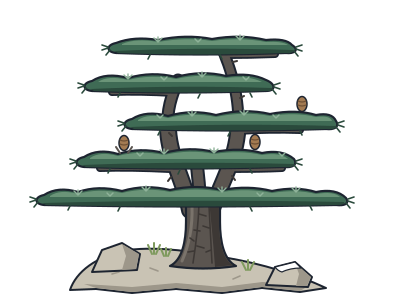
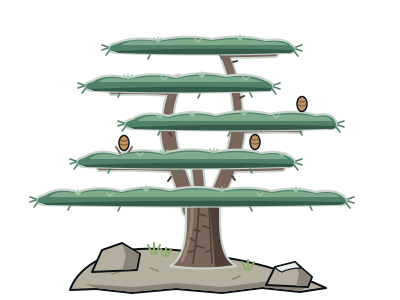
- Cedar of LebanonA broad, layered mountain tree prized in ancient times and shown on Lebanon's flag.
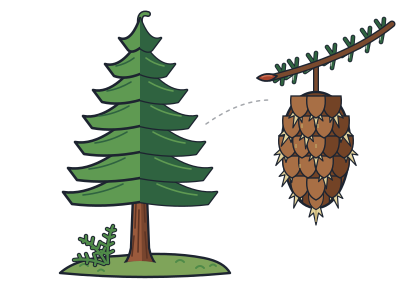
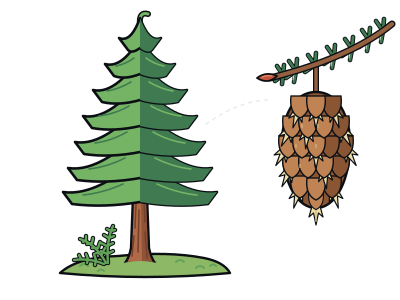
- Douglas firA towering timber tree of the Pacific Northwest whose cones have mouse-tail bracts.
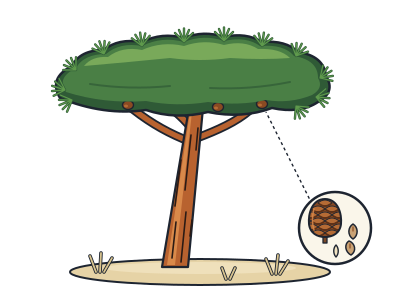
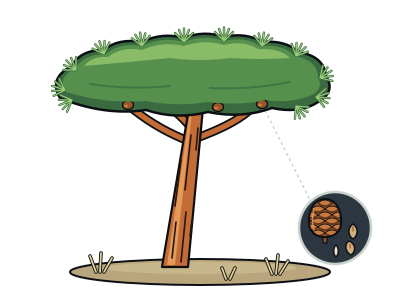
- Stone pineThe umbrella-shaped Mediterranean pine that gives us pine nuts.