A species
Medium ground finch
Geospiza fortis
A small bird with a big lesson in evolution.
You and the medium ground finch meet in the Amniotes branch, shown at about 320 million years ago (on 4 December, in a calendar from life's shared ancestor to today).
The medium ground finch is one of Darwin’s finches whose beaks changed across generations after a drought. Its family holds another surprise: despite the name, Darwin’s finches belong to the tanager family, not the true finch family. DNA evidence helped reveal that connection.
On the Galápagos island of Daphne Major, Peter and Rosemary Grant documented what happened during the 1977 drought. Small, soft seeds became scarce. Birds with deeper, stronger beaks could open the large, tough seeds left behind more easily. These birds were more likely to survive, and their young tended to have larger beaks too.
The important detail is that beaks already varied before the drought. Individual birds did not grow stronger beaks because they needed them. Instead, inherited features such as larger beaks became more common in the next generation. This is natural selection. The change was small but measurable: average beak depth was about 9.2 millimetres before the drought and about 9.7 in the next generation.
Different feather colours
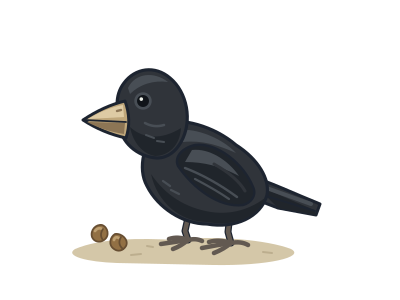
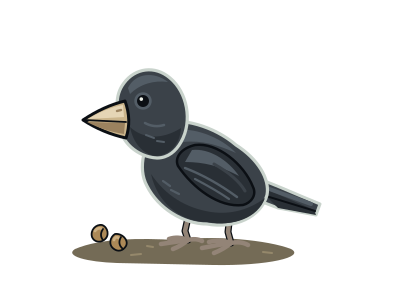
Mature males have black feathers. Females are brown and streaked.
A seasonal beak colour
The beak is black during breeding and pale during the rest of the year.
Mixed company
Outside the breeding season, roughly May to December, it forms large flocks with other ground finches and small tree finches.