A species
Greater bird-of-paradise
Paradisaea apoda
Golden cascades in a treetop dance
You and the greater bird-of-paradise meet in the Amniotes branch, shown at about 320 million years ago (on 4 December, in a calendar from life's shared ancestor to today).
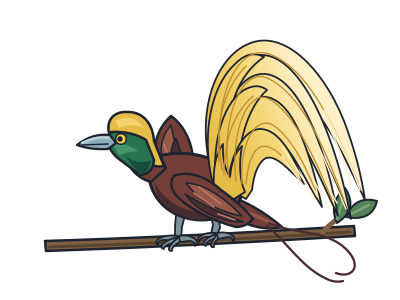
Males show off cascades of golden plumes in treetop dances. Despite their dazzling feathers, these birds are relatives of crows. They belong to the perching birds, the broad group that also includes sparrows and ravens. Their family connections are less obvious than their remarkable appearance.
Up to 15 adult males gather at traditional display trees. A male hops along a branch, spreads his chestnut wings and leans forwards, raising his flowing feathers over his back. These displays take place high among the rainforest treetops, sometimes at dawn. The dance is part of courtship: a display to attract a mate.
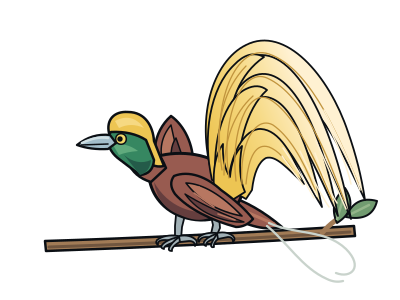
An adult male has a maroon-brown body, a yellow head and a shimmering green face and throat. Two long, wire-like tail feathers trail behind him. Females are brown and lack the male’s golden display plumes. Both have yellow eyes and blue bills. Their home is the lowland and hill rainforest of southern New Guinea and the Aru Islands.
Not a golden tail
The flowing golden plumes grow from the sides of the body, not the tail.
Fruit and insects
These birds eat fruit and small animals, including insects.
Independent nest builders
Females build and look after nests without male help.