An extinct species
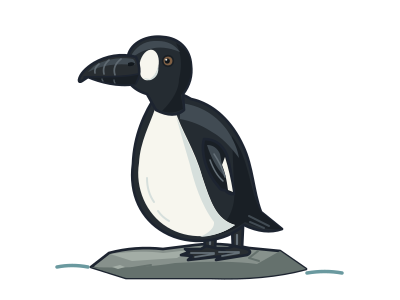
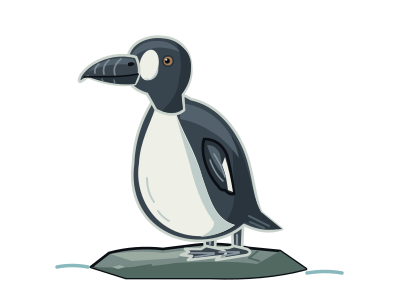
Great auk †
Pinguinus impennis
The original ‘penguin’ was a relative of puffins.
Lived about 400,000–180 years ago.
You and the great auk meet in the Amniotes branch, shown at about 320 million years ago (on 4 December, in a calendar from life's shared ancestor to today).
The great auk was the original bird called a ‘penguin’, but it belonged to the auk family, alongside puffins and guillemots. The similar-looking birds of the Southern Hemisphere were later named after it. It lived in the North Atlantic from at least about 400,000 years ago until the 1800s.
Flightless did not mean wingless. Its small wings pushed it through the water as it dived for fish. It spent much of its life at sea, in waters stretching from Canada and Greenland to Iceland and north-western Europe. To breed, it needed islands with shorelines it could climb: it had to walk from the water to its nesting ground.
People hunted great auks for meat, feathers, fat and oil. On land, their awkward walk and inability to fly made them easy to catch. As they became rarer, collectors paid more for their skins and eggs, adding pressure to the remaining birds. The last documented breeding pair was killed on Eldey, an island off Iceland, in 1844.
A living family connection
Its closest living relative was the razorbill, another black-and-white seabird with a deep bill.
One egg, two warming patches
It laid one egg per clutch. Preserved museum birds showed that it had two patches of bare skin for warming the egg.
Colour preserved
Breeding adults had a large white patch in front of each eye. Preserved skins supported this feather pattern directly; it was not guessed from fossil bones.