A species
Atlantic puffin
Fratercula arctica
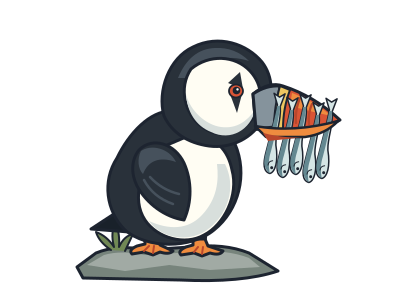
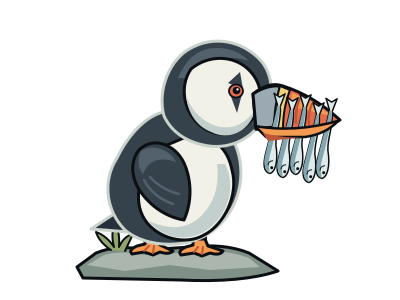
A colourful beak with room for a row of fish
You and the atlantic puffin meet in the Amniotes branch, shown at about 320 million years ago (on 4 December, in a calendar from life's shared ancestor to today).
An Atlantic puffin can return to its chick with about a dozen small fish lined up crosswise in its colourful beak. It may look like a little penguin, but it belongs to the auk family, which includes the extinct, flightless great auk. Unlike penguins, puffins can fly.
How does it keep hold of such a slippery load? Backward-pointing spines on its tongue and the roof of its mouth help grip the fish. It can keep earlier catches in its beak while catching more during the same dive. Underwater, it beats its wings to move forward and uses its feet to steer.
Home is a nesting colony on a North Atlantic island or sea cliff. Both males and females dig nest holes with their beaks and feet, though some pairs use gaps between rocks instead. Both parents keep the egg warm and bring fish to their chick. Outside the breeding season, these birds live offshore, including far out in the open ocean.
One egg
A female normally lays just one egg in a breeding season.
A quieter winter look
After breeding, outer beak plates are shed. The beak looks smaller and less colourful, and the face becomes greyer.
Beak-to-beak greetings
Partners rub their beaks together as part of maintaining their bond.
Next to it on the tree
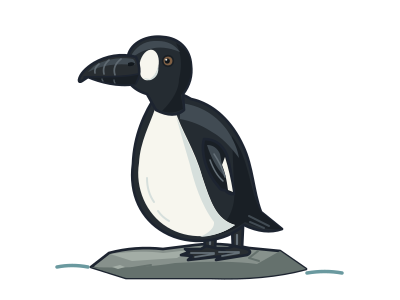
- Great aukThe original 'penguin': a flightless North Atlantic bird; last documented breeding pair killed in 1844.
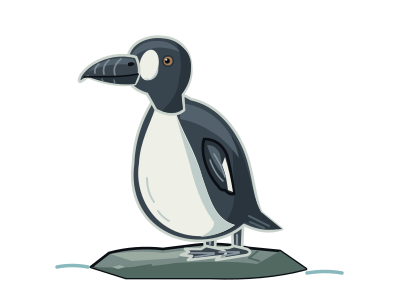
- RazorbillA black-and-white seabird with a deep, blade-like beak; the great auk's closest living relative.
- Common guillemotIts chicks leap off cliff ledges before they can fly, and their father raises them at sea.