A species
Bird's-nest fern
Asplenium nidus
A treetop fern that makes its own compost
You and the bird's-nest fern meet in the Eukaryotes branch, shown at about 1.8 billion years ago (on 28 July, in a calendar from life's shared ancestor to today).
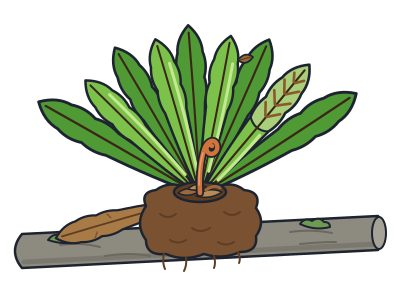
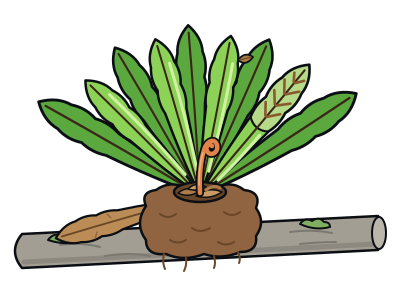
High in rainforest trees, this fern grows as a giant green rosette, a bit like an open shuttlecock. Its fronds are glossy, leathery and undivided, with no leaflets at all. Each one has a dark midrib down the centre. They are usually about half a metre to one and a half metres long and look rather like banana leaves. Even so, it belongs to the same big group of ferns as bracken, maidenhair and Boston fern.
The nest shape does a job. Its bowl catches rain and falling dead leaves. As the leaves rot in the centre, they turn into rich compost that feeds the fern. It is not a parasite. It only uses the tree to hold itself up and takes no food from it.
That pocket of damp compost becomes a home in the treetops for ants, termites, frogs, and even smaller ferns and orchids. In a rainforest in Borneo, scientists found that one large fern can hold about as much weight of insects and other small creatures as all the rest of the tree's crown. Counting these ferns more than doubled their estimate of how many small creatures live in the treetops.
A Hawaiian name
It grows wild in Hawaii, where its Hawaiian name is ʻēkaha.
Fern on the menu
In Taiwan and parts of Polynesia, people eat the young fronds as a vegetable, stir-fried or boiled.
A mistaken name
Its group is called the spleenworts because people once wrongly believed these plants could cure illnesses of the spleen.
Next to it on the tree
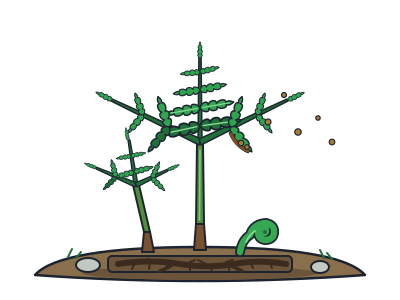
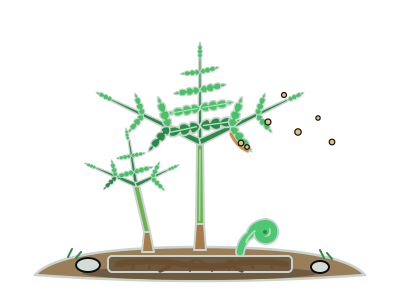
- Bracken fernSpreads by spores, not seeds; one of the most widespread plants on Earth.
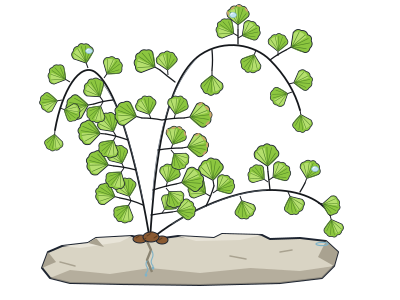
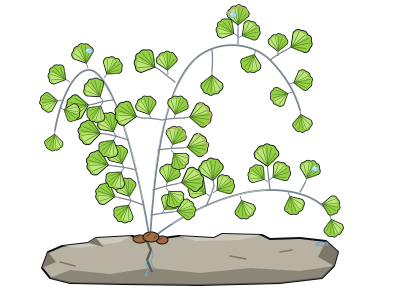
- Maidenhair fernDelicate fan-shaped leaflets on black wiry stems that shed water like wax.
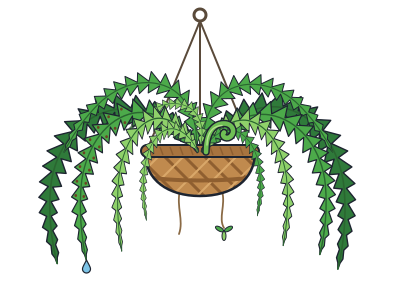
- Boston fernThe arching fern in hanging baskets, a parlour favourite since Victorian times.
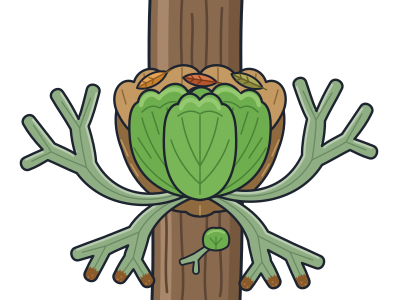
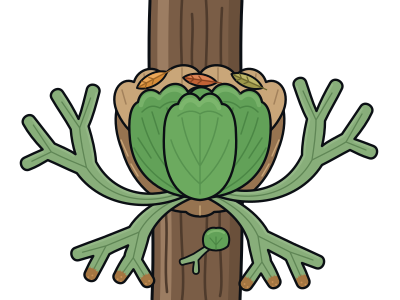
- Staghorn fernGrows on tree trunks, with antler-shaped fronds and a shield that catches falling leaves.