A species
Staghorn fern
Platycerium bifurcatum
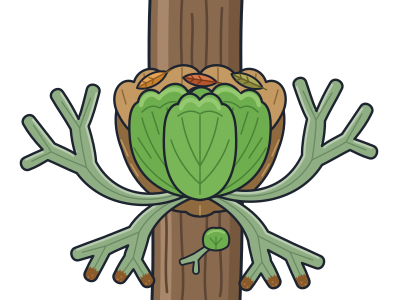
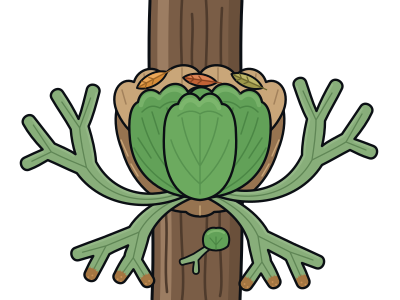
A fern that lives up a tree, with leaves like antlers and a shield that collects falling leaves.
You and the staghorn fern meet in the Eukaryotes branch, shown at about 1.8 billion years ago (on 28 July, in a calendar from life's shared ancestor to today).
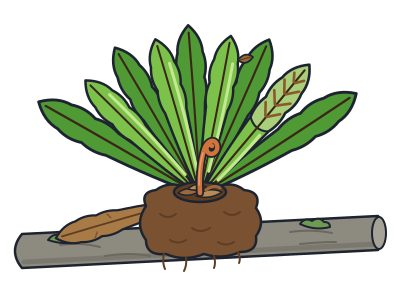
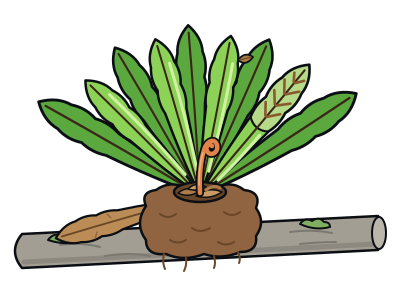
This fern does not need soil. It grows on the trunks and branches of trees, and sometimes on boulders. It makes two very different kinds of leaf, called fronds. Long, grey-green fronds fork again and again and hang down like a deer's antlers. Round, flat fronds overlap and press against the bark like a shield.
The shield is a clever extra. Falling leaves and other bits get trapped behind it and slowly rot into food for the fern. The shield also protects the roots from damage and from drying out. When old shield fronds die, they turn brown and papery but stay in place. They build up into a spongy layer that soaks up water, and new green shields grow over the top.
Up on its tree, the fern is not a parasite. It uses the tree only as a perch to reach the light, and takes no water or food from it.
Like the other ferns beside it on the tree, such as the Boston fern and bracken, it has no flowers or seeds. It grows wild in the forests of eastern Australia and is a popular garden plant around the world.
Two names, one fern
In Australia this fern is usually called the 'elkhorn fern'. There, 'staghorn fern' usually means a bigger relative, but in many other countries this species is sold as the staghorn fern.
Not a disease
Velvety brown patches under the antler tips are where the fern makes its spores. Gardeners sometimes mistake them for a disease.
Tougher than its relatives
It is one of the hardiest staghorn ferns and can survive about −1 °C. Most other staghorn species need at least about 13 °C.
Next to it on the tree
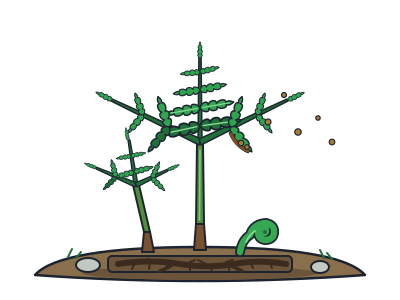
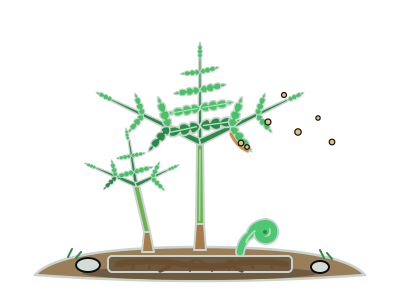
- Bracken fernSpreads by spores, not seeds; one of the most widespread plants on Earth.
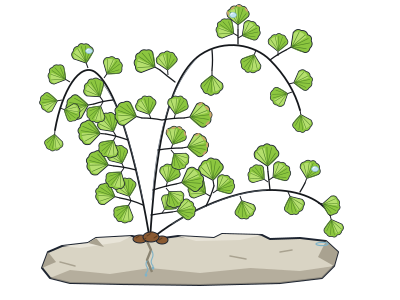
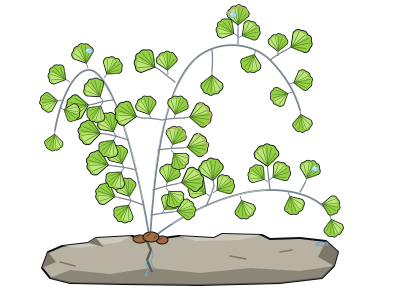
- Maidenhair fernDelicate fan-shaped leaflets on black wiry stems that shed water like wax.
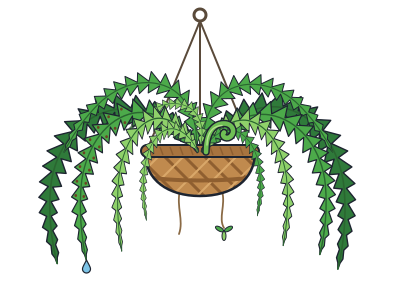
- Boston fernThe arching fern in hanging baskets, a parlour favourite since Victorian times.
- Bird's-nest fernA rosette of glossy undivided fronds high in rainforest trees that collects its own compost.