A species
Maidenhair fern
Adiantum capillus-veneris
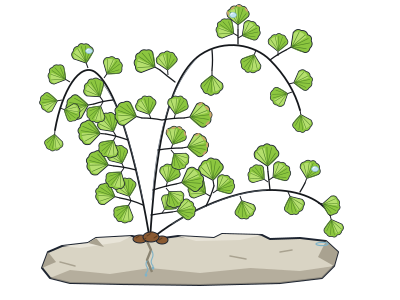
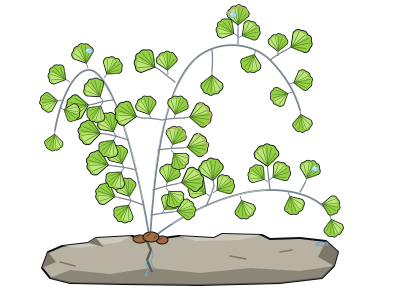
A lacy fern with fingernail-sized fans on black, hair-thin stalks. Water just beads up and rolls off.
You and the maidenhair fern meet in the Eukaryotes branch, shown at about 1.8 billion years ago (on 28 July, in a calendar from life's shared ancestor to today).
Drop water on a maidenhair fern and something odd happens. The water does not soak in. It gathers into round, shiny beads that roll straight off the leaves. Even the first part of its scientific name comes from an ancient Greek word meaning roughly 'unwettable'. That is a handy trick for a plant that lives on wet, dripping rock.
Look closer and you see that each frond is made of many tiny fans, each about the size of a fingernail. The light-green leaflets have fine veins that spread out like the ribs of a hand fan. They hang from thin, glossy black stalks as wiry as fishing line. Those dark stalks gave the plant a second name, 'hair of Venus', after the Roman goddess of love and beauty.
Its closest relatives are a surprise. They are the shoestring ferns, which have plain, ribbon-like leaves and mostly grow high up on tree trunks and branches in tropical forests. The ferns shown beside it here, such as bracken and the Boston fern, are only distant relatives within the same big fern group.
It grows in warm and mild regions around the world, on damp, shady limestone and sandstone cliffs near water. Like all ferns, it has no flowers or seeds. Instead it makes spores, tucked under little folded flaps along the edges of the leaflets.
Noticed by the Romans
Almost 2,000 years ago, the Roman writer Pliny the Elder pointed out that this plant grows in wet places but its leaves stay dry.
Taken by collectors
Fern collectors in the 1800s took so many plants that many wild sites in Britain were lost, mostly before 1930.
A big family
There are about 200 kinds of maidenhair fern. This is just one of them.
Next to it on the tree
- Bracken fernSpreads by spores, not seeds; one of the most widespread plants on Earth.
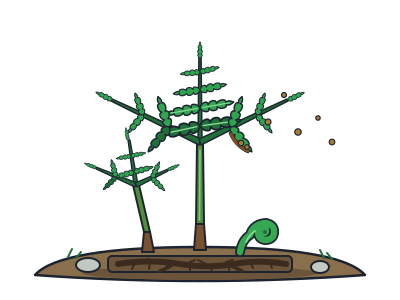
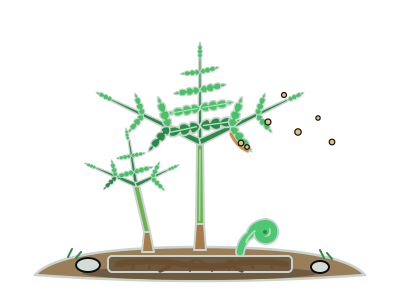
- Boston fernThe arching fern in hanging baskets, a parlour favourite since Victorian times.
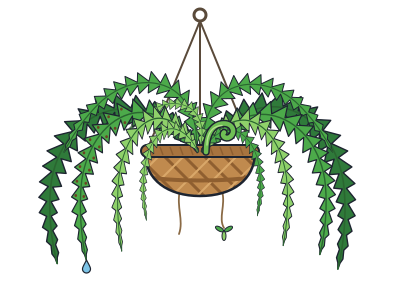
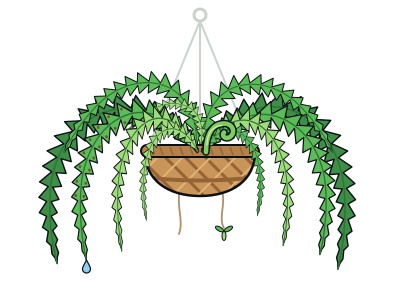
- Staghorn fernGrows on tree trunks, with antler-shaped fronds and a shield that catches falling leaves.
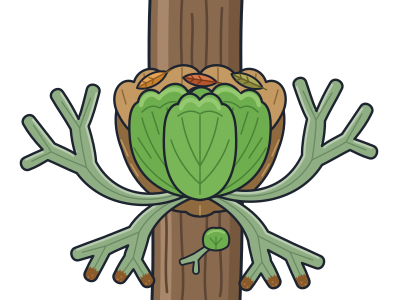
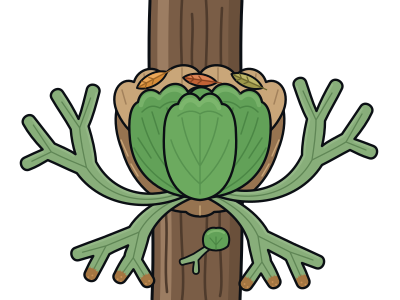
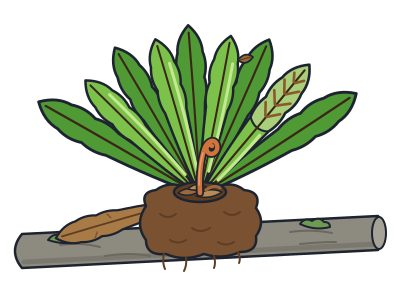
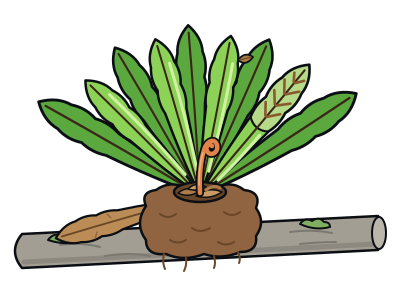
- Bird's-nest fernA rosette of glossy undivided fronds high in rainforest trees that collects its own compost.