A group of living things
Ants
Formicidae
Wasp relatives with wingless workers and colonies that can reach millions.
This branch is shown at about 160 million years ago; its age is a rough estimate.
You and ants meet in the Two-sided animals branch, shown at about 580 million years ago (on 11 November, in a calendar from life's shared ancestor to today).
Ants are a social branch of the wasp family tree. Bees and other wasps are their relatives, despite the very different look of a line of wingless workers. Some ant colonies contain millions of individuals, cooperating to gather food, raise young and defend their nest. But millions are not the rule for every colony.
Workers evolved from flying ancestors, but they do not start adult life with wings and then drop them. They develop as wingless adults. Losing flight freed space inside their bodies for larger, rearranged muscles supporting the head, legs and rear body. Their bodies became better suited to work on foot.
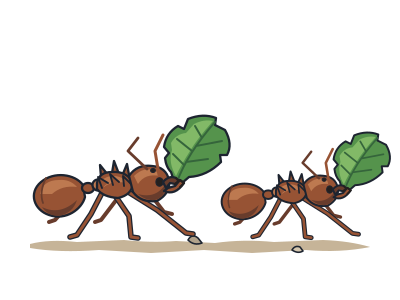
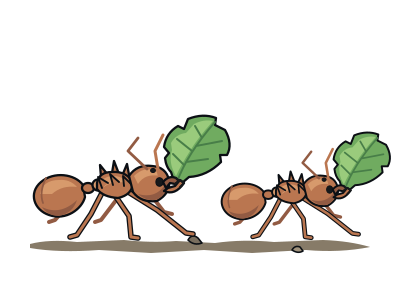
Watch a line of leafcutter ants carrying green leaf pieces. Those loads feed an underground fungus crop, which provides food for the colony. Other ants find food by following scent trails left by workers. They read these chemical messages with their feelers, called antennae—so a busy trail is also a route marked with messages.
A garden starter
A leafcutter queen carries a small piece of fungus from her birth nest to start her new colony’s garden.
Tiny passengers
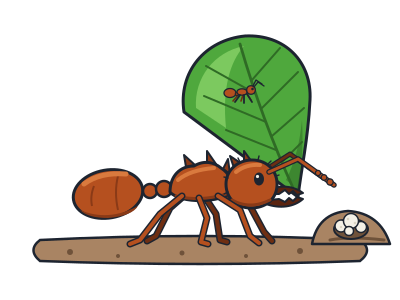
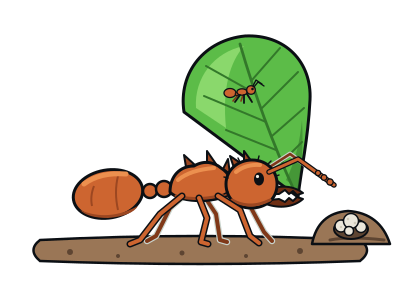
Some tiny leafcutter workers ride on leaf loads and help defend the carriers against parasitic insects.
Not all eyes work
Ants usually have two main eyes, but some species have reduced or nonfunctional eyes.
Inside ants
- Leafcutter antCarries leaf pieces home not to eat but to grow the fungus it feeds on.
- Army antColonies of half a million raid the forest floor and build living nests from their own bodies.
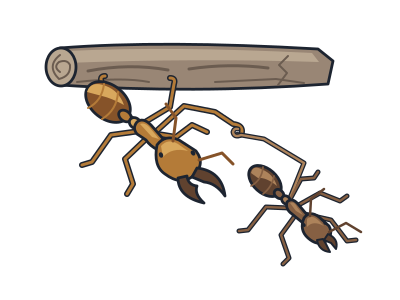
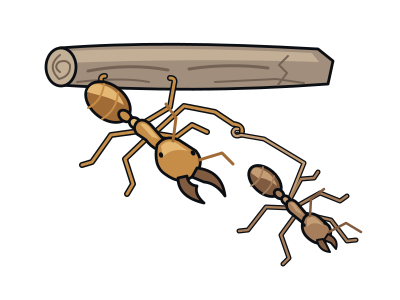
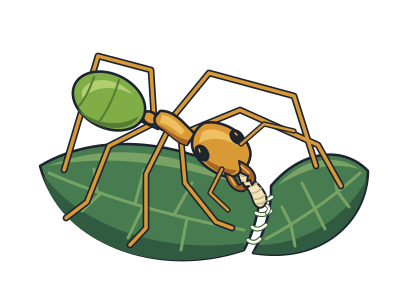
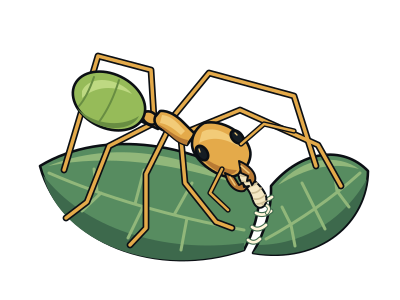
- Weaver antStitches leaves into nests using silk from its own larvae.
- Honeypot antSome workers hang from the ceiling as living larders, swollen with nectar.
- Trap-jaw antSnaps its jaws shut faster than almost any animal and can use them to leap.
- Red imported fire antLinks bodies to form living rafts that float through floods.
- Saharan silver antRuns across Saharan sand at midday, cooled by silvery hairs that reflect heat.
- Red wood antBuilds big domed mounds of pine needles in forests and sprays acid at intruders.
- TitanomyrmaA giant ant queen as big as a hummingbird, from the Messel pit.
Next to it on the tree
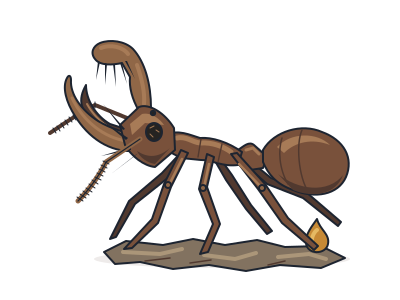
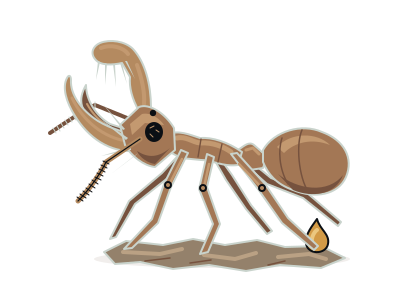
- Hell antA Cretaceous ant with a horn and jaws that snapped upwards, preserved in amber.
- BeesWasps that turned vegetarian, feeding their young on pollen instead of prey.
- Hornets and paper waspsWasps that chew wood into paper, from solitary potters to colonies of thousands.
- Giant woodwaspA harmless sawfly relative that drills into pine with a long egg-laying tube.
- Fig waspA tiny wasp that pollinates figs from the inside, in a partnership tens of millions of years old.