A species
Leafcutter ant
Atta cephalotes
A tiny farmer that grows its own food underground
You and the leafcutter ant meet in the Two-sided animals branch, shown at about 580 million years ago (on 11 November, in a calendar from life's shared ancestor to today).
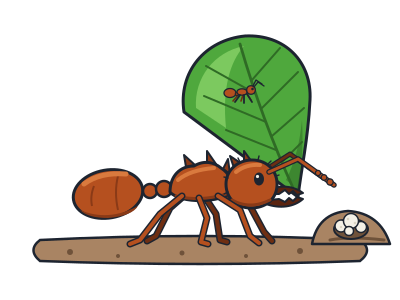
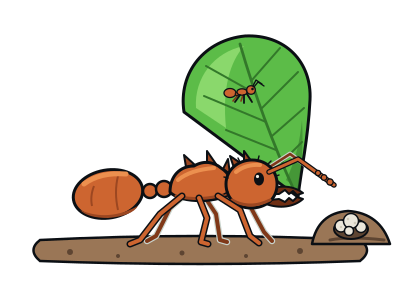
Watch a line of these ants marching home and you will see each one holding a green leaf piece up like a sail. It looks like they are carrying lunch, but they aren't. The ants can't digest tough leaves themselves. Instead they chop the leaves into tiny bits and feed them to a fungus that they grow in underground gardens. The fungus breaks the leaves down, and then the ants eat the fungus. Adults also sip plant sap, but the young are fed on fungus.
That makes these ants farmers. Their ancestors began growing fungus about 50 million years ago, long before people planted their first crops. They are ants, like their relatives the army ant and the weaver ant, and ants belong to the same big insect group as bees and wasps.
A colony works like a busy city. It can hold up to about 5 million workers, and all of them are daughters of one egg-laying queen. The workers come in different sizes with different jobs. The smallest look after the young and tend the garden. Middle-sized workers cut and carry leaves. Big-headed soldiers guard the nest and the trails. A worker can carry about six times its own weight.
This ant lives in wet tropical forests from southern Mexico through Central America into South America. Its scent trails can stretch up to about 120 metres, about as long as a football pitch, to reach the plants it harvests.
Hitchhiking guards
The tiniest workers ride on top of leaf pieces carried by bigger ants. They protect the carriers from flies that try to lay eggs on them.
Germ-fighting helpers
Workers carry helpful bacteria on their bodies. The bacteria make chemicals that keep pests out of the fungus garden.
A packed lunch for a new home
A young queen starting a new colony brings a small tuft of fungus from her parent nest to start her own garden.
Next to it on the tree
- Army antColonies of half a million raid the forest floor and build living nests from their own bodies.
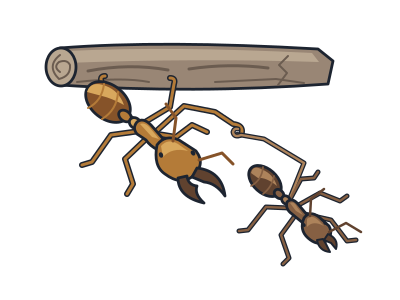
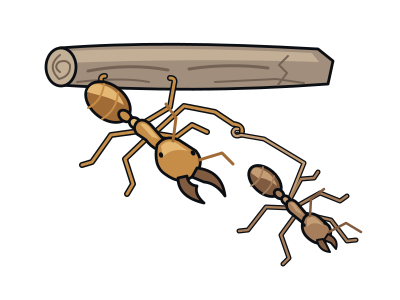
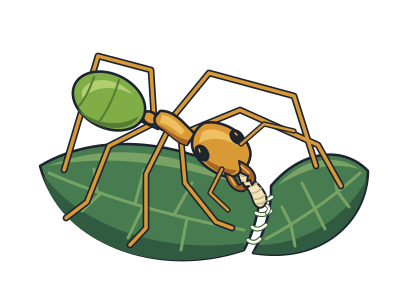
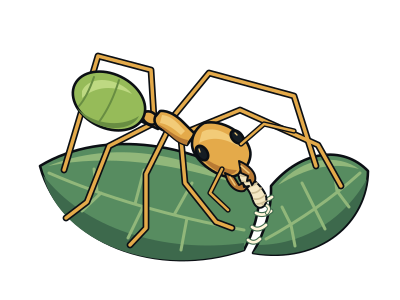
- Weaver antStitches leaves into nests using silk from its own larvae.
- Honeypot antSome workers hang from the ceiling as living larders, swollen with nectar.
- Trap-jaw antSnaps its jaws shut faster than almost any animal and can use them to leap.
- Red imported fire antLinks bodies to form living rafts that float through floods.
- Saharan silver antRuns across Saharan sand at midday, cooled by silvery hairs that reflect heat.
- Red wood antBuilds big domed mounds of pine needles in forests and sprays acid at intruders.
- TitanomyrmaA giant ant queen as big as a hummingbird, from the Messel pit.