A species
Trap-jaw ant
Odontomachus bauri
Snaps its jaws shut faster than almost any animal and can use them to leap.
You and the trap-jaw ant meet in the Two-sided animals branch, shown at about 580 million years ago (on 11 November, in a calendar from life's shared ancestor to today).
Two-sided animalsStarfish, sea squirts and usChordatesVertebratesJawed vertebratesBony fish and their descendantsLobe-finned fishFish on the way to landFour-limbed animalsAmniotesMammals and their ancestorsMammalsLive-bearing mammalsPlacental mammalsPrimates, rodents and rabbitsPrimatesApesGreat apesHumans and chimpanzeesHumanMouth-first animalsMoulting animalsArthropods and kinArthropodsCrustaceans and insectsInsectsWinged insectsInsects with full metamorphosisBees, wasps and antsAntsTrap-jaw ant
Snaps its jaws shut faster than almost any animal and can use them to leap.
The full page for Trap-jaw ant is still being written and drawn.
Next to it on the tree
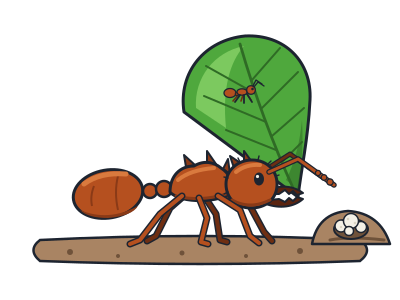
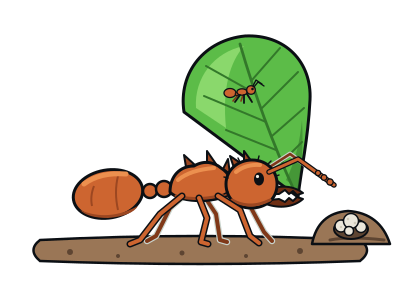
- Leafcutter antCarries leaf pieces home not to eat but to grow the fungus it feeds on.
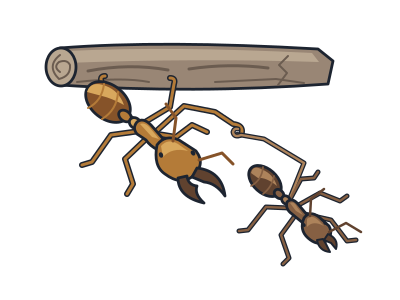
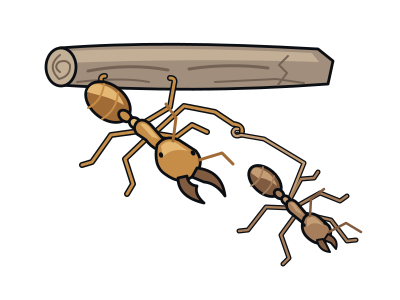
- Army antColonies of half a million raid the forest floor and build living nests from their own bodies.
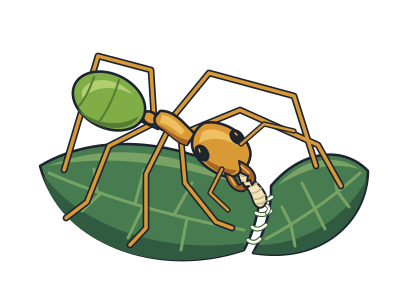
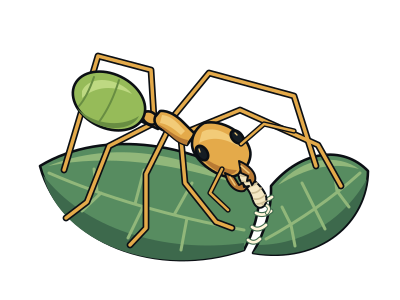
- Weaver antStitches leaves into nests using silk from its own larvae.
- Honeypot antSome workers hang from the ceiling as living larders, swollen with nectar.
- Red imported fire antLinks bodies to form living rafts that float through floods.
- Saharan silver antRuns across Saharan sand at midday, cooled by silvery hairs that reflect heat.
- Red wood antBuilds big domed mounds of pine needles in forests and sprays acid at intruders.
- TitanomyrmaA giant ant queen as big as a hummingbird, from the Messel pit.