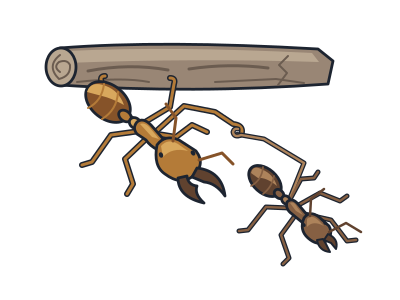
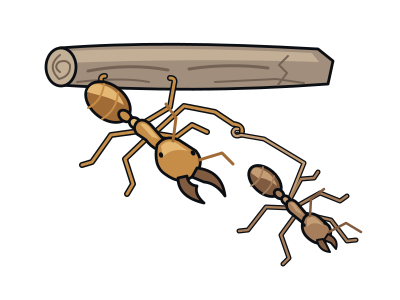
A species
Army ant
Eciton burchellii
About half a million workers, one living nest.
You and the army ant meet in the Two-sided animals branch, shown at about 580 million years ago (on 11 November, in a calendar from life's shared ancestor to today).
A colony of about half a million workers can raid the forest floor and build a living nest from its own bodies. These army ants belong to the same ant family as the leafcutter and weaver ants beside them on the tree. Those neighbours are relatives, but not necessarily their closest ones. Ants also belong to the wider insect group that includes bees and wasps.
Workers hook their feet together to form a temporary nest called a bivouac. The ants themselves make the structure: a nest built from living workers rather than just materials they collect.
When hunting, the swarm can spread across a front about 10 metres wide. It catches animals such as crickets, cockroaches and spiders. But the colony is not always on the move. It alternates between staying at one nest site and a travelling phase with frequent raids and moves. This cycle follows the development of its young, which need food as they grow.
A wingless queen
Unlike many familiar ant queens, this species’ queen never has wings.
Bridges made of ants
Workers join their bodies across gaps, letting other ants walk over them.
Messages beyond sight
Workers have very poor vision. They communicate using chemical signals, touch and vibrations.
Next to it on the tree
- Leafcutter antCarries leaf pieces home not to eat but to grow the fungus it feeds on.
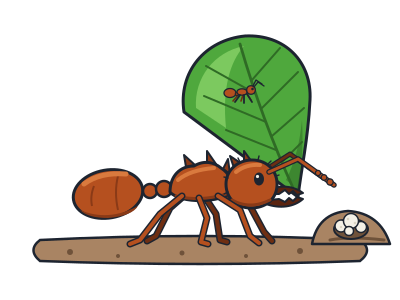
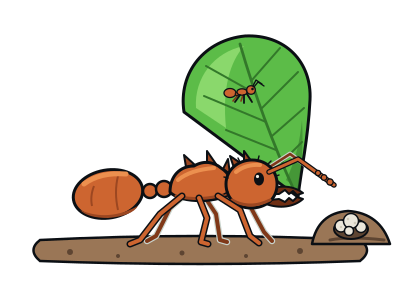
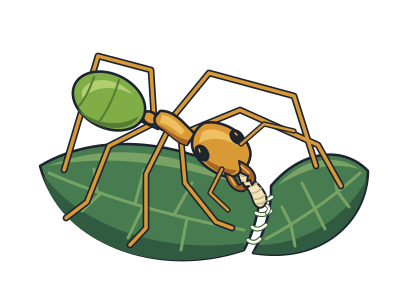
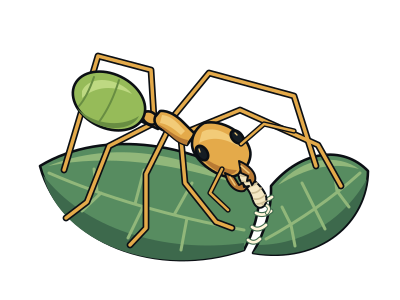
- Weaver antStitches leaves into nests using silk from its own larvae.
- Honeypot antSome workers hang from the ceiling as living larders, swollen with nectar.
- Trap-jaw antSnaps its jaws shut faster than almost any animal and can use them to leap.
- Red imported fire antLinks bodies to form living rafts that float through floods.
- Saharan silver antRuns across Saharan sand at midday, cooled by silvery hairs that reflect heat.
- Red wood antBuilds big domed mounds of pine needles in forests and sprays acid at intruders.
- TitanomyrmaA giant ant queen as big as a hummingbird, from the Messel pit.