A species
Weaver ant
Oecophylla smaragdina
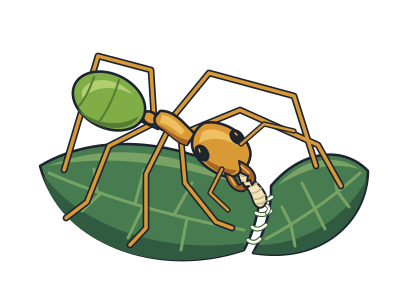
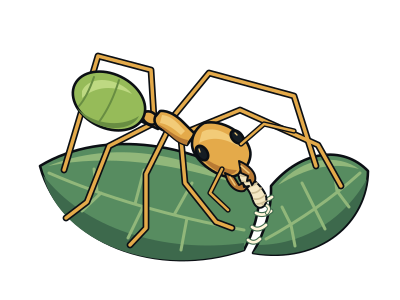
Leaves for walls, baby ants for silk
You and the weaver ant meet in the Two-sided animals branch, shown at about 580 million years ago (on 11 November, in a calendar from life's shared ancestor to today).
Weaver ant workers stitch leaves into nests with silk supplied by their colony's larvae—the young ants, not the adults. Some workers hold leaf edges together while others carry larvae across the joins, laying down silk threads. This unusual builder belongs to the same ant family as leafcutter ants and army ants: different ways of life within one family.
A single leaf nest may be only one part of the colony—the community of ants living together. One colony can occupy many nests spread across several trees. Larger workers mainly take on outside jobs, while smaller workers mainly work inside the nests.
Workers hunt insects and also collect animal remains. They tend small insects called scale insects and mealybugs for honeydew, a sugary liquid those insects produce. Their hunting can help farmers by controlling insect pests.
Not always green
Australian workers have yellow heads and middle sections with green rear sections. In Singapore, their rear sections are reddish.
Down to earth
Although their nests are above ground, workers search for food both on plants and on the ground.
Watch without touching
Workers defend their nests and may bite and spray acid when disturbed.
Next to it on the tree
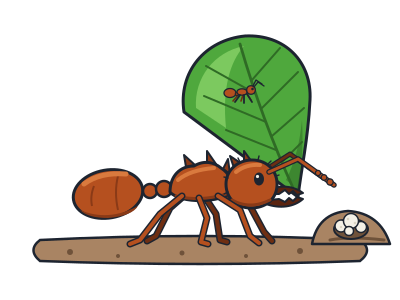
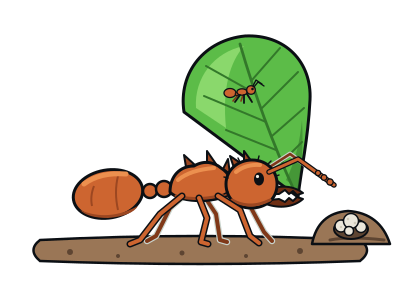
- Leafcutter antCarries leaf pieces home not to eat but to grow the fungus it feeds on.
- Army antColonies of half a million raid the forest floor and build living nests from their own bodies.
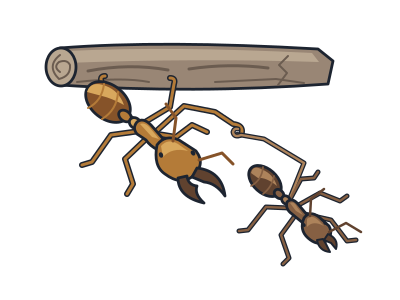
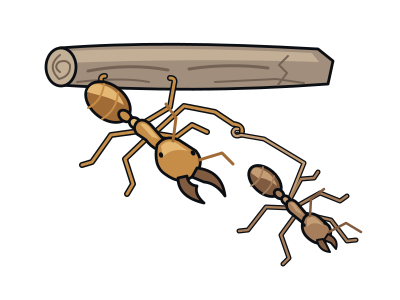
- Honeypot antSome workers hang from the ceiling as living larders, swollen with nectar.
- Trap-jaw antSnaps its jaws shut faster than almost any animal and can use them to leap.
- Red imported fire antLinks bodies to form living rafts that float through floods.
- Saharan silver antRuns across Saharan sand at midday, cooled by silvery hairs that reflect heat.
- Red wood antBuilds big domed mounds of pine needles in forests and sprays acid at intruders.
- TitanomyrmaA giant ant queen as big as a hummingbird, from the Messel pit.