An extinct species
Hell ant †
Ceratomyrmex ellenbergeri
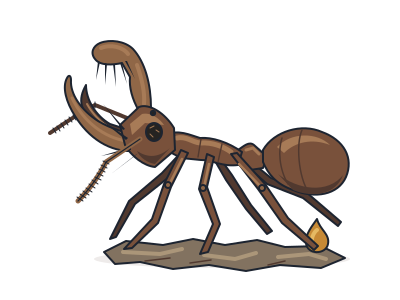
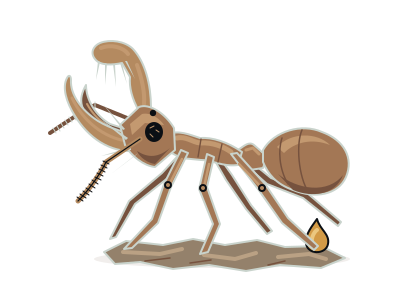
An ancient ant with upward-closing jaws and a horn.
Lived about 99–98 million years ago.
You and the hell ant meet in the Two-sided animals branch, shown at about 580 million years ago (on 11 November, in a calendar from life's shared ancestor to today).
This Cretaceous ant had a horn above long jaws that swung upwards, rather than closing sideways like those of living ants. Despite that strange head, it belonged to the wider ant family. Hell ants formed an extinct side branch outside the group containing all living ants. This species was not established as their direct ancestor.
It lived about 99 to 98 million years ago. Its fossils came from northern Myanmar, preserved in amber: fossilised tree resin. One remarkable specimen showed a worker holding a young cockroach relative between its jaws and horn. This gave scientists strong evidence for how its unusual hunting equipment worked.
The horn was not a third jaw. It was a fixed projection on the head, towards which the jaws moved. Before the prey-holding fossil was reported, that upward movement had been a proposed explanation. The fossil strongly supported it, although it could not reveal exactly how fast the jaws snapped shut.
A paddle-shaped tip
Its horn curved forwards and widened into a rounded paddle at the tip.
A hairy underside
Long, tapering hairs covered the underside of its horn.
Jointed feelers
Each of its two elbowed antennae had 12 segments.
Next to it on the tree
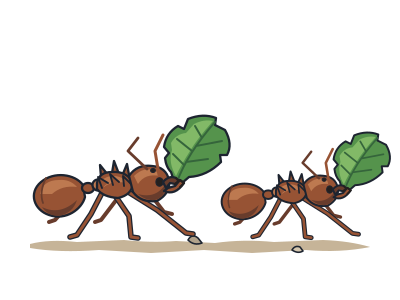
- AntsSocial wasps that gave up wings for most of their lives and built colonies of millions.
- BeesWasps that turned vegetarian, feeding their young on pollen instead of prey.
- Hornets and paper waspsWasps that chew wood into paper, from solitary potters to colonies of thousands.
- Giant woodwaspA harmless sawfly relative that drills into pine with a long egg-laying tube.
- Fig waspA tiny wasp that pollinates figs from the inside, in a partnership tens of millions of years old.