A group of living things
Segmented worms
Annelida
Worms built from rings, from garden earthworms to rainbow reef worms
This branch is shown at about 525 million years ago; its age is a rough estimate.
You and segmented worms meet in the Two-sided animals branch, shown at about 580 million years ago (on 11 November, in a calendar from life's shared ancestor to today).
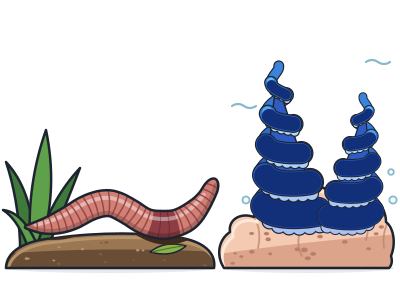
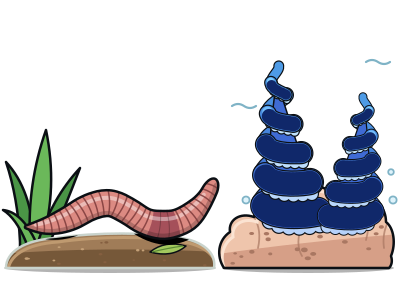
An earthworm in your garden and a tiny rainbow-coloured "tree" on a coral reef look nothing alike. Yet both belong to the same big group of worms built from rings. In most of them, the body is a chain of repeated segments, and each segment carries the same set of organs, a bit like the carriages of a train. Thin inner walls often separate one segment from the next.
There are more than 22,000 living kinds. About 12,000 are bristle worms, and most of those live in the sea. Many sea species have fleshy, leg-like flaps along their sides, often with tiny bristles. The other big group includes earthworms and leeches. DNA studies turned up a surprise: earthworm-type worms branched off from within the bristle worms, and leeches branched off from within the earthworm-type worms. So a leech is really a rather unusual relative of the earthworm.
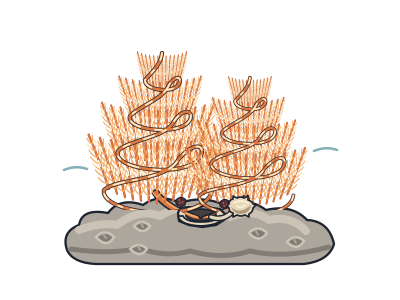
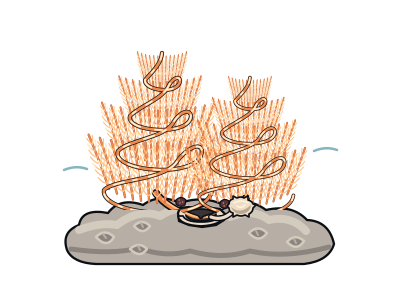
Christmas tree worms show how different members can look. All you see are two bright spiral crowns poking out of a tube in the coral. These worms are small, usually only about 4 cm long. A worm uses its feathery crowns to breathe and to catch tiny bits of drifting food, and it snaps back inside when startled. Across the whole group, sizes range from worms too small to see to giants several metres long.
No mouth, no problem
The giant tube worm of deep-sea hot vents can grow to about 3 metres long, yet the adult has no mouth or gut. Bacteria living inside its body make food from chemicals in the vent water.
Not all leeches drink blood
There are about 680 kinds of leech. Only about three-quarters of them feed on blood. The rest hunt small animals. Inside, a leech's body is usually counted as 32 segments, and most leeches have a sucker at each end.
Family members in disguise
Peanut worms, spoon worms and beard worms were once treated as separate groups of animals. Scientists now count all of them as segmented worms, even though some look nothing like a ringed worm.
Inside segmented worms
- Christmas tree wormA tube-dwelling worm with two spiral feather plumes that vanish in a blink.
- Giant tube wormLives at deep-sea vents with no mouth or gut, fed by bacteria inside it.
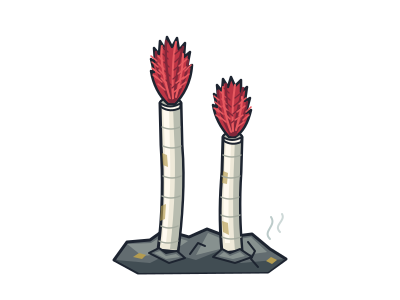
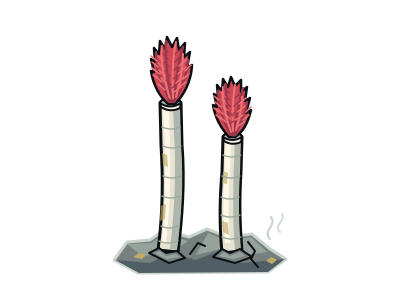
- Pompeii wormLives on deep-sea vent chimneys, among the most heat-tolerant animals known.
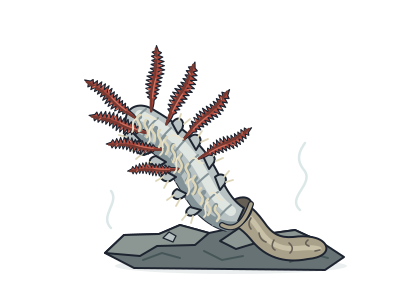
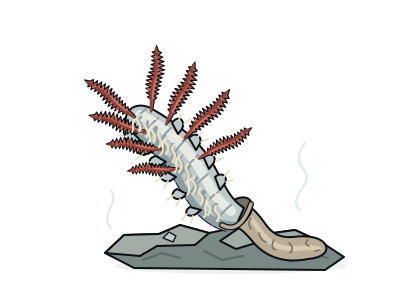
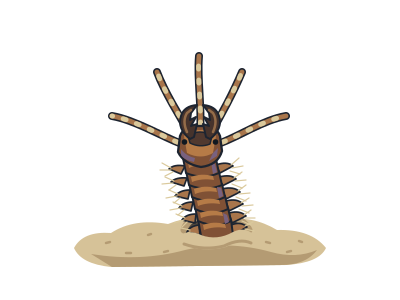
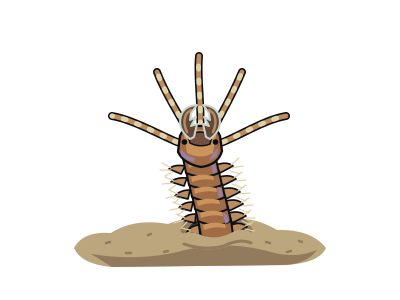
- Sand strikerHides in the sand and snaps up passing fish with scissor jaws; it can grow nearly three metres long.
- Earthworms and leechesRinged worms with a saddle-like band that makes a cocoon for their eggs.
- LugwormLives in a U-shaped burrow and leaves the coiled sand casts you see on beaches at low tide.
- Sea mouseA furry oval worm whose bristles shine with rainbow colours.
- Bone-eating wormA deep-sea worm with no mouth or gut that grows roots into the bones of dead whales.
- Peanut wormA plump unsegmented worm that pulls its head in to look like a peanut; it turns out to be a ringed worm.
- Fat innkeeper wormA sausage-shaped worm whose burrow is shared by crabs, fish and shrimp that stay as guests.
Next to it on the tree
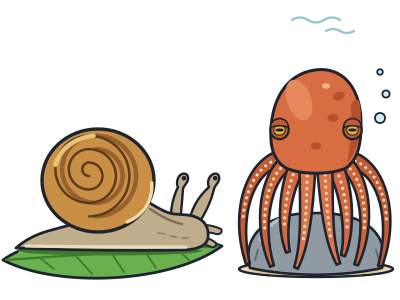
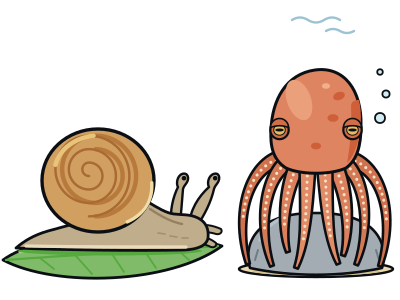
- MolluscsSnails, clams and octopuses: one family, wildly different bodies.
- Moss animalA crawling jelly colony of tiny tentacled animals in fresh water.
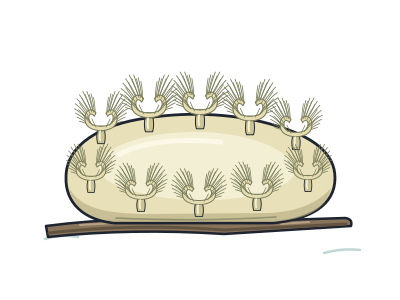
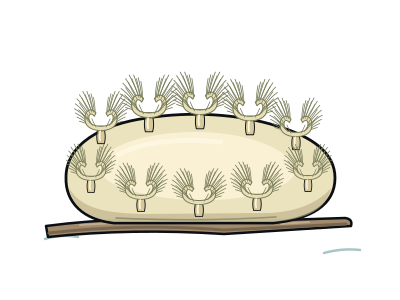
- Bootlace wormMay be the longest animal, with records of 30 metres or more.
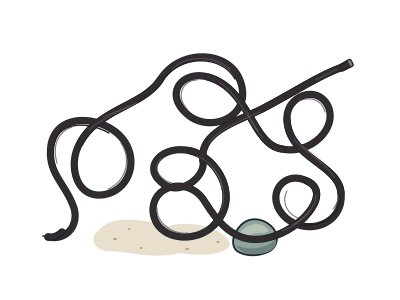
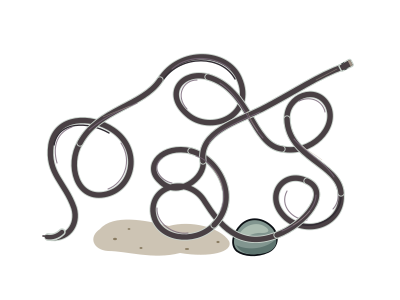
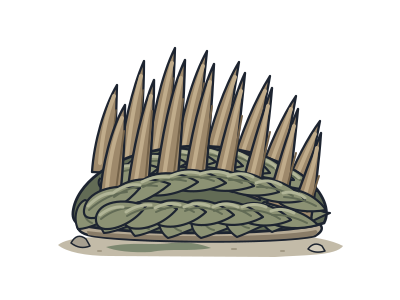
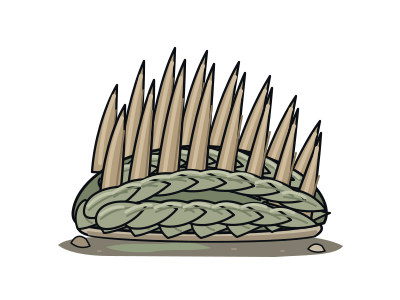
- WiwaxiaA Cambrian slug covered in scales and tall spines.
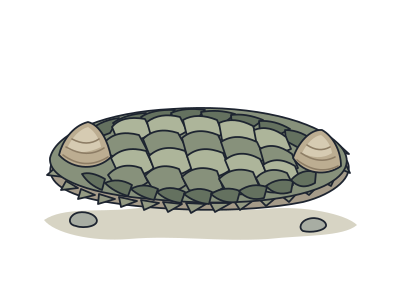
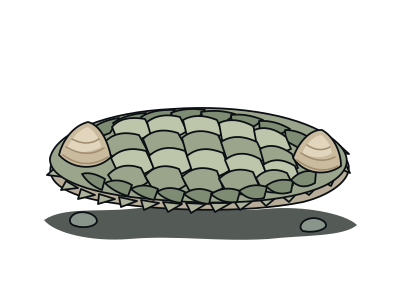
- HalkieriaA Cambrian slug covered in chain-mail scales, with a small shell at each end.
- Lamp shells and horseshoe wormsFilter feeders with a crown of tentacles; some hide in two-part shells, some in tubes.
- OdontogriphusA flat Burgess Shale grazer with a toothed tongue, perhaps a shell-less early mollusc.