An extinct species
Halkieria †
Halkieria evangelista
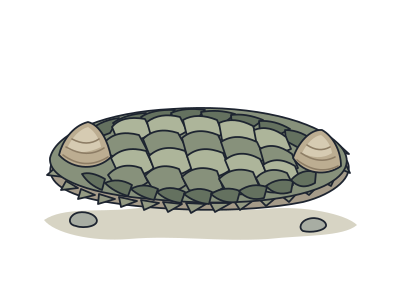
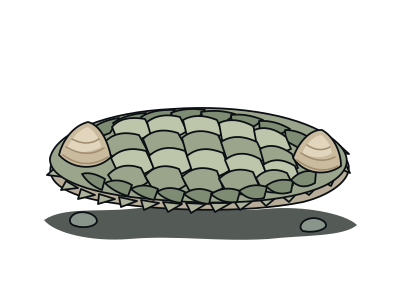
A slug-shaped animal in chain-mail armour, with a shell at each end.
Lived about 518–515 million years ago.
You and the halkieria meet in the Two-sided animals branch, shown at about 580 million years ago (on 11 November, in a calendar from life's shared ancestor to today).
It looked like a slug wearing chain mail, with a small shell near each end of its back. But “slug-like” described its shape, not a proven place among modern sea slugs. Many overlapping armour plates covered its long, oval body. The two larger shells sat apart, rather than closing together like a clam’s shell.
It lived in the sea. Its fossils were dated to about 518 to 515 million years ago and came from Sirius Passet in northern Greenland. Some preserved the shells and little armour plates still together, showing how these separate pieces fitted around one animal.
These fossils included flattened impressions in dark shale. They revealed the arrangement of the armour, but not every detail of the animal underneath. An apparently complete coat of armour was not the same as a completely preserved body.
Growing at the edges
Curved lines on both end shells showed that they grew by adding material around their edges.
A first-day discovery
Paul Smith found the first complete example on the first day of the major 1989 Sirius Passet expedition.
Named for a photographer
Its name honoured Christian Halkier, a former photographer at Copenhagen’s Geological Museum.
Next to it on the tree
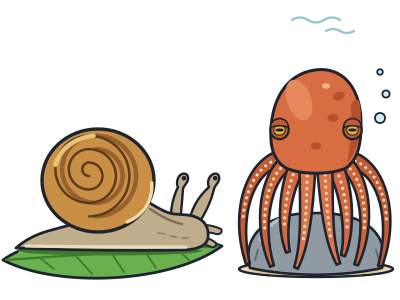
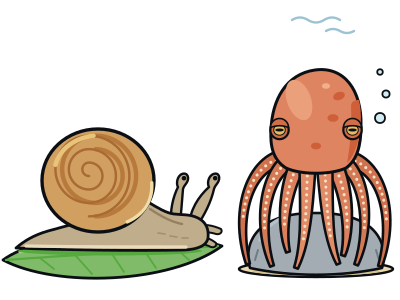
- MolluscsSnails, clams and octopuses: one family, wildly different bodies.
- Segmented wormsWorms built from repeated rings: earthworms, leeches and colourful sea worms.
- Moss animalA crawling jelly colony of tiny tentacled animals in fresh water.
- Bootlace wormMay be the longest animal, with records of 30 metres or more.

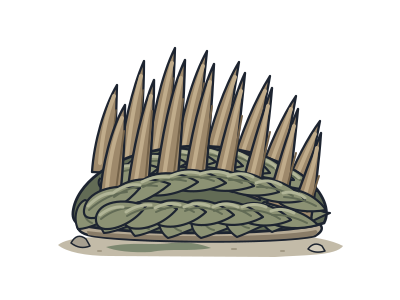
- WiwaxiaA Cambrian slug covered in scales and tall spines.
- Lamp shells and horseshoe wormsFilter feeders with a crown of tentacles; some hide in two-part shells, some in tubes.
- OdontogriphusA flat Burgess Shale grazer with a toothed tongue, perhaps a shell-less early mollusc.