An extinct species
Wiwaxia †
Wiwaxia corrugata
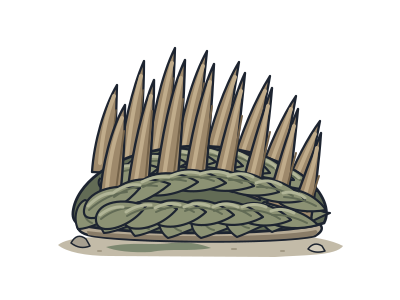
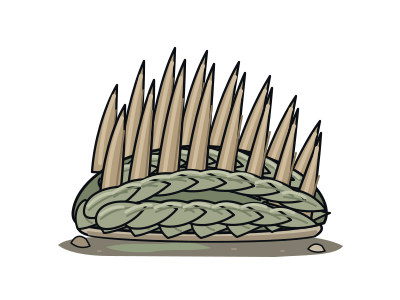
A Cambrian slug-like animal covered in scales and tall spines.
Lived about 510–505 million years ago.
You and the wiwaxia meet in the Two-sided animals branch, shown at about 580 million years ago (on 11 November, in a calendar from life's shared ancestor to today).
It looked like a small slug wearing overlapping scales and tall, blade-like spines. This sea-floor animal lived during the Cambrian, within the broad span of about 510 to 505 million years ago. Its best-known fossils dated to about 506 to 505 million years ago. Its foot and mouthparts resembled those of molluscs, while its covering invited comparisons with bristled worms: a surprising mix of features.
Its back and sides carried the scaly covering, but its underside had no scales or spines. A broad foot occupied most of that underside. Larger individuals had two lines of long spines rising above the back. These were spines, not walking legs.
Fossils from the Burgess Shale in the Canadian Rockies preserved whole individuals with their coverings still together, as well as loose scales and mouthparts. These remains revealed an animal with tough scales, rather than the mineral shells of many living molluscs.
Spines came later
The smallest individuals lacked long spines. These began developing at body lengths of about 8–16 millimetres.
A covering that grew piece by piece
It added and replaced individual scales as it grew, rather than shedding its whole covering at once.
An early mistaken identity
The first fossil described, in 1899, was just one piece of its covering. It was initially mistaken for a worm tube.
Next to it on the tree
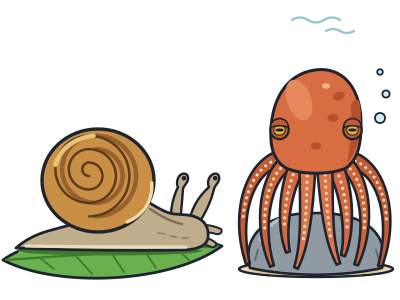
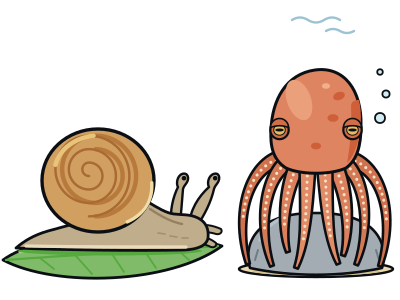
- MolluscsSnails, clams and octopuses: one family, wildly different bodies.
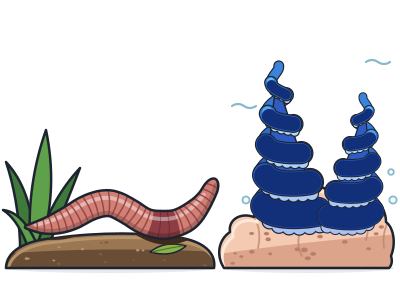
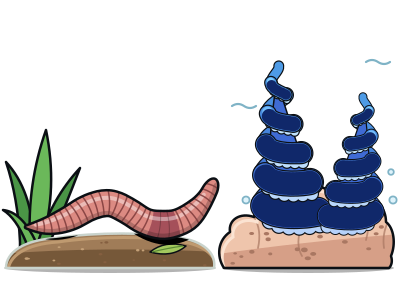
- Segmented wormsWorms built from repeated rings: earthworms, leeches and colourful sea worms.
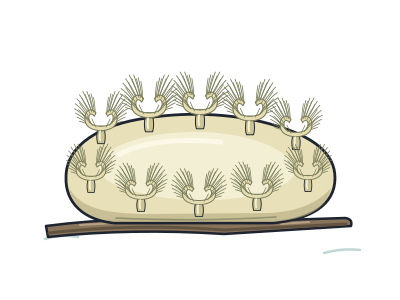
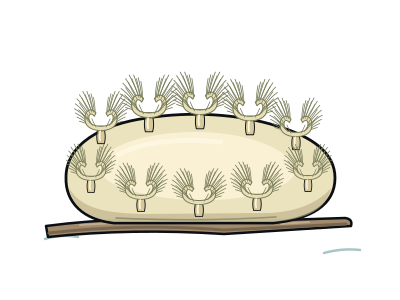
- Moss animalA crawling jelly colony of tiny tentacled animals in fresh water.
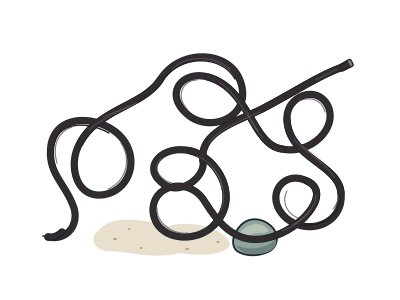
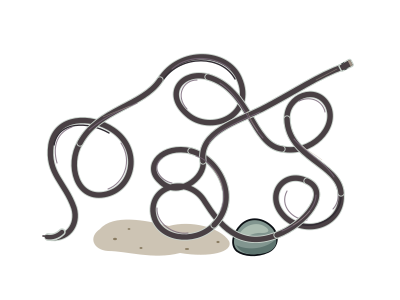
- Bootlace wormMay be the longest animal, with records of 30 metres or more.
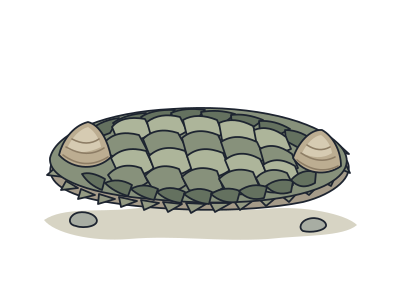
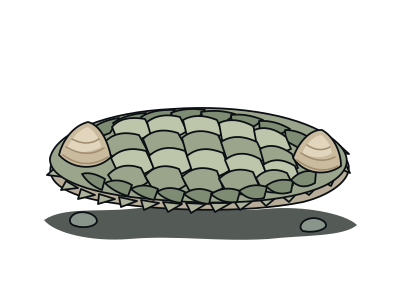
- HalkieriaA Cambrian slug covered in chain-mail scales, with a small shell at each end.
- Lamp shells and horseshoe wormsFilter feeders with a crown of tentacles; some hide in two-part shells, some in tubes.
- OdontogriphusA flat Burgess Shale grazer with a toothed tongue, perhaps a shell-less early mollusc.