A species
Bootlace worm
Lineus longissimus
A bootlace-thin contender for the longest animal
You and the bootlace worm meet in the Two-sided animals branch, shown at about 580 million years ago (on 11 November, in a calendar from life's shared ancestor to today).
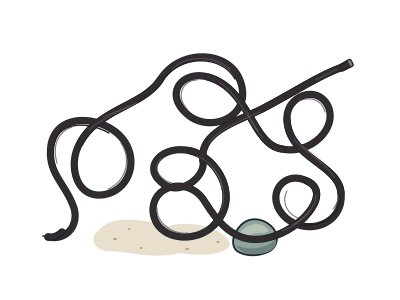
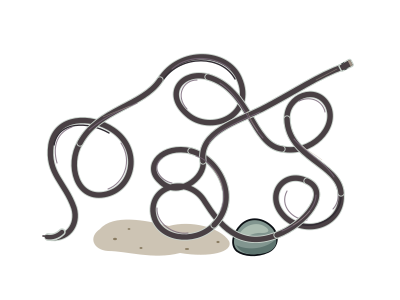
The bootlace worm may be the longest animal, with reports of individuals reaching about 30 metres or more. That is longer than a bus, yet its body is usually only about 5 millimetres wide: roughly bootlace thickness. Extreme length records need caution because this flexible animal is difficult to measure consistently.
Despite its worm-like shape, it belongs to the ribbon worms, a separate group from segmented worms. Ribbon worms share a broad branch of the animal family tree with molluscs, segmented worms and lamp shells. These relatives show how different animals on the same branch can look. The bootlace worm has no repeated outer sections: its body looks like one continuous cord.
Adults are usually dark brown to black, sometimes with a purple sheen. Rather than lying stretched out, the worm often forms a tangled mass beneath boulders, inside rock cracks or among the structures that anchor kelp. Its home is the lower shore and shallow seabed, including muddy, sandy and shelly ground.
Hidden eyes
About 10–20 tiny, dark eyes run along each side of the snout. Its dark colour can make them hard to spot.
A slimy response
When disturbed, it produces plenty of thick mucus.
Different colours when young
Young bootlace worms range from olive-brown to chocolate-brown.
Next to it on the tree
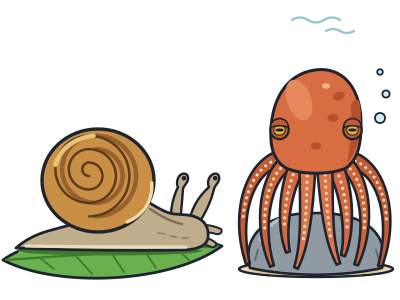
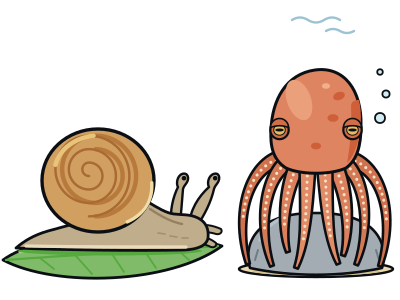
- MolluscsSnails, clams and octopuses: one family, wildly different bodies.
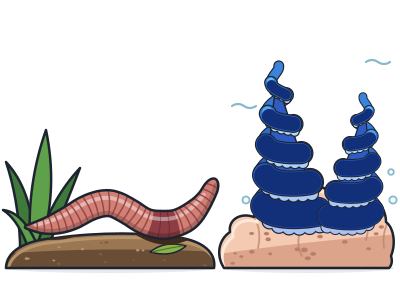
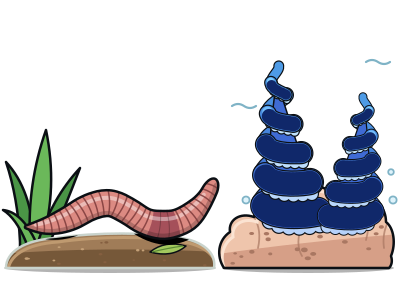
- Segmented wormsWorms built from repeated rings: earthworms, leeches and colourful sea worms.
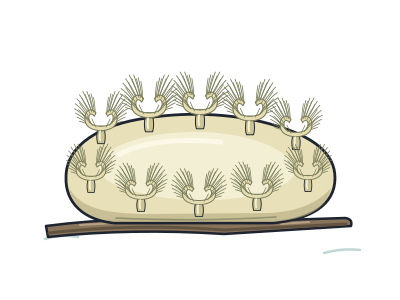
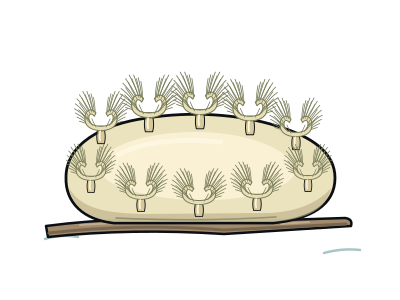
- Moss animalA crawling jelly colony of tiny tentacled animals in fresh water.
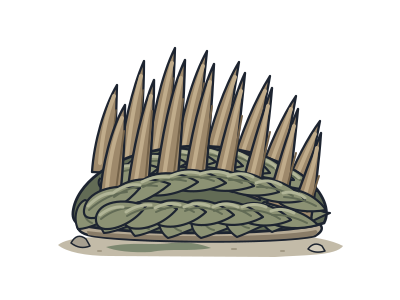
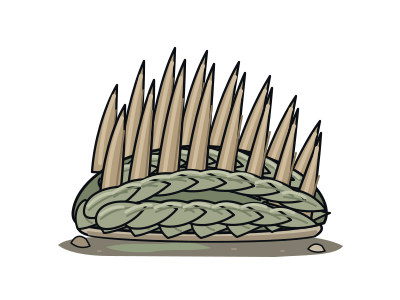
- WiwaxiaA Cambrian slug covered in scales and tall spines.
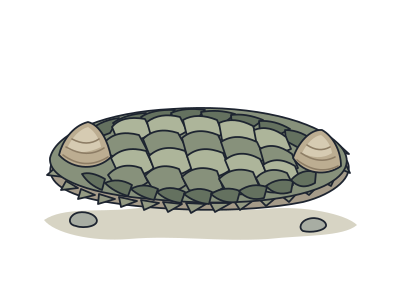
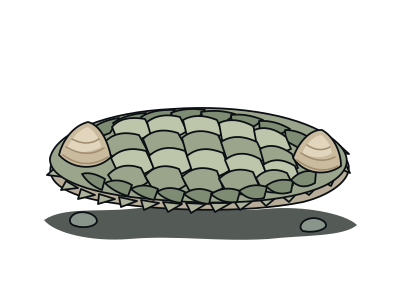
- HalkieriaA Cambrian slug covered in chain-mail scales, with a small shell at each end.
- Lamp shells and horseshoe wormsFilter feeders with a crown of tentacles; some hide in two-part shells, some in tubes.
- OdontogriphusA flat Burgess Shale grazer with a toothed tongue, perhaps a shell-less early mollusc.