A species
Sand striker
Eunice aphroditois
A hidden worm with scissor-like jaws
You and the sand striker meet in the Two-sided animals branch, shown at about 580 million years ago (on 11 November, in a calendar from life's shared ancestor to today).
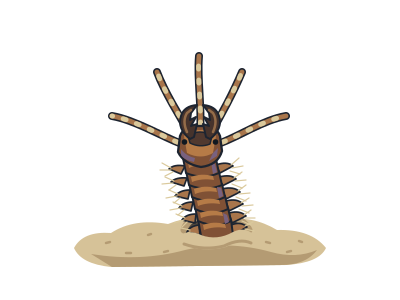
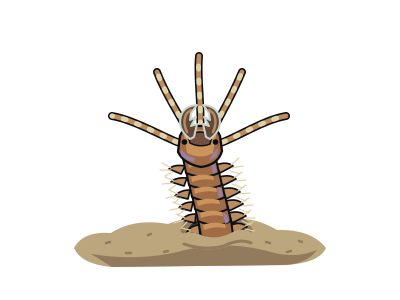
The sand striker hides beneath the sand, then snaps up passing fish with sharp, scissor-like jaws. It pulls its catch into its burrow. An exceptionally large sand striker can stretch nearly three metres—longer than most adults are tall—yet most of that long body stays hidden from view.
This fish-catching hunter belongs to the segmented worms, the same broad group as earthworms and leeches. Its long, narrow body is divided into hundreds of short sections. Paired little paddles along its sides carry fine bristles, rather than the jointed legs of an insect.
Five slender feelers spread from its head and help it detect nearby prey. Darkness is not essential for a hunt: the sand striker can catch fish during daylight while staying concealed. At night, it reaches farther out of its burrow.
Two eyes
The sand striker has two eyes, as well as its head feelers.
A lined shelter
Its burrow has a lining of mucus, a slippery substance.
Fish fight back
Some fish direct jets of water towards its burrow. These sometimes make the sand striker retreat.
Next to it on the tree
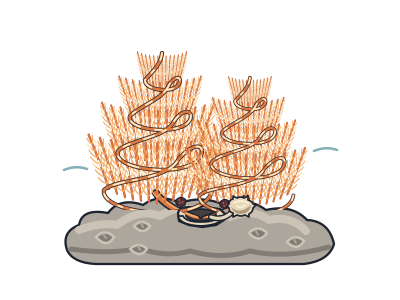
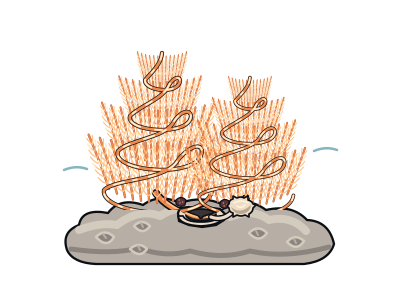
- Christmas tree wormA tube-dwelling worm with two spiral feather plumes that vanish in a blink.
- Giant tube wormLives at deep-sea vents with no mouth or gut, fed by bacteria inside it.
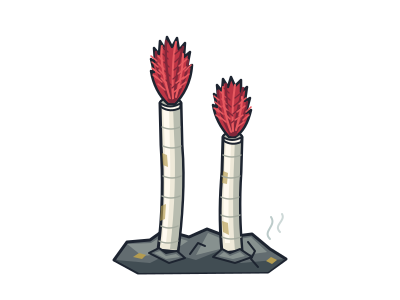
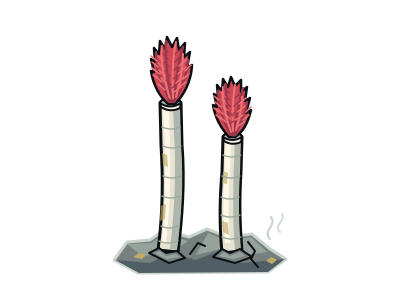
- Pompeii wormLives on deep-sea vent chimneys, among the most heat-tolerant animals known.
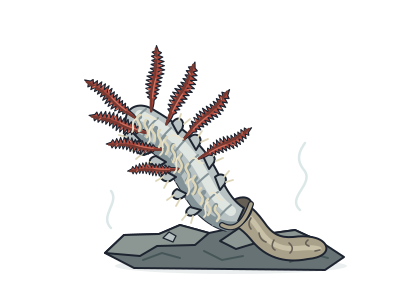
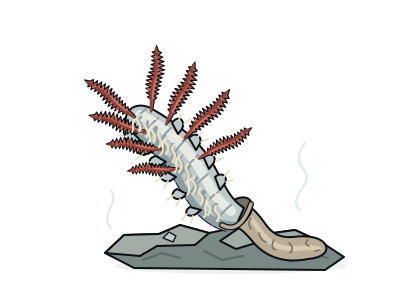
- Earthworms and leechesRinged worms with a saddle-like band that makes a cocoon for their eggs.
- LugwormLives in a U-shaped burrow and leaves the coiled sand casts you see on beaches at low tide.
- Sea mouseA furry oval worm whose bristles shine with rainbow colours.
- Bone-eating wormA deep-sea worm with no mouth or gut that grows roots into the bones of dead whales.
- Peanut wormA plump unsegmented worm that pulls its head in to look like a peanut; it turns out to be a ringed worm.
- Fat innkeeper wormA sausage-shaped worm whose burrow is shared by crabs, fish and shrimp that stay as guests.