A species
Christmas tree worm
Spirobranchus giganteus
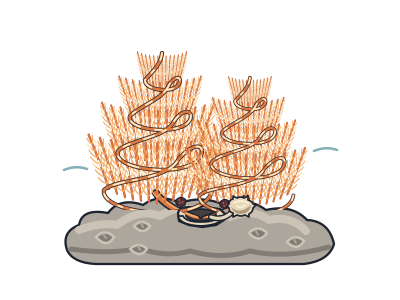
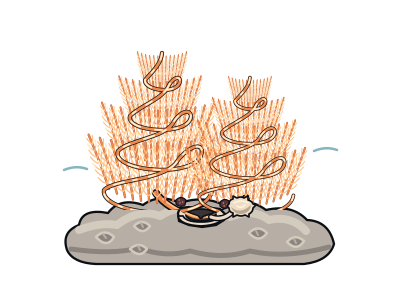
Two spiral plumes, one hidden worm.
You and the christmas tree worm meet in the Two-sided animals branch, shown at about 580 million years ago (on 11 November, in a calendar from life's shared ancestor to today).
A tube-dwelling worm with two spiral, feather-like plumes can make its little trees vanish in a blink. This surprising animal belongs to the segmented worms, the same broad animal group as earthworms and leeches. Both colourful plumes belong to one worm, not two, and most of its body stays hidden.
The plumes are called crowns. They are working parts, not decorations: they help the worm breathe and catch food drifting through the seawater. Its meals include tiny plant-like organisms too small to see without a microscope. While the crowns reach into the water, a hard tube protects the soft body below.
Adult worms stay settled in their tube homes rather than roaming across the reef. Their homes are usually closely associated with coral. When startled, a worm rapidly pulls its crowns inside, then plugs the opening with a lid carried on a special stalk.
Eyes near the crowns
A pair of eyes sits near the crown bases. Each eye contains many tiny light-sensing units.
Hooks for holding on
Small hooked bristles help anchor the worm inside its tube.
A drifting childhood
Young worms first drift in the water before settling and developing their tube homes.
Next to it on the tree
- Giant tube wormLives at deep-sea vents with no mouth or gut, fed by bacteria inside it.
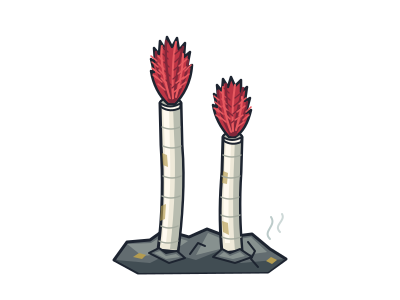
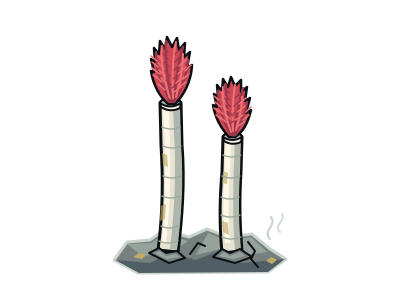
- Pompeii wormLives on deep-sea vent chimneys, among the most heat-tolerant animals known.
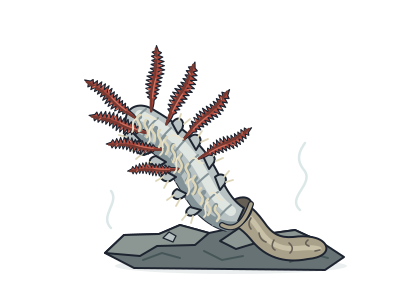
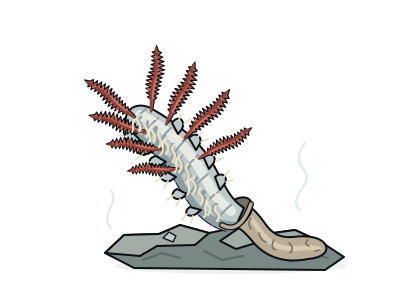
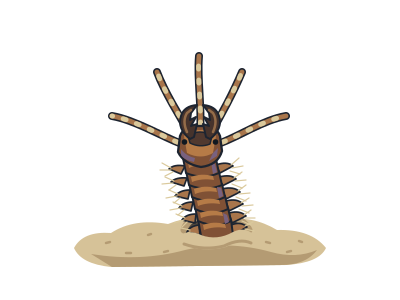
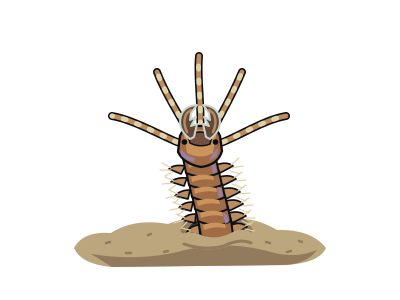
- Sand strikerHides in the sand and snaps up passing fish with scissor jaws; it can grow nearly three metres long.
- Earthworms and leechesRinged worms with a saddle-like band that makes a cocoon for their eggs.
- LugwormLives in a U-shaped burrow and leaves the coiled sand casts you see on beaches at low tide.
- Sea mouseA furry oval worm whose bristles shine with rainbow colours.
- Bone-eating wormA deep-sea worm with no mouth or gut that grows roots into the bones of dead whales.
- Peanut wormA plump unsegmented worm that pulls its head in to look like a peanut; it turns out to be a ringed worm.
- Fat innkeeper wormA sausage-shaped worm whose burrow is shared by crabs, fish and shrimp that stay as guests.