A species
Fat innkeeper worm
Urechis caupo
A sausage-shaped worm whose burrow is shared by crabs, fish and shrimp that stay as guests.
You and the fat innkeeper worm meet in the Two-sided animals branch, shown at about 580 million years ago (on 11 November, in a calendar from life's shared ancestor to today).
Two-sided animalsStarfish, sea squirts and usChordatesVertebratesJawed vertebratesBony fish and their descendantsLobe-finned fishFish on the way to landFour-limbed animalsAmniotesMammals and their ancestorsMammalsLive-bearing mammalsPlacental mammalsPrimates, rodents and rabbitsPrimatesApesGreat apesHumans and chimpanzeesHumanMouth-first animalsMolluscs, worms and kinMolluscs, ringed worms and kinSegmented wormsFat innkeeper worm
A sausage-shaped worm whose burrow is shared by crabs, fish and shrimp that stay as guests.
The full page for Fat innkeeper worm is still being written and drawn.
Next to it on the tree
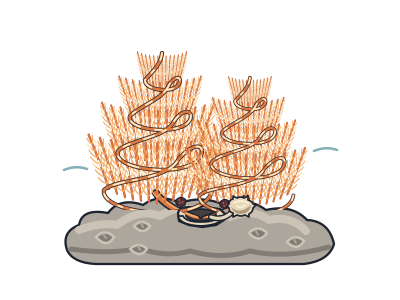
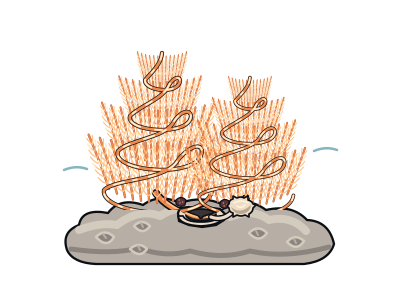
- Christmas tree wormA tube-dwelling worm with two spiral feather plumes that vanish in a blink.
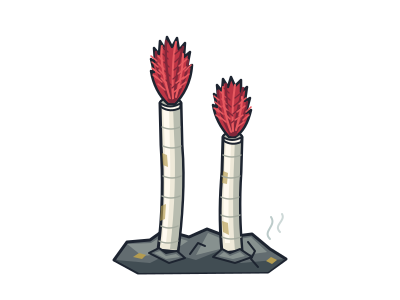
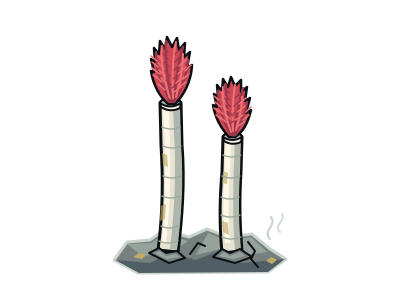
- Giant tube wormLives at deep-sea vents with no mouth or gut, fed by bacteria inside it.
- Pompeii wormLives on deep-sea vent chimneys, among the most heat-tolerant animals known.
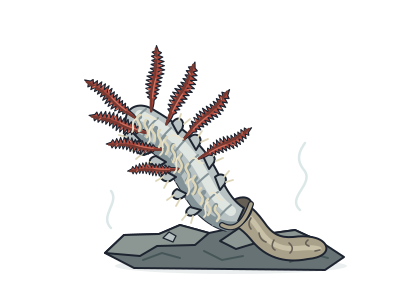
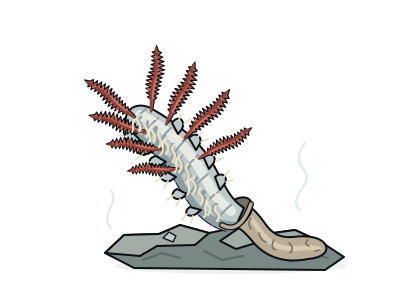
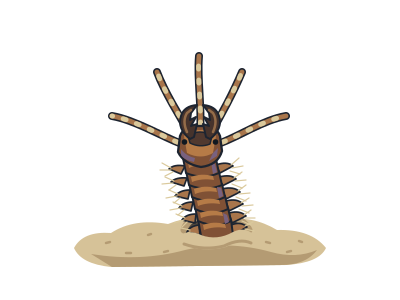
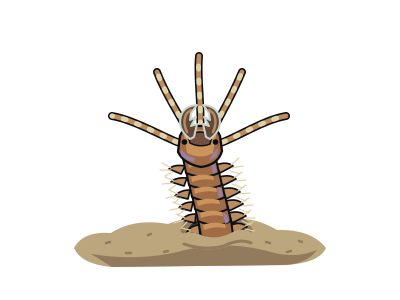
- Sand strikerHides in the sand and snaps up passing fish with scissor jaws; it can grow nearly three metres long.
- Earthworms and leechesRinged worms with a saddle-like band that makes a cocoon for their eggs.
- LugwormLives in a U-shaped burrow and leaves the coiled sand casts you see on beaches at low tide.
- Sea mouseA furry oval worm whose bristles shine with rainbow colours.
- Bone-eating wormA deep-sea worm with no mouth or gut that grows roots into the bones of dead whales.
- Peanut wormA plump unsegmented worm that pulls its head in to look like a peanut; it turns out to be a ringed worm.