A species
Pompeii worm
Alvinella pompejana
An earthworm relative at home on hot deep-sea chimneys.
You and the pompeii worm meet in the Two-sided animals branch, shown at about 580 million years ago (on 11 November, in a calendar from life's shared ancestor to today).
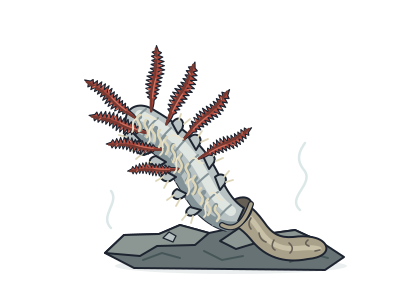
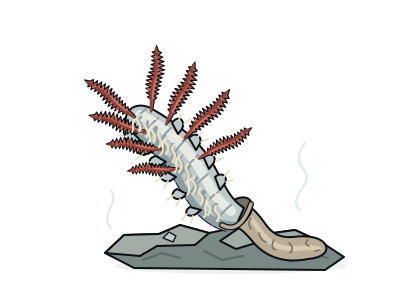
The Pompeii worm lives on deep-sea vent chimneys and ranks among the most heat-tolerant animals known. This unusual animal belongs to the same broad group of segmented worms as familiar earthworms and leeches. Its home, though, is far removed from garden soil or a pond.
Many worms live together, each inside a paper-thin tube attached to a rocky vent chimney. Here, hot, mineral-rich water meets cold seawater, so temperatures can change sharply over short distances. Moving in and out of their tubes helps the worms mix cooler, oxygen-rich seawater into their surroundings.
Their backs look shaggy, but that covering is made of bacteria, not fur. And heat-tolerant does not mean heat-proof: research found that prolonged exposure to about 50–55°C was more than these worms could survive. The temperature of hot water flowing from a vent is not the same as the temperature of a worm living nearby.
Bacteria on the menu
Their food includes bacteria.
Feeding their coat
Small glands on the back release mucus that feeds the bacterial covering.
A long way down
They live about 1,500–3,500 metres below the sea surface.
Next to it on the tree
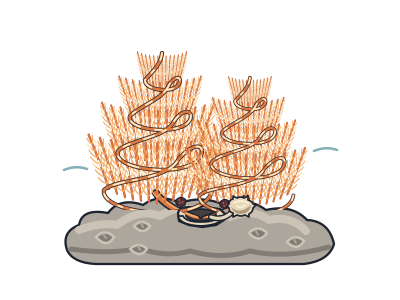
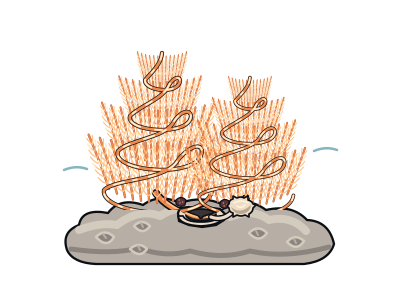
- Christmas tree wormA tube-dwelling worm with two spiral feather plumes that vanish in a blink.
- Giant tube wormLives at deep-sea vents with no mouth or gut, fed by bacteria inside it.
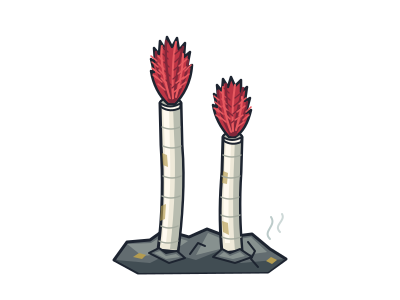
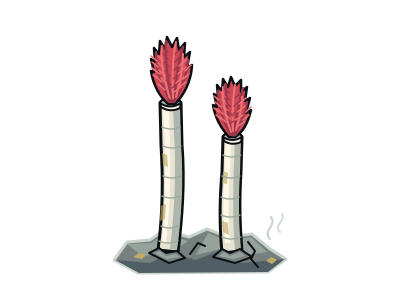
- Sand strikerHides in the sand and snaps up passing fish with scissor jaws; it can grow nearly three metres long.
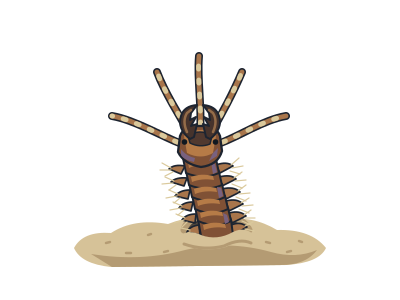
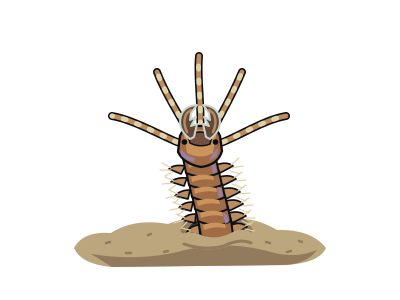
- Earthworms and leechesRinged worms with a saddle-like band that makes a cocoon for their eggs.
- LugwormLives in a U-shaped burrow and leaves the coiled sand casts you see on beaches at low tide.
- Sea mouseA furry oval worm whose bristles shine with rainbow colours.
- Bone-eating wormA deep-sea worm with no mouth or gut that grows roots into the bones of dead whales.
- Peanut wormA plump unsegmented worm that pulls its head in to look like a peanut; it turns out to be a ringed worm.
- Fat innkeeper wormA sausage-shaped worm whose burrow is shared by crabs, fish and shrimp that stay as guests.