An extinct species
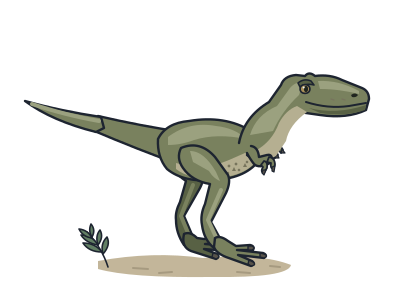
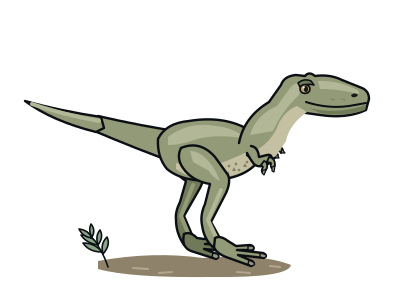
Yutyrannus †
Yutyrannus huali
A shaggy giant in the T. rex family.
Lived about 125–124 million years ago.
You and the yutyrannus meet in the Amniotes branch, shown at about 320 million years ago (on 4 December, in a calendar from life's shared ancestor to today).
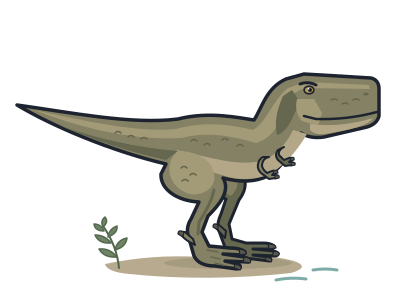
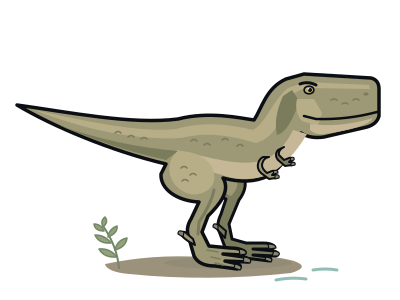
This shaggy relative of T. rex was a giant. The largest known individual was estimated at about nine metres long, roughly the length of a small bus. It belonged to an early branch of the tyrannosaurs, the dinosaur group that included T. rex. It was a different animal, not simply a feathered version of its famous relative. It lived about 125 to 124 million years ago.
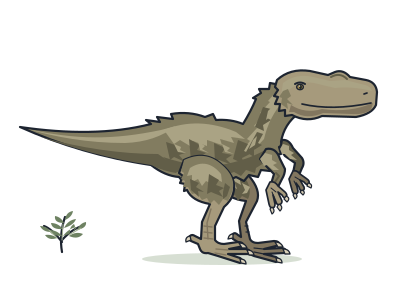
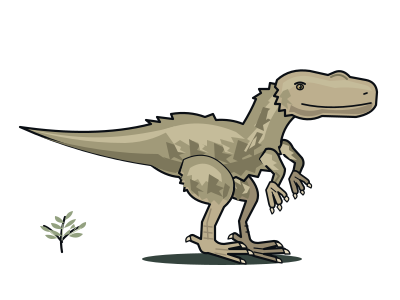
The feathers were not just an artist’s idea: patches survived beside the bones. Across the specimens, they were preserved near the neck, arms, hips, feet and tail. Some reached about 15–20 centimetres long, roughly the length of a pencil. These remains provided direct evidence that even a very large tyrannosaur could have feathers.
Despite its feathers, this animal could not fly. It was a meat-eater that walked on two legs. Its remains challenged the idea that giant predatory dinosaurs were always scaly, without proving that every tyrannosaur wore the same shaggy covering.
Three skeletons
The original description was based on three nearly complete skeletons: one larger, more mature animal and two younger ones.
A raised snout
Its skull had a bony crest along the middle of its snout.
A fitting name
Its name meant approximately “beautiful feathered tyrant”.
Next to it on the tree
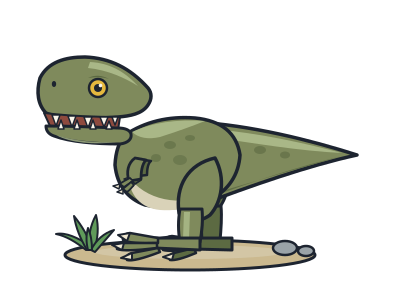
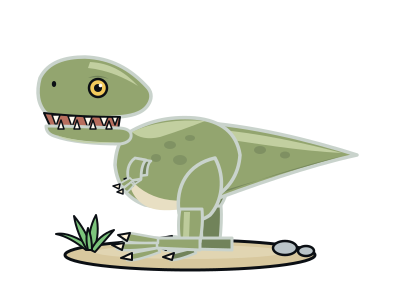
- Tyrannosaurus rexThe famous predator was a closer relative of a chicken than of Triceratops.
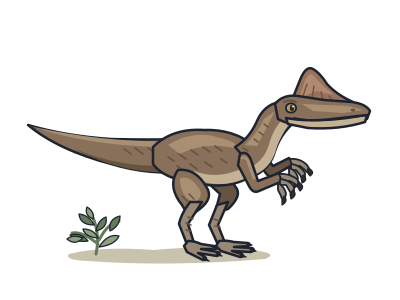
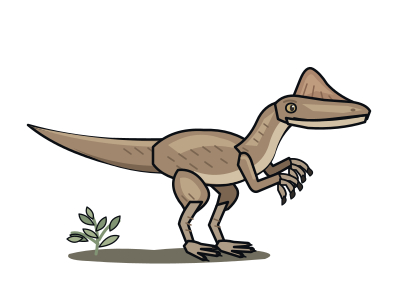
- GuanlongAn early, small tyrannosaur with a showy crest on its snout.
- AlbertosaurusA lighter cousin of T. rex; a bonebed suggests some lived in groups.
- TarbosaurusT. rex's Asian cousin from Mongolia, with even smaller arms.