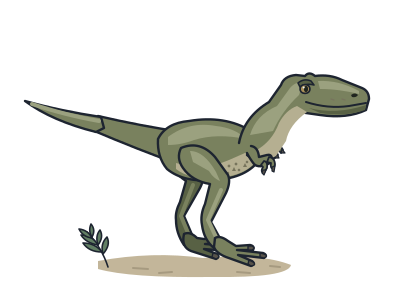
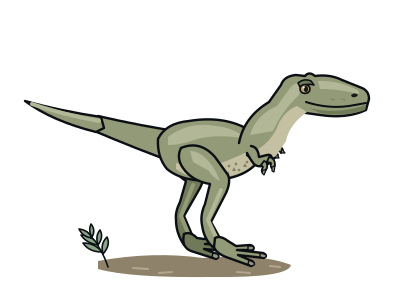
An extinct species
Albertosaurus †
Albertosaurus sarcophagus
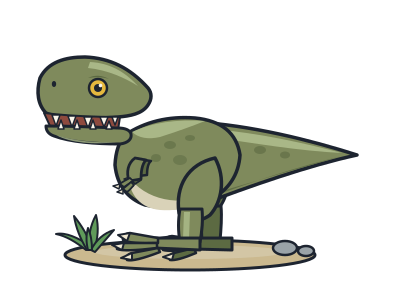
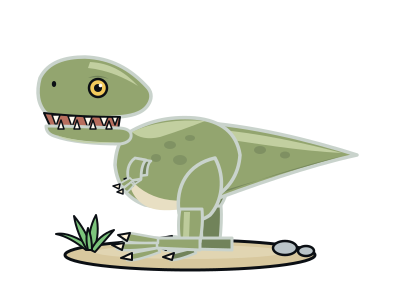
A lighter cousin of T. rex, with clues to possible group living.
Lived about 71–68 million years ago.
You and the albertosaurus meet in the Amniotes branch, shown at about 320 million years ago (on 4 December, in a calendar from life's shared ancestor to today).
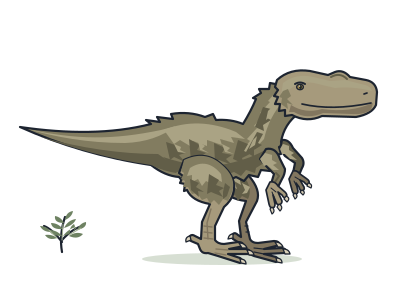
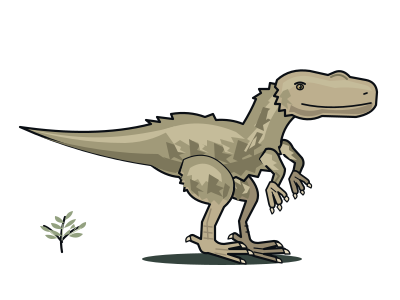
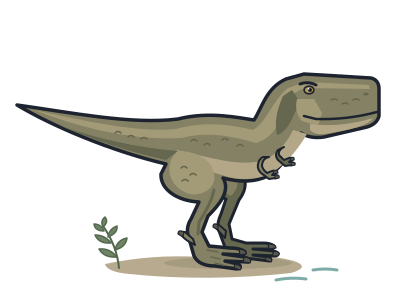
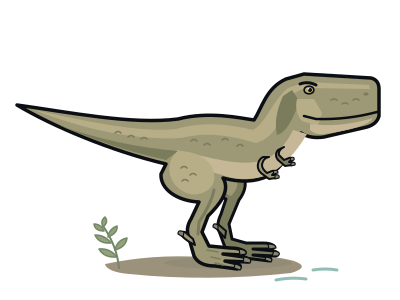
A lighter cousin of T. rex, this dinosaur was not simply a young version of its famous relative. Its closest recognised relative was Gorgosaurus, on a different branch of the same family. Fossil bones showed proportionately longer lower legs and feet than T. rex, along with a shorter, lower skull.
It lived about 71 to 68 million years ago in what is now Alberta, Canada. Its home included river plains covered in plants and swampy lowlands, between the growing Rocky Mountains and an inland sea. Large adults reached about 9 metres long—roughly the length of a bus—with an estimated weight of a few tonnes.
At Dry Island Buffalo Jump Provincial Park, a bonebed—a layer containing many fossil bones—held remains of at least 12 individuals. These ranged from small youngsters to large adults. Finding them together prompted the idea that some gathered in groups. But the bones did not prove that these dinosaurs hunted together or formed a family. Fossils recorded their remains, not a snapshot of their everyday behaviour.
Two-fingered hands
Its short arms ended in just two fingers on each hand.
A metre-long skull
Its skull could reach about one metre long, with small bony projections above and just in front of the eyes.
Replacement teeth
It replaced worn, broken or lost teeth throughout its life.